Archaeological Sights and Museums of the Thyreatis Land
The Argolic has enchanting beaches and the “sun and the sea” of the Argolic is charming, whoever comes once after comes constantly.
“With the main feature of the area the” meeting “of the beautiful mountain with the sparkling sea, the Municipality of North Kynouria invites its visitors on a magical journey.”
The most picturesque Paralio Astros, “the island” Paralio Astros, is perched on the hill and the ancients called the hill the “island”. Paralio Astros has nothing to envy from any Aegean island, it has it all, it is only two hours from Athens, it is very close “to the mountain” Parnonas, from its port the access to the “Aegean islands” is easy, is located close to the most important archaeological sites of our country and is very close to the historic Astros, the historic Agiannis and beautiful historical traditional villages.
Portes beach is within walking distance ❤ km> from Astros and <2.5 km> from the port of Paralio Astros, a magical walk.
“At Portes beach ended one of the two drainage canals, built by Bavarian engineers, during the reign of Otto… (The other is our well-known canal from Moustos to the sea). The purpose of the drainage channels was to reduce the area of the Moustos swamp and thus alleviate the problem of malaria, which was the scourge of the area.… The Doors were two iron doors, attached to the three elegant “legs”, which did not block the water of the Moustos to roll in the sea, but when Batis was caught the Doors closed with the blows of the first waves… Thus they prevented the marsh from being refilled with sea water… This project, limiting the extent of the marsh and the problems it created, acted as a catalyst for the development of the whole area ». (The text by our friend Nikos Mylonas)
Archaeological Sights and Museums of the Thyreatis Land
From our Municipality
The picturesque port of Agios Andreas at a distance of 3 km from the village overlooking the Myrtos Sea. Clear sea for all activities. The port does not have anarchic tourist development and offers relaxation and absolute tranquility. One beach has pebbles and stones and is the children’s favorite, while crossing the river is a second large beach with fine pebbles and transparent waters and a trademark of the ruined windmill that is in the water. The area is known to lovers of water sports, due to the winds, while south of the port there is a rocky shore suitable for spearfishing.
Next to the sea there is the “island of Agios Andreas” where one can see ruins of a cyclopean wall that belong according to the testimonies to the ancient city of Anthini. Parts of the outer precinct with towers of the 5th-4th century are preserved. e.g. Later the city was moved lower to the sea, where Late Roman ruins and additional fortifications from Byzantine times are preserved. Near the castle is preserved half a damaged arched stone bridge.
On the map above the Byzantine Empire in 555 AD it was at its peak
The three maps brilliantly describe the history lessons that are very relevant today ,the war it is not over…..
On May 29, 1453, “Black Tuesday” and a frustrating day for the Greek nation, Christianity and Western civilization, “Polis Ealo”, the Queen city was conquered and enslaved by the Ottoman “barbaric” conquerors. The fall of Constantinople to the Ottomans was described as “the disgrace of the Latins” because the few fanatics who teach their children hatred of Western civilization have not stopped the war until today and the “west” accepts them without any reaction, ignoring their own fall. it becomes daily inevitable.
“Power wears out and money corrupts” in 1453 and today, we have not forgotten the “all sacrifice” prime ministers of a scorched earth …
From Wikipedia, the free encyclopedia
“The Byzantine Empire of the first years of the 13th century was in turmoil and in decline. “The economy was going from bad to worse, corruption in the state apparatus was growing, and the exploitation of the people by state officials and the systematic neglect of the provinces by the emperors had alienated the provinces from the capital.”
Essentially, the end of the Byzantine Empire began in 1204 with the fourth crusade that the “Praetorians” of power invited to the Queen city to take back the lost “spoons” from the other Praetorians. The empire after 1204 was divided into smaller “empires” and incessant civil wars between them from 1204 to 1453. they finally handed over the Queen city to the Ottomans.
Byzantine Empire after 1204 was divided into smaller “empires” and the civils wars were not ended.
The Ottomans, undisturbed by the civil wars between the Praetorian emperors, began their own grand plan to take the city, which had begun before 1204 and was completed almost 300 years later, something the Latins of Disgrace do not understand today. ».
The “marbled King” was eventually left alone with 2,000 mercenaries, 5,000 political guards and 170 Sfakians to defend the city in front of 150,000 fanatical Ottomans.
Earlier, he had outlined the proposal of Mohammed II to surrender the city in exchange for his freedom and the Despotate of Morea.
“And the city is not given to you by me, nor by the other people who live in this common opinion, we all die voluntarily and we do not live our lives.”\7
The Byzantine Empire in 1450 was ready to surrender and be enslaved to its enemies.
The Ottomans working in their plan for 300 years and they never had stop.
It was a “black Tuesday” on May 29, 1453, when Constantine Paleologos, the last emperor of Byzantium, “fell” in front of the Gate of Agios Romanos, defending the Queen.
The heroes of Sfakion continued the resistance and the massacre of the Ottomans even after the fall until the death of the latter.
The “marbled King” emperor Constantine Paleologos exclaimed loudly before his impending death.
“Do not exists one Christian to take my head from me?”
Four hudrend years later when the Greek revolution in the second year showed the difficulties that existed, our English friends sent an admiral to reconcile the wars. The admiral met the old man of Morias in Nafplio and asked him to reconcile with the Turkish conquerors and the old man of Morias gave the answer.
Below, the old man of Moria says it all in two words.
– We never surrendered, we fought the Turkish conquerors non-stop for four hundred years in the plains and in the mountains, and to better understand the admiral continued. Fire and ax to the collaborators of the conquerors. The admiral understood well and the meeting ended quickly.
On May 29, 1453 “Polis Ealo” but the war by fortunately a few fanatics continues today, let our friends wake up one day in the “west” to avoid their own fall.
“The” Holy Space “of the 2nd National Assembly of the Greeks” with code GR-01724 in the electronic version of the Committee “Greece2021”
December 2021
The “Greece 2021” Committee was established by a decision of the Prime Minister in order to coordinate the formulation of the TITLE OF PROPOSAL TYPE OF ACTION anniversary program for the celebration of the 200 years after the Revolution of 1821.
To achieve its purpose, the Commission has chosen from the outset to extend an open invitation to all, so that everyone – body, club, organization, company, individual – can suggest how they want to celebrate this unique anniversary. The aim was for the National Program for the Celebration of the 200 years after the Revolution of 1821 to be formed by the society itself. At the same time, the Commission sought the greatest possible participation from all over Greece, as well as from Greeks abroad, but also from the friends of Greece, developing collaborations and mobilizing bodies of Local Government, the Greek Authorities abroad and Hellenes Abroad.
He set the framework for the anniversary to be celebrated throughout the anniversary year 2021, and to propose actions and events that honor not only the Revolution of 1821 but the entire course of 200 years of modern Greece, as well as the Greeks who they left a strong mark on this process. In addition, in the same context, the Commission sought actions and events that would open up prospects, set goals for Greece’s future course and leave a legacy for the country.
For the submission of proposals, the Commission has developed a special electronic platform, easily accessible through its website. The platform started operating in December 2019 and remained open for submission of proposals until 31 July 2020. Due to the intense interest, the possibility of submitting proposals through a form for another month was given, as announced on the Commission’s website. Self-financed actions continued to be proposed to the Commission throughout 2021.
The response to the Commission’s call exceeded all expectations. A total of 1,827 proposals were submitted to the platform by a variety of bodies, organizations, institutions, companies and individuals, in Greece and abroad, in 47 countries on all five continents.
In order to honor and highlight the wide participation of society as a whole and of each individual, but also to leave a historical record for the future, the Commission presents this digital edition. The publication shall include basic information on the proposals submitted in response to a celebration set out by the Commission and for which the bodies and / or persons who submitted them agreed to be included.
To start off the Greece2021 section on this website, we first would like to tell you about the important roles that Astros, Kynourias Agiannis and other places in the area played in the War of Independence, for which we are now celebrating the 200 anniversary or bicentennial.
The plaque shown below was placed on the wall of the “Holly Space” at Astros in 1899, to commemorate the location of the Second National Assembly of the Greeks which took place here from the 30th of March to April 18, 1923.
” In this location, the Second National Assembly of the Greeks took place on March 30, 18 April 1823″
The “Holy Space” of the Second National Assembly of the Greeks is undoubtedly one of the most important historical monuments of the 1821 revolution, not only for Kynouria but also for the Greek homeland, that so many heroes fought to free from the shackles of the Ottoman empire.
Astros and its surroundings are widely know because of the Second National Assembly taking place here. But there are still a lot of people who still don’t know its significance in the revolutionary war, and its role in the the subsequent formation of the modern Greek state.
One of our goals with AstrosGreece.gr is to use it as an outlet to share more knowledge and information about the significance of the Second National Assembly of the Greeks in Astros. Aslo for the improvement and acknowledgement of significant things that have bee overlooked or ignored
To that end we’ve done some significant outreach to the authorities over the last years and could use your help in to promote our history.
EVERYONE KNOWS ΑΣΤΡΟΣ ΚΥΝΟYΡΙΑΣ FROM THE SECOND NATIONAL ASSEMBLY OF THE GREEKS…
“Greece 2021” We are pleased to announce “The” Holy Space “of the 2nd National Assembly of the Greeks” and code GR-01724, IT IS HERE IN FRONT OF US
Dear Mr. Kourogiorgas,

We are  pleased to confirm that we have received your proposal entitled "The"  Holy Space "of the 2nd National Assembly of the Greeks" and code  GR-01724, which we intend to include in a special edition that we are  preparing and will include a description of all the proposals identified  with the four axes of the Commission and which contribute to this  common national undertaking on the occasion of the 200th anniversary of  the Revolution of 1821.

Your written consent for this publication, as provided in the current legislation, will be requested in the second year.
With  regard to the possibility of the Commission supporting your proposal,  we will contact you shortly after the final plenary session and the  Commission's assessment of the financial means available.
Thank you very much for your participation in the national call.

Yours sincerely, Eleni Kyprioti

Responsible for Managing Platform  Proposals Greece 2021 Committee http://www.greece2021.gr  secretariat@greece2021.gr T: 7002021000, 216000400
We have proposed to our municipality, to all those responsible for the “Greece 2021” committee and to the common mind, the four topics of the Thyrea that undoubtedly played a catalytic importance for the organization and success of the liberation struggle.
These and other things the common mind tells us we must always distinguish and promote in local, regional and national space, and in the website of our municipality and in the anniversary events for the celebration of the 200 years of the Greek Revolution
The “Holy Space” of the Second National Assembly of the Greeks
The Archaeological Museum of Astros and the “Sacred Space” of the Second National Assembly of the Greeks are modest and imposing, they are “museums” in themselves.
The assembly responded with the proclamation, to the world and the greats of the time. “We are determined to become independent, as an autonomous and independent nation.” a little topical today…
The indigenous Pelasgians had a golden rule that for millennia until today the inhabitants of Thyrea faithfully applied, mutual respect, consensus, conciliation and the Greek measure. The “squid” Astrinos, faithful to the tradition of millennia of people of the Greek measure and national reconciliation, were called at that time by the nation to compromise the warring camps for a national dialogue and achieved it with results, under the influence and leadership of Agianitis, responsible for military security in time of war of the National Assembly, Panos Zafeiropoulos or Akouros. Astros was chosen for the National Assembly, because in Astros there were many squids and it was undoubtedly a place of common acceptance and would better help the nation.
The Archeological Agency in 1899 built the inscription on the site and the locals after the end of the Second “National Assembly” named the site “Sacred Space”, out of obvious respect, for the great contribution it offered to the Greek Nation. Here, for exaggeration, the “sanctuary” does not have a religious meaning but a National meaning, the place was recognized by the inhabitants as very important, as a “Holy Place”. The decisions of the National Assembly were very important for the establishment and organization of the Greek State.
2) The Karytsiotis School of Agiannis
From the same sigil of 1638 we are informed that Agiannis became a patriarchal exarchate “for the sake of course of the School of Agios Ioannis, operating much older”. According to this passage, a school operated in Agios Ioannis, long before 1638. In Agios Ioannis, there were also “inferior” schools, such as that of Papakyriakos and secret schools, initially in the Metochi of the Loukous Monastery, Agios Dimitrios and later in the narthexes of the churches of the village. The people of Agianni never really surrendered to the conquerors and as a proof of their way they managed to keep their schools open throughout the Turkish rule and kept the flame of the nation secretly and openly awaited.
Our great benefactor Dimitrios Karytsiotis <1741-1819> was born in Agios Ioannis and according to the Agianniti tradition, he left “with a tsarouchi”. in which young people from Agios Ioannis, from all over mainland Greece and our islands studied and in 1805 he built the branch of the School of Agios Ioannis in Astros. The Karytsioti school played a primary and decisive role for Agiannis to become the capital of revolutionary Greece, from August 15 to October 1, 1822 and to hold the Second National Assembly of the Greeks in Astros in 1823. The “government” which is very close in the school of Karytsiotis of Agiannis was the seat of government. Astros is mainly known in our homeland by all Greeks and to expatriates abroad by the Second National Assembly of the Greeks that took place in 1823, for which the whole world knows us. The “squid” Astrinos, from the squid they used to write in the famous School of Karytsioti, offered a lot to the homeland during those difficult moments for our nation when everything was hanging by a thread to drown the revolution in blood. But before the National Assembly, the catalytic construction of the Karytsiotis School had preceded.
3) Agios Ioannis (Agiannis) of Arcadia
From the beginning of the revolution in 1821 there were discussions between the protestors and the chiefs to become a government of the Greek revolutionaries that would be based in Agianni. Eventually the Karytsiotis school played a primary and decisive role in making Agiannis the capital of revolutionary Greece from August 15 to October 1, 1822. The “government” located very close to the Karytsiotis school of Agiannis was the seat of government. The loopholes under the windows of the building can be seen. Later in 1825 it was also unsuccessfully proposed that Agiannis become the seat of the Greek government again.
Panos (Akouros) Zafeiropoulos, is one of the most important, or rather the most important Agiannitis before the revolution of 1821 and his contribution to Thyreatida Earth and his homeland is incalculable and passed in the fine print of history, it is not mentioned in the history books and is strangely unknown for its great offers in our homeland.
4) The “camp of the Bervena”
The battle of May 18, 1821 in historic Vervena and historic Doliana thwarted the dismantling of the camp in Vervena and the plan of the Turks. It also boosted the morale of the revolutionaries and paved the way for the fall of Tripoli. Undoubtedly the “Bervena camp” played a catalytic role in the organization and success of the liberation struggle. From the “camp of the historical Bervena” the liberation of our homeland began essentially and militarily. These are a few things about our heroic ancestors, but let’s get to today.
“To realize where we are and to decide where we want to go.” the president of the Committee tells us “Greece 2021 ″ Mrs. Gianna Angelopoulou.” The future is decided today – shaped by the actions of all of us in the present. We all need to be present tomorrow. Only words are not enough for that. Progress requires both effort and manner. He wants the body and the mind to work. The challenges of the future are already here… ” The pretext of the “crack” and the trap of another study (mercy now with the innumerable studies….) Of the pretext of the “static adequacy” of the building of the Archaeological Museum of Astros will not pass in the end, the local community has the first say and the competent eventually they will understand and listen to us, everyone must take on the responsibilities of today…. “Only words are not enough for that.”
“The Holy Space” of the 2nd National Assembly of the Greeks, the courtyard of the school and the Karytsioti School is modest and imposing, it is a “museum” in itself. Marbles and monuments are important and are present in all museums. We have more than monuments this wonderful modest and imposing space, WHICH IS A MUSEUM ON ITSELF, tied to our modern history which not many have. We will open our museum soon.
We have proposed to our municipality, to all those responsible, to the committee “Greece 2021” and to the common mind, the five issues of the Earth Thyreatis, which undoubtedly played a catalytic importance for the organization and success of the liberation struggle.
The most important topics we have in the Thyreatis Earth and we must always distinguish and promote in the anniversary events of 1821.
Recently, on August 13, 2021, the cultural center of Agiannis was inaugurated, which includes a folklore museum, a shadow theater exhibition and a lending library.
A wonderful job, as the president of the landscaping association of Agiannis Stratis Dalianis said, is the work of a group of people who helped to make it happen. The members of the landscaping association of Agios Ioannis and the friends of Agiannis, out of love and excessive interest for our village and our place, did what they could with their time and offerings, without powers, static studies and seals. Let them be followed by our competent and other fellow citizens, so that they become more self-evident for our place, such as the final and irreversible opening of the “Holy Space” of the 2nd National Assembly of the Greeks and its promotion on the website of our municipality, and finally, after so many static studies, the opening of the Archaeological Museum of Astros.
The folklore museum is housed in the primary school of Agiannis that was built in the 1960s, at the entrance of the village in Koutri, in the place that was the famous marble School of Karytsioti. Our great benefactor Dimitrios Karytsiotis <1741-1819>, was born in Agios Ioannis <Agiannis> and according to the Agianniti tradition, he left “with one tsarouchi”. Our great benefactor, a powerful Agiannitis patriot of the Diaspora, found a way to allow the 400 years of conquering Turks, before the Greek revolution of 1821, the acquisition and operation of the Karytsiotis school in Agiannis in 1798 and in the Karytsiotis school branch , which opened in 1805.
The museum will be open every day from 6pm to 8pm, otherwise if anyone wants to learn more or visit it can call 6973738850, Mr. Stratis Dalianis.
Also on the 13th of August 2021, in the place Koutri in Agiannis, an event was held by the landscaping association of the village with the theme of Dimitrios Karytsiotis Great Benefactor, School of Karytsioti, Unveiling of his bust.
Our compatriot Nikolaos Barlas, son of Michael from the Diaspora and distant Toronto, Canada, responded to the first call of the president of the landscaping association and financed the bust of Dimitrios Karytsiotis, expressing his love for the place where he lived. Nikos Barlas, a successful businessman in the foreign land he lives in, has from time to time helped other clubs and for that we are grateful and we wish him to be always well and to always have his mind in our village. The club decided to honor Nikos Barlas by appointing him an official member and awards a plaque and a commemorative diploma of honor. At this point, the niece of Nikos Barlas received the commemorative plaque and the diploma of honor and with the request to convey to her uncle the love and gratitude of the people of Agianni to him. Then the unveiling of the bust of Dimitrios Karytsiotis took place.
It is relevant to our topic how the Astros Museum started and operated in the 1950s and 1960s, our late fellow citizen “ancient Greek” our respected professor Kyriakos (Koulis) Hasapogiannis. The idea of the Astros Museum was started and became a reality by our late respected professor (it was not “transformed” by anyone, it was “made” by our late respected professor). In the 1950s and 1960s Astros had a museum and today the Archaeological Museum of Astros remains closed after the pretext of the crack and with the trap of studying the pretext of static adequacy. At the same time, our municipality “forgot” the creation and catalytic offer for the Astros museum of our respected professor Kyriakos (Kouli) Hasapogiannis and distinguishes unjustifiably and narrow-mindedly on the website of our municipality by chance employees of the Ministry of Culture in 1985, let there be a museum 1950.
Our fellow citizens, members of the landscaping association of Agiannis, friends of Agiannis and the Agiannites of the diaspora practically take in their hands what belongs to them, do not wait for the Ministry of Culture and the authorities to “study” them, approve and seal them. As they did recently in Agiannis and as our professor did in the 1960s, they will soon open the “Holy Space” of the Second National Assembly of the Greeks and the Archaeological Museum of Astros, there are no more unjustified excuses and pretexts.
Agiannis was the capital of Greece of the Provisional Government of the Revolution, from August 15 to October 1 and the neighborhood of Soulinari was the metropolis of Agiannis. “The church of Agios Vassilios was a large church which was located at the bottom of the village and specifically at the place of Matthew and near the source of Soulinari. The church, which was the metropolis of the church, was completely destroyed in 1826 and in its place today a simple shrine has been erected. many mansions of important Agiannites (such as Perros, Sarigiannis, Matthew etc. (of the Zafeiropoula brothers)) and various churches (Agios Efstratios and Agios Petros) ”, by our fellow citizen Giannis D. Kourbelis
In the summers when the village was “full”, many residents came for holidays, in Soulinari we had a festival every day. It was very crowded with about 20-30 people, who waited 2-3 hours sometimes for their turn to get water with the linens, the tessas and the barrels loaded on the donkeys. It was a pleasant social event and the gossip from the women “go cloud”, who looked at who and the like. Many went more for the gossip and supposedly for water with a small pitcher. Sometimes my grandfather would send me to the tap for “some cool water” and I would go with a very small pitcher, a clever trick, and the women who were waiting to fill their barrels would leave me first, since “I had a small pitcher”…, but most likely and for not listening to gossip.
The young men and women of the village also went to Soulinari for strange hours for a bridal market, to go elsewhere .., they went for water and they were very thirsty and when they were lucky and there were no people, they felt the first heartbeats. The young people then always made the first move, indicatively with the following ..
From Smaragdi Arvaniti.
“In Agiannis there is water, they call it Soulinari,
and whoever suffers from love to go and drink, to become!
My little Agiannitopoulos, you have burned my heart “.
And so that there is no doubt they continued their siege
The little water that ran at night, when the residents did not get it, we share with the barber Theodore Maglis, for watering our orchards and trees in front of the house. There was a small concrete ditch and our own small cistern made by my “versatile” grandfather. In the orchard we had tomatoes, zucchini, beans, cucumbers, aubergines, okra, maize, we even watered the large arbor about 30-40? meters that made beautiful grapes, heptakilia, aetonychia and the red agiodimitri, and our figs, how not to love Soulinari…
We are lucky that our house was close to Soulinari. At night, my mother, who was not very crowded, would carry water with the tassels and the tins for washing clothes and would fill the two cauldrons that were in our yard under the mulberries, when when I helped too. Once our teacher Tassos Kalfagiannis inspected us at the school for cleanliness, I would have been 7-8 years old then. Most of us went to school barefoot. When he reached me he told me to go home to wash my feet. I run to our house and dip my feet in the cauldrons that had water for washing. and on the way to school, my mother shouted from behind “Turkish boy” you ruined my water. I go to school my feet as they were wet were filled with dust, street gallows and when the teacher saw me like that he laughed non-stop, well done you washed them nicely, but next time your mother washes them
Just above Soulinari was the house of Tsaroucha who came in the summers, he was very old in the 80’s, and he played music non-stop even at noon with a musical instrument that he played on foot, a lantern? I did not know his name. On the roof of this house once around Easter, the tsarouchas had not come yet, all the children of the neighborhood <girls and boys> had a party and danced, I was very young, suddenly the dancers inadvertently pushed me under the roof in Soulinari, but hard nut I did not suffer anything, I was accustomed to the hardships. , it seems that Santa Claus saved me that time .. Once again I had straightened Sourlis’ elbow in the well with my head, I still have the marks, when the oss of our donkey was cut or my echo
Someone called me and knocked me down. the cork, or both together, I do not remember what we called them.
Since we are talking about caravan and cork, the best was when I was carrying the bundles from our fields to the “kakoleo” with our mules. russia and cobra. My father would load them for me and wait for me in our fields, and I would manage to get rid of them and put them hard on our lawn. On the way back I was enjoying the carriage, as if once the cobra loaded with limbs in the xerokambi turned me over and I cut the ingla with rags and I came back empty-handed and scared, but my father welcomed me with a smile, as I always did.
We had our policies even then. Once my mother, above our oven in the fig tree, was caught by the hair with her neighbor with a lot of French… because the neighbor wanted us to let old Kapyla, my grandfather’s brother, vote for her party. When I was very young I was sitting with the old man Kapyla, barba Costa Kourogiorga, on our porch, he could not move because he was crippled, he had fallen from his arbor on the terrace with the stones behind our house, and we were enjoying the spectacle, it was nothing Dozens of women and men who were trying to separate them, but were holding their hair tightly .. Natos and the barba Giannis Stathogiannis, almost squealing, were very old, over our cistern on the side of the road to Soulinari he was coming with his big mustache and his white hair with a curl up and he was shouting loudly \
Fortunately, at that time, Pagios came again, he was coming from Soulinari, he would be in Xerokambi, riding a horse with also a big mustache and white hair, with the tsemberi tied like a fez and his dark fustanelles and behind him with many mules loaded on foot about a dozen servants of Agiopetrites. Do you want out of respect for Pagios to pass or did they get bored of the debauchery, the battle stopped, and those involved withdrew, continuing their French, and Barba Kapylas made his cross ..\
The former house of Panagiotis Giannoukos (Pagiou), benefactor of the community of Astros. This mansion belonged to Agiannitis, a friendly and friendly Panos Sarigiannis. Panos Sarigiannis was one of the most important personalities that Agios Ioannis has highlighted. He was the son-in-law of the also prominent Anagnostis Papazoglou, the protagonist of the struggle, with active participation in the It is located at the bottom of the village, between the Old School and the Soulinari spring. A few meters lower were the ruins of St. Basil, once the metropolis of St. John, which was completely destroyed by Ibrahim in 1826. This building has a large size and impressive dome. Next to this house there are the mansions of Perros and Matthew “, by our fellow citizen Giannis D. Kourbelis
“The mansion of the Kourogiorgas – Fourliga family in Agios Ioannis. It is located in the place “Elagos – Agios Vassilios”, near the source Soulinari. A lower school of the village was housed here during the Turkish occupation “
When Ibrahim in the revolution in 1826 burned down our homeland and the school of Karytsiotis in Koutri in Agiannis, also then there was no state and our politicians were forced to run to the mountains to be saved. Our ancestors, the people of toil and everyday life, did not bend or surrender. They did what they could in the ashes to say in their own way the state is here, as they still offered their homes to be used for schools, after the school in its place had burned down.
Our house was relatively large, had a large loggia in front and a wooden balcony downstairs where our threshing floor was located on the border with the area of Santa Claus. It had a large linen of about 25 sq.m. My grandfather Michalis Stravosogias was always in front of such people, he was always in front of them for such things, singing them with his stories. Knowing the place, I guess linen was the school room in 18 they were finished with the sea bream we were looking forward to playing with the sea bream, we are leaning and belly up to the threshing floor. It also had the basement, about 20 sq.m. under the winter house, which was something like a hiding place since there was a waterfall with a vertical staircase from the winter house, and the stones from the wall that were built quickly in an emergency or in possession of the small inner door so that nothing but a wall could be seen, is still inside our homes. You should have known to find the one covered under the chest and a rag and shaker to enter the basement. In the 1950s we had two large wine barrels in the basement, for about twelve barrels of wine, two meters long and almost two meters high, which I stepped in to clean in the fall. one still exists today. In the neighboring house of Kapylas, old of Matthew, there was a similar hiding place that some said reached the hiding place of the forerunner ???. Before the harvesters came, our threshing floor was used by many neighbors for threshing, I remember 20? piles around. The good thing was for fun we slept on the lawns and at night we listened to the stories about ghosts and fairies from the older neighbors. We were fed up with threshing when we were threshing, with mules and horses crawling around, and many times we crawled behind the haystack in the straw, but you had to be very fast if you fell because the mules would step on you, that’s why my uncle Costas Kourogiorgas the joke, leather strap. saying “sputum” you will leave as if the mules are pressing. In front of our house was Soulinari, below the border with the threshing floor is the area of Agios Vassilis, behind the mansions of Matthew, Barleika, Pagios, Perros, then two houses, after the old primary school and more beyond the neighborhood of Prodromos, other houses and Prodromos. This was the Soulinari neighborhood.
The mansion of Matthew with its peculiar big chimney, which had the underground large crypt, today owned by Kapyla (descendants of Kostas Kourogiorgas).
In the 1950s it was beautiful in the village. There was excellent social contact and mutual respect with everyone and everything, at festivals, in churches, in daily life in the precincts of the precursor and in Soulinari, in joys and sorrows. We respect the elders, they were all barbarians and aunts (uncles) and aunts).
During the holidays we wore our “goodies”, we went to the church and to the dances, which everyone danced in the square, if we had any drachma we drank an orange juice. We are happy and happy for what we had and we did not know better, nor did we want to know. We had it all and it was enough, they just did not have money but we do not need it… ..
Personally, I did not feel comfortable during the festivities and the big riots with my ornaments and my “good”. I felt better and I preferred to go to the “tsoulaftra” for watering and to play with the neighbors with the tsipoura, the letharia and the soil in Soulinari.
5-6 years ago we published the following, today it seems something is finally happening or will happen soon, after all the obstacles collapsed. With a few small changes we publish them again, because we believe they are still relevant today.
We recently read about the small problems with the road signs, which we are still waiting to be corrected, better late than never, because they are very important for our visitors, certainly not so important for the competent and locals who know where to go without looking at them. our road signs, and we ask everyone who knows about these mistakes to report them to the competent service of the municipality, someone has to do it, no autopilot will do it, maybe the municipality does not know them or forgot them to correct them We want to believe that one day the municipality will understand these small mistakes are very important and we will not forget them ……….
We remembered that it was Astros in the sixties that everything changed drastically and so hastily, as if everything happened in the sixties.
In the sixties many great changes took place in our daily lives locally, nationally and globally. This “generation of sixty” decided to change everything everywhere. Let us mention some such as May 68, Che, the peace movements, the emancipation of women, the hippies who used to tell us every day “Make Love, not War”, “socialism with a human face” by Dubeskek and the insight of Willy Brandt At the national level, the dictatorship of 1967 stopped the social and political changes and temporarily put this “generation of sixty” in plaster, killed its Levantine soul and restored the morale of the cops and collaborators with the known results. We will leave the global and national for others and for the past. Let us come to Astraina of the sixties.
Here the idea of the Astros Museum was built by the “ancient Greek” Koulis Hasapogiannis, (these we had, we could always do with “measure”, these we did)
The Astros Museum
Astros before 1960 had a museum and promoted as much as possible our cultural heritage. In the photo above is “the first Astros museum as it was before the demolition. Here the “ancient Greek” Koulis Hasapogiannis built the idea of the Astros Museum, carried the marble statues with his fellow villagers and sometimes asked for the help of Panos Kampilis, who was younger and stronger, to raise them on the staircase. His age also caught him ostensibly from one end to help. The railings on the windows for safety by the archaeologists were not put by Karytsiotis or the agronomist and gardeners of the garden, they were put by his hands μας our late professor and inspected them every time he opened the Astros Museum.
The Karytsioti School became the Astros Museum and served the place beautifully for several years, (we had these, we could always do this with “measure”, we did these), until it became the “pretext of the crack” and closed indefinitely.
I’m sure if he lived today, he would gather us all in the square, give us a nice festive speech and put us all in front with trowels and cement to close the “pretext of the crack” today …… Everyone, the mayor in front, would have him convince him certainly would not disappoint him. He would sit next to you and do whatever he could to help or stir the mud, but more to make sure we did a good job and finished it, today.
The “ancient Greek” Koulis Hasapogiannis, was accidentally born 2,500 years later. His whole social and professional life was full of “mutual respect”, “Greek measure”, unparalleled “ethos”, and “excessive courtesy” for the smallest detail, even when some of his students teased him, he smiled sweetly and politely and he quickly turned to his own subject so that the students could learn something, even though they wanted a break…. , these were our teachers. ”
Today we do not have a museum and today we do not want to promote our cultural heritage, because we let some “stupid employees”, as one of our great poets used to say, insist on having closed and inaccessible today, not only the Museum, but still without any excuse the pretext and the “Sacred Space” of the Second National Assembly of the Greeks.
Today the head of EFARK, Ephorate of Antiquities of Arcadia, decided without any excuse and does not want anyone to see the walls and an inscription of the archeological service of the “Sacred Space” of the Second National Assembly of the Greeks, nothing else exists in this area, and this in her opinion highlights our cultural heritage. We do not understand this persistence, crookedness and narrow-mindedness.
We know that we “must build Romeiko in the space and sector in which we are” and we must all take public positions on all issues. We wonder why until today the local “leadership”, our elected representatives, the mayor, the regional governor and our deputies do not make a public intervention to the competent “stupid officials” and on the issue of the “Sacred Space” of the Second National Assembly of the Greeks. At least let us tell them their position publicly. We will soon find them in front of our elected representatives.
In the final analysis, not all these “competent” people do nothing, but it is our fault that we allow them and as we understand, they will soon take their place.
We do not understand why “the stones do not rise” to open the “Holy Space” permanently and irrevocably.
The water
The whole village before the sixties had 3-4 fountains. We went with the barrels and the sinks very far for water. Around sixty they brought fountains all over the village in every neighborhood and slowly added water to the houses later. With the water, the village slowly changed, the inhabitants planted the first oranges and cultivated their pergolas.
The “farm”, the large space that starts from where OTE is located, and this space belonged to the farm, to the cemetery and from “west to east”, with all the schools, stadiums and squares, its space Zafeiris Foundation, were donated by the biggest benefactor of our place D. Karytsiotis to the School to pay for tuition the teachers of the school with the fruits and the fruits of the “farm” such as grapes, medlars. The water was also brought by Karytsiotis from the “manna of water”, above Loukou, with a stone spit, (aqueduct) that still exists, so that the village has water and the farm garden is watered so that the School is open . ”
At this point of the aqueduct it had been spread by the older and the younger ότι. That Karytsiotis had given instructions to the Arab keeper and gardener of the garden “to cut the water” from the village, when he learned the Astros museum was closed. Of course he would pass the farm back because there was no reason for the residents to have it anymore. Two hundred years ago the great benefactor brought us water for the village, gave us the farm and built the school. Today, two hundred years later, we are not even worthy to open the “sacred space”, let alone the museum, which we left to be demolished ten years ago….
Electricity
Electricity also came around sixty. I still remember reading with the oil lamps and the lamps.
The streets, The society and the politics of the time
After the water and the electricity, it was time to open the roads, another great work of the time. Before the sixties in Astros there were three taxis and 2-3 trucks, people were moving by buses, in Agiannis There were two buses upstairs and two downstairs. Children in Agiannis we went on foot. Let us remember how the roads were made.
Let us say a few words about the society and politics of the time to better understand what we are saying. After the occupation, the civil war and the guerrillas, the people of toil closed themselves to survive one more day. The left was now defeated and chased in relentless persecution. The democratic faction was frightened and also persecuted by the dictatorship of Metaxas and the civil war, it was questioned and despised by the establishment. The right was in its greatness.
The deputies of Arkadia in 1958 were the 6 of the right-wing EPE, Triantaphyllakos, Papailiou, Aposkitis, Michas, Pavlopoulos, Kalteziotis, Papadimitriou, and N. Bakopoulos of the Democratic Party, Liberal Party and in 1961 the E, T Aposkitis, Michas, Pavlopoulos, one of the right-wing Markezini Tsakalos KP and one the democratic N. Bakopoulos EK. The numbers tell the truth convincingly, no analysis is needed. At that time, the leftists in Astros were counted on the fingers of “one hand”, leftists, there were no communists then, because the word was “myasma”, no one said that word. The Democrats were a little more numerous, but most of them for the sake of survival hid and read the Democratic newspapers secretly or folded them in when they bought them so that they would not be seen. Astros was more right-wing than Arcadia and almost everyone in Astros voted for Dimitraki and Apostoli, say about 80% and almost all the other right-wing party leaders…. At that time, the village was ruled by Dimitrakis Efthymiou and Apostolis Hasapogiannis. They were the two “big party leaders” of the village, there were other small party leaders, who as more affluent had many political friends, some of whom worked part-time in their jobs and out of obligation always voted for their friends, the powerful political deputies for many years. .Triantaphyllako and E. Papailiou, father of the current MP Arkadia of SYRIZA, here we are not talking about nepotism and family rule, but the people say in similar cases “the kingdom goes to work” …… Although Dimitrakis and Apostolis belonged to the same party of the right (EPE) were fierce enemies for their own reasons, perhaps for the plots they shared. They and their friends, or as their leaders or minions called them, hardly talked to each other, they were political opponents.
Then a miracle of unity and understanding took place. Dimitrakis and Apostolis agreed to make Saranto Kanellopoulos, a left-wing communist, not an “initiated” communist, president of the community, to do any work. Sarantos was “a leftist ideologue, but respected by the inhabitants..His first job was to open the streets. He would go in front of the bulldozer with the cigarette in his mouth and a chisel and say to the bulldozer “varto, varto” .. to throw the olives. , and kept Sarando for good and for bad for his boss Dimitrakis. In fact, a cousin of my uncle, let’s not say names, took him to court because he opened the way for him to pass and the judge assumed and asked the cousin “there is his house across the street, he also cut from his own field” the cousin as she was honest without thinking he confessed “he cut more of his own” which was the truth, and so the judge easily concluded “the accused is innocent”, with the cousin looking curious .. My father came from Agiannis and saw the hatred Our pergola was missing the fence spikes, the zucchini and the “batakes” were on the way down the road. My Uncle had overdone it. He disliked the trout and the zucchini, but he liked the road, as a progressive man he was he laughed with joy, he could not go and his brother to the courts. Besides, my grandfather built the house at this point in 1915 and had entered a lot since then, on the contrary, many did and let them have space, once the road in front of our house used to pass by with difficulty only a donkey loaded…. So somehow fortunately the roads we have today opened ..
Paralio Astros in the 1950’s
The Karella factory
I happened to be present when the late Tzimis Gardikiotis and Alkis Hasapogiannis both started with a lot of passion and love for the place the first conversations in the late sixties to build a factory in Astros “for the good of the village” the factory became later and changed the village.
University fees have been abolished
We mention this here, let it not be a local issue, because it had very great, I would say indescribable effects on the Greek and local society.
In November 1963, the Democratic Party and the old man of democracy won the national elections and the old man of democracy, under the influence of E. Papanoutsos, abolished the tuition fees for the universities. Then, in order to go to university for a year, your father had to sell a field if he had one. As a result, all the toiling people could now more easily educate their children to change their lives. When I finished high school we are 40 students and I think 36-38 went to universities, in Law we are 6.
The names of the streets
I do not know what happened to the street names, I did not follow that, and I’m sure, mistakes would be made that we can correct later, we all have to have suggestions. I will be allowed to suggest some street names that I consider important, if they have not been made and do not exist, I hope that those in charge will take them into account in the future.
We must have a road in Astros called.
Giannis Mattheou, Kyriakou Hasapogianni, Sarantou Kanellopoulos, Tzimis Gardikiotis. (the street that is our home), Alki Hasapogianni
These names are with us, they are full of Astros, let’s say otherwise there can be no Astros without… .Kyriakos Hasapogiannis… ..My uncle vice-president, I will not mention him for anti-nepotist reasons, let his cousin’s descendants mention him ……….
Barba Panos Barlas or Katsianos was a real helper, without knowing who Epikouros was, who played the clarinet in Agianni in the fifties to entertain himself more and less his fellow villagers. His house was next to the traditional guesthouse “Fountas”
Barba Panos decided with his savings from the clarinet to acquire a ribbon, a small carpentry craft for the younger ones, next to his house which was a rock, so that he could easily supervise.
The work on the ribbon was done by his two older children, the work was good and they needed more space to expand their industry. Barba Panos supervised everything and caught a board in grace and appearance.
Then he decided to build a carriage, which was a larger cart, with two large wheels, to throw away the soil and rock that his children dug almost every day for about 20 years to grow the area of the ribbon, where today is traditional hostel “tassel”.
Loufolias did a lot of work, for a glass of wine or 2-3 cigarettes, from time to time and for a plate of cuts. Loufolias, when he did not carry the trumpets from Karamatzanis alone today on the ribbon, very large wood for planks, carried by 2-3 people normally if Loufolias did not want, most of the time he worked the cart and threw the soil and the rocks outside the village, on the side of the road in Perdikoneri.
But Barba Panos was forward-thinking and had reserves.
Plastira was putting Giannis Koutivas to pick up other children and throwing some carts, because Loufolias would be drunk somewhere.
The plan was for everyone to push or pull the loaded body up to the peridoneri, you could see maggofa uphill, and on the way back everyone went up to the body and Plastiras confidently and confidently led the body downhill back to the ribbon quickly to catch up and we go many times… ..
One fine summer day, when I beat all the players of Plastira behind the school of Agiannis, we had to go late to the ribbon of Barba Panos, it was arranged.
We went out to the pond and gathered about a dozen children to help us take the carriage to the perdikoneri and the maggoufa uphill, mostly younger ones I do not remember now. Was it written that day to stop temporarily or for a few years…? Barba Panos’s plan to grow the ribbon, I think the program stopped that day.
Plastiras was driving the carriage full of children too fast, from his coffin that he lost the players earlier, a very big case, or because we were late, his carriage left at the turn that was the hut of Loufolias and the side over the Canelias’s house, fortunately no one died or was seriously injured and the wheels got lost in the paddocks in the mills under the forecourt, they are still rolling… and Barba Panos’ body became a mess.
Little by little, all of us limping and groaning, we kicked her under the lacquer, so that Barba Panos would not take us for granted, and we left him waiting for the carriage, which you could see, and other soils that he left necessarily and definitively for Founta.
Let us mention here something about the organ players and a nice story.
The ones I remember are Barba Panos Kon. Barlas or Katsianos ►8 on the clarinet that he always played with fun, in times of need his brother Barba Mitsios- Mitsiaronis also helped. Tassis Dikaios – Drapetis – on the lute, Marinos Aloupogiannis on the violin, Sakkas (Tassis Kon Barlas) on the pipe and Lampis Kampilis on the drum.
From the surrounding villages the most famous were Angelletos or Bahatis from Meligou on clarinet, barba Giannis Mourloukos or Seliverdes from Verneva on lute and Perrai from Platanos on violin.
But let’s say something about Barba Panos Katsianos. He was a very gentle and happy man with what he had. He told us that he had never been ill, had never had a headache and had never taken medication or aspirin. In the summer evenings we took him for chants to Agiannis guys then. He was very happy to play the clarinet with us for many hours.
Stratis Dalianis or Lokanikas, an old mayor, was collecting money from everyone to pay Barba Panos. I remember once he had a penny (50 drachmas) and he put it in a pocket of Barba Panos. After a while he would take it and put it in the other pocket and he did it all night to make Barba Pano believe that he was putting a lot of money into it.
Of course, Barba Panos understood that, but he continued the clarinet with joy the next day when he finally found it. the fifty asked us on the ribbon we were going when we were going to sing. He wanted to play the clarinet and enjoy watching everyone have fun.
At that time, at the festivals, everyone danced together in Agiorgis Square, let’s say without exaggeration, and 100 people danced together. Anyone who had money and was anxious – got into fun and threw something for the instruments.
Later, Bahatis from Meligou, after each dance after each song, played the clarinet for a long time to give him money to play and dance. This tuning had been exaggerated, which people no longer wanted, but it gradually became a habit for everyone.
Once it was Easter days and people were dancing in Agiorgi next to the mulberries and then the other organ players started playing for money and since no one was throwing anything because they could not, with the loud crowd, who usually spoke very slowly, hear it everyone, Barba Panos Katsianos, said: “You guys are dancing, let the world dance in the air, we are selling them !!!” and he started playing alone and then the others followed him what to do. ”
Since we mentioned our friend Plastiras, who greeted us for the other world, I remembered another short story. Plastiras, Stelios Katsianos, who also greeted us for the other world, Giannis my cousin Lefikis, and I Giannis the Lord, we had good company, we smoked in the house of Korobokos which was closed under Katsianos…. and at noon we went for nuts and cucumbers to the pergolas in the mills, everyone slept at noon and whoever gets the grace…. the guard Tsioros and Matzouranis did not catch us with anything., that we did not eat we played in the mantra of Prodromos until the final victory and at the end everything was taken by a lucky person of the day. My cousin John left for Canada when he was young and when he returned after many years he found his company. old friend and after they kissed warmly he said.
Look at “the chief thief <he meant the nuts ,,,> they called him chief warden” and they started laughing non-stop that they remembered our glorious days ..
Mystras, also known as Myzithras in the Chronicle of Morea, was a fortified Greek city and former municipality (Municipality of Mystras) in Laconia in the Peloponnese Region [1]. Located in Taygetos, near ancient Sparta, Mystras was the capital of the Byzantine Despotate of Mystras in the 14th and 15th centuries, experiencing a period of prosperity and cultural flourishing.
The Despotate and the Ottoman conquest
In 1348 the Despotate of Morea was created, with the first despot Manuel Kantakouzinos (1349-1380), son of the emperor John VI Kantakouzinos. He was succeeded by his brother Matthew Kantakouzinos (1380-1383) and his son Matthew Dimitrios I Kantakouzinos (1383-1384). The latter was confronted by the emperor John V Palaiologos, when he claimed greater independence from Constantinople, and gave his place to the emperor’s son, Theodore I Palaiologos (1383-1407). In the years that followed, the despotate expanded throughout the Peloponnese, upgrading the political, administrative and spiritual importance of Mystras.
In 1429 a second despotate was created in Moria, based in Glarentza, whose leader was Constantine IAI Palaiologos, while in 1430 a third was founded, based in Kalavrita, with Thomas Paleologos, brother of Constantine and Theodore II, as despot. Paleologos, who was despot of Mystras in the period 1407-1443. In 1443 Constantine became despot of Mystras, a position he held until 1448, when he was anointed emperor – the last – of the Byzantine Empire. The last despot of Mystras was Demetrios Paleologos (1449-1460).
On May 30, 1460, Demetrios Paleologos surrendered Mystras to the Ottomans without a fight and clung to the sultan’s court.
The churches of Mystras
Mystras is dominated by 7 important churches:
• Agios Dimitrios (Diocese). Royal wooden roof, with beautiful sculptures on the iconostasis and frescoes. In its courtyard is the Metropolitan Palace, today the Museum of Mystras.
• The Evangelistria, single-storey with a characteristic wide narthex.
• Agioi Theodoroi, with the characteristic famous octagonal dome, the largest and most ancient church of Mystras. It preserves impressive frescoes, including a portrait of the emperor Manuel II Palaiologos dated 1423. Here is the tomb of the despot of Morea Theodoros AD.
• The Virgin Hodegetria (Boss). This is the name of the three-storey two-storey domed church with two chapels on either side, that of the “gold bullions” because it is internally covered with a hagiographic composition of angels holding gold bullions of the years 1314, 1319, 1320 and 1322, and the other of Andronikos depicting the emperor Paul despot of Mystras Theodoros I Palaiologos.
Hagia Sophia, above the palaces, of 1350, was the catholic of the monastery of the Life-Giver Christ and probably constituted the church of the Palaces. Many members of the ruling class of Mystras have been buried in it and in the tomb of the northern portico was found the silk female dress of a noblewoman of the beginning of the 15th century, which is in the museum of Mystras.
• The Predictable.
• Pantanassa (nunnery), whose church is the best preserved monument. There are also the tombs of Miss Cleopa Malatesta and Theodora, the wife of the emperor Constantine IAI Palaiologos.
These churches were catholic monasteries. In general, the churches of Mystras were a place of learning of Byzantine architecture, painting, hagiography and spatial study of the time shortly before the Renaissance. Today, only Pantanassa functions as a monastery. Many of the churches owe their present form to maintenance work carried out by Anastasios Orlandos shortly before 1940. The form of the churches is connected with the natural relief of the place where they were built. Thus, all the churches deviate to the east, in violation of the relevant rules of religious tradition. One of them, Agios Georgios, faces north to south. In terms of architectural form, the simple royal type and the typical for Mystras type dominate, combining the basilica on the ground floor and the church with domes in the gallery. The external galleries are also a trademark of the churches. Overall, the architectural form and building materials form a perfectly harmonious whole with the environment.
In the ancient Greek world Delphi was considered the centre of the universe
From the Time Machine
At the foot of Mount Parnassos is built the oracle of Delphi, the navel of the earth according to the ancient Greeks. According to legend, at this point the eagles sent by Zeus from the East and the West met in search of the center of the earth.
The original photo of Loukas Hapsis depicts our Galaxy from the Navel of the Earth ….
Here was the navel of the earth where the eagles of Zeus met and Apollo killed the dragon Python. What should the faithful do to get an oracle for the future (drone video) – TIME MACHINE (mixanitouxronou.gr)
From Wikipedia, the free encyclopedia
Delphi was an ancient Greek city in which the most important oracle of the ancient Greek world operated. The city is mentioned from Homeric times with the name Pythos. At the beginning of historical times it was one of the cities of ancient Fokida, but gradually the role of the city was strengthened and developed into a pan-Hellenic center and a sacred city of the ancient Greeks. It was also the center of Delphic Amphitryon. Delphi maintained its important position until the end of the 4th century AD, when the operation of the oracle was finally put to an end by decree of Emperor Theodosius.
Apollo was officially crowned ruler and protector of Delphi, and at the point where Python was slaughtered, the supreme god Zeus threw the sacred rock, a huge white stone in the shape of an egg, and so Delphi became known at the end of that time. of the world as the “navel of the Earth”.
Delphi is known as the navel of the earth. According to legend, when Zeus released two eagles, one from the East and the other from the West, they met in this place that was considered the center of the world.
Before the recent health crisis in 2019, thirty-four million visitors came to our country and the number is increasing every year. We had a 62% increase in ten years (in 2010 it was 21 million, in 2006 it was 14 million). Most of us visit for our rich history and basically to enjoy the “sun and the sea in the Aegean islands” and to see our most important archeological sites.
It is no exaggeration to say that most people come to see the Parthenon, which undoubtedly symbolizes the Greek Miracle, the Greek measure, human mutual respect and is admired as a symbol of universal and enduring values of excellence, democracy, art and global human evolution.
As soon as we go up the propylaea and see the Parthenon, it causes admiration in general for the human race and our ancestors. We stop speechless, admire him and enjoy him with awe and emotion.
We want to confess that in every visit to our homeland, we always find time to visit every year the Parthenon and the prison of Kolokotronis in Palamidi. They are our great miracles of the Greeks, which we like to visit many times, we are not satisfied with them, they inspire and guide us.
The Parthenon is undoubtedly the greatness of the world, full stop.
The stolen Parthenon Sculptures.
The Parthenon Sculptures (also known as Elgin Marbles by the English because of Elgin), are a collection of sculptures from the Acropolis of Athens. They were removed and stolen by Thomas Bruce, the 7th Earl of Elgin, ambassador to the Ottoman Empire from 1799 to 1803, and transported to Britain in 1806.
England never had legal possession of the Parthenon Sculptures. The possession of the Sculptures is a robbery and the international community and the EU must isolate and condemn England financially until they return the Parthenon Sculptures to the Acropolis Museum.
Melina Mercouri passionately claimed the return of the Parthenon Sculptures and blasted everyone who referred to them as “Elginia”. Melina Mercouri as Minister of Culture in 1982 was in Mexico at the Unesco General Conference. “Or you need to understand what the Parthenon Marbles mean to us. It is our pride. They are our sacrifices. It is the supreme symbol of kindness. It is a tribute to democratic philosophy. It is our ambition and our name. It is the essence of our Greekness… »
From Wikipedia, the free encyclopedia
The Parthenon is a temple built in honor of the goddess Athena, patron saint of the city of Athens. It was the result of the collaboration of important architects and sculptors in the middle of the 5th century BC. century. The era of its construction coincides with the ambitious expansion plans of Athens and the political prestige that followed vis-.-Vis its allies during the period of Athenian Hegemony in Ancient Greece. The architects of the Parthenon were Iktinos and Kallikrates.
The Parthenon is one of the most recognizable monuments in the world. According to the prevailing view, the modern interest in the monument appeared during the European Enlightenment of the 18th century, and is admired as a symbol of universal and lasting values of excellence, democracy, art, etc. In Greece it also has a special place in the national feeling, both the monument itself and the sculptures that have been removed from it and are exhibited in the British Museum. [26] According to the UNESCO World Heritage Center, the Parthenon as part of the wider monument complex has been on the World Heritage List since September 11, 1987. However, it is not the formal addition to a list that makes the Parthenon part of the cultural heritage. As a material project it is the most reliable testimony of a technologically and aesthetically advanced culture, which has significantly influenced the development of the modern Western world ………
The monument
The Parthenon is the most brilliant monument of the Athenian state and the colophon of the Doric style. Its construction began in 448/7 BC. and the inauguration took place in 438 BC. in Megala Panathinaia, while the sculptural decoration was completed in 433/2 BC. According to the sources, the architects who worked were Iktinos, Kallikratis and possibly Pheidias, who was also responsible for the sculptural decoration. It is one of the few all-marble Greek temples and the only Doric one with all its metopes in relief. Many parts of the sculptural decoration, the entablature and the ceiling panels were painted in red, blue and gold. Pentelic marble was used, except for the pillar, which was made of limestone. The wing had 8 columns in width and 17 in length. The placement of the columns is unusually dense with a ratio of column diameter to column height of 1: 2.25 (cf. the ratio 1: 2.32 in the temple of Zeus at Olympia and 1: 2.65 in the temple of Aphaia in Aegina). On the narrow sides there was a second row of 6 columns that created the illusion of a double temple. Another peculiarity was the existence of a frieze that surrounded the nave along its entire length and is perhaps the most obvious of the Ionic influences. The metopes on the east side depict the Battle of the Giants. The Amazon depicts the Battle of the West, the Centaur War in the south and scenes from the Trojan War in the north.
From Astros, Tripoli – Ancient Olympia 170 km, (2.20 hours)
From Wikipedia, the free encyclopedia
Olympia was the most glorious sanctuary of ancient Greece dedicated to Zeus. It was the venue of the Olympic Games which were held in the context of the Olympics.
Olympia was called Altis, meaning Holy Grove. It was built on the north bank of the river Alfeios. There are traces of human presence from the Neolithic period. Initially it was a rural settlement and gradually evolved into the largest religious center of the ancient world.
There was for about a thousand years the ivory statue of Zeus, work of Pheidias, which was known in antiquity as one of the seven wonders of the world. It was 12 m high and consisted of wood inside, but gold, ivory, silver, mountain crystal and semi-precious stones outside.
The starting point of the Olympic Games is placed in 776 BC. and was held every four years. But the Games are already much older, because according to their tradition, Pelopas started, who defeated the king of Pisa Oinomao in a chariot race. The various buildings, of religious and secular character, were gradually erected until the 2nd c. AD the form it has today. The oldest building is the temple of Hera and the newest is Nymphaeum. In Roman times, many buildings were completed and rebuilt as the Romans continued the games without interruption.
The operation of the sanctuary continued normally during the first Christian years during the reign of Constantine the Great. In 393 AD The last Olympic Games took place and a little later the Byzantine emperor Theodosius I, by his decree, banned their performance because they were considered pagan, while during Theodosius II, the final destruction of the sanctuary took place (426 AD). [2 ]
From Astros, Argos 34 km, Mycenae 43 km, Tyrinth 33 km, Epidavros 70 km
Ancient theatre of Epidavros
The theater of Epidavros is an admirable monument of acoustics that we can not acquire today with all the technologies .., they sound without exaggeration and the breaths, I do not exaggerate.
Once we visited the Epidavros Theater with our children, after a long trip from Canada and we went near a group of foreign visitors who had a guide. The tour guide went to the central point which was the place for the actors and said something like that.
Now I will clap to hear them sound clear throughout the theater ,, now I will drop a coin to clearly hear the banging noise all over the theater, everyone is impressed, we are sitting away in the seats… now I will take a deep breath to hear me throughout the theater…. the guide did not stop breathing and everyone started applauding, non-stop, these are our monuments that we have… ..Once the civilized people had theaters,….
From Wikipedia, the free encyclopedia
The ancient theater of Epidaurus is located at the southeastern end of the sanctuary which was dedicated to the healing god of antiquity, Asclepius, in the Asclepieion of Epidaurus. It is built on the western slope of Mount Kinorti. It is located near today’s Ligourio of Argolida and belongs to the Municipality of Epidaurus. It is considered the most perfect ancient Greek theater in terms of acoustics and aesthetics.
The ancient theater of Epidaurus was built by the architect Polykleitos the Younger as reported by Pausanias [4]. Pausanias [5] praises the theater for its symmetry and beauty. With a maximum capacity of 13,000 – 14,000 spectators, the theater hosted the musical, vocal and dramatic games that were included in the cult of Asclepius. It was also used as a means of treating patients, as there was a belief that watching dramatic performances had beneficial effects on patients’ mental and physical health.
It is considered the oldest city in Mainland Europe due to the existence of many archaeological monuments dating back to the Late Bronze Age, when it was one of the most important centers of Mycenaean Civilization and one of the oldest in Greece. The symbol of the city since ancient times is the wolf.
Mycenae (Mycenae, Mycenae) was an ancient city of Argolis near Mount Tritos and opposite the Argolic Gulf. The archeological site of Mycenae is located about 90 kilometers southwest of Athens, in the northeastern Peloponnese.
During the 2nd millennium BC, Mycenae was one of the largest centers of Greek culture, being a strong military fortress that dominated most of southern Greece. The period of Greek history between 1600 BC. until about 1100 BC. is called “Mycenaean”, referring to Mycenae. At the height of their glory, in 1350 BC, the castle and the lower town had 30,000 inhabitants and were 32 hectares in size. [1] Homer is the first to mention the city, describing it with the words “broad-shouldered, golden”.
Mycenaean Civilization refers to the culture of the Late Bronze Age, which developed in 1600-1100 BC. mainly in central, southern mainland and island Greece. [1] The adjective “Mycenaean” comes from the first archeological site where it was located, the Mycenae of Argolis, which are one of its most important centers. During its heyday it spread to Crete, the Aegean islands and the Eastern Mediterranean but also to Cyprus. Mycenaean Civilization is identified with the Late Helladic period. It is traditionally classified as prehistoric, as our knowledge of it to date is based mainly on archaeological finds. [2]
Mycenaean culture – Wikipedia (wikipedia.org)
Tyrinth
The low hill of Tirynths, at the 8th kilometer of the Argos-Nafplio road, was inhabited continuously from the Neolithic era until late antiquity. In prehistoric times the area flourished mainly during the early and late Bronze Age. In the second phase of the Early Helladic era (2700-2200 BC) there must have been an important center with dense habitation and a uniquely constructed circular building, 27 m in diameter, at the top of the hill.
• The castle of Larissa, built in prehistoric times, which was repaired and expanded several times since antiquity and played an important historical role during the Venetian occupation and the Greek Revolution of 1821. [46] It is located at the top of the eponymous hill, which is the highest point of the city (289 m.). The castle is first mentioned on the occasion of its occupation in 1203 by Leontas Sgouros. In ancient times there was a castle on the neighboring hill of Aspidos, which however is not preserved. Attached to walls, these two castles fortified the city and protected it from enemy invasions.
• The Ancient Theater, with a capacity of 20,000 spectators, built in the 3rd century BC. replacing the older neighboring theater of the 5th century BC, and connected to the Ancient Agora, it was visible throughout the ancient city and the Argolic Gulf. In 1829 it was used by Kapodistrias for the 4th National Assembly of the new Greek state. Today it houses cultural events during the summer months. [47]
• The Ancient The Agora, near the Ancient Theater, was formed in the 6th century BC. at a central point where roads from Corinth, Heraion and Tegea ended. Bouleuterion, built in 460 BC, have been excavated in the area. when Argos adopted the democratic state, Sanctuary of the Lyceum of Apollo and a palaestra, among others. [48]
• The “Criterion” -Nymphaeum of Argos, an ancient monument in the southwestern part of the city, at the foot of Larissa, which took its current form from the 6th to the 3rd century BC. It originally served as a court of ancient Argos, similar to the Supreme Court of Athens. There, according to mythology, Hypermnistra, one of the 50 daughters of Danaos, the first king of Argos, was tried. Later, during the reign of Hadrian, a fountain was created in the area for the collection and channeling of water from the Hadrian’s Aqueduct, which was located north of the city. The space is connected by a paved path with the ancient Theater. [49]
• The Spyridon Trikoupi House (built in 1900), where the politician was born and lived in his youth. In the following years it was used by the National Bank of Greece as a residence for the respective director of the local branch. In the building, which is not open to the public, there is also the chapel of Agios Charalambos where Trikoupis was baptized. [54]
• The chamber tombs of the hill of Aspidos.
• The pyramid of Elliniko near the village of Kefalari, southwest of Argos. It dates to the end of the 4th century BC. century and there are several theories about the use it may have had (tumulus, fort, frying pan). Contrary to the date accepted by the scientific community, some claim that this pyramidal building was built shortly after the tombs of the Pharaohs, the famous pyramids and indicates the relationship of the Argives with Egypt.
Nafplio is 33 km away from Astros and is a vast museum with many attractions and historical monuments. The most important are Kapodistria Square and Palamidi Castle, where the prison of the old man of Moria is located .
In the castle of Palamidi is the prison of the old man of Moria. In the background on the left is the entrance of the dungeon, which when you go down the stone steps out of emotion and awe catches your breath. The stone steps lead to the place, where with his tsarouchia the iron-clad old man of Moria dug the rock out of his anger for the Kotzabasides.
We welcome the anniversary events to celebrate the 200th anniversary of the Greek Revolution.
In the first very important victories of the Greek fighters of 1821 in Valtetsi, Vervena and Doliana, the fate of the liberation struggle was decided and the way was opened for the liberation of the enslaved Tripolitsa, which was the most ingenious and grandiose plan of the Elder of Moria, final success of the match. Typically before the battle of the Doliana and the Berbena, the Greeks said “the Turks are coming” and hid and after the decisive victory they said “where are the Turks” to slaughter them. The “Turkophagus” with his blood-stained sword raised high chased the Turks to Tripoli, shouting loudly “Persians, stand up and fight”. In fact, in historic Vervena and historic Doliana, “Moria’s roads were closed” so that we can be free today. “
On May 12 and 13, 1821, a decisive battle took place in Valtetsi, Arcadia, between Greeks and Turks. This was the first “regular” battle, which lasted 23 hours according to Theodoros Kolokotronis who was the leader of the Greeks. Our ancestors achieved a great victory which gave them great confidence, as they were convinced that they could face the Turks. If the Turks won the battle of Valtetsi, the future of the Revolution was bleak. Kolokotronis writes in this regard: “That war (in Valtetsi) was the salvation of Greece”.
The defeat of the Turks in Valtetsi meant, among other things, the failure of their plan to advance to Messinia from the road to Megalopolis. Their defeat had to be offset very quickly by a victory. Just five days later, Mustafa Bey Kehajabeιs, who was the leader of the Turks in Valtetsi, decided to campaign against the Bervena camp, which he considered an easy target as it was more isolated than the rest. He believed that the camp would be disbanded and the Turks would reach Mystras and from there to Messinia to quell the Revolution. But even in case of their defeat, the road to Argos and Corinth would be open for reinforcements to come down from the Eastern Mainland.
On the night of the 17th to the 18th of May 1821, Kehagiabeis started from Tripoli with a large force (4,000 men and cannons, according to Sp. Trikoupis), with the aim of disbanding the Greek camp at Vervena.
When he reached the Rizes, Kehagiabeis divided his force into three phalanxes.
The first phalanx attacked Vervena.
The second phalanx attacked Doliana, with the ultimate goal of attacking the Bervena camp from the southeast.
The third phalanx (mainly cavalry) attacked Dragouni. With a plan to join later with the other forces fighting in Vervena.
The liberation of the nation is not donated but is won on the battlefields with the blood of our heroic ancestors who practically did their patriotic duty. Unfortunately in Dragouni on May 18, 1821, the Turks with the supremacy of the cavalry defeated the Greeks and there the Agiannitis chief Panos Zafeiropoulos Georgakis Digenis and 17 Agiannite fighters were killed. Panos (Akouros) Zafeiropoulos this day participated in the battle of Vervena.
Nikitaras had passed through Doliana but as soon as he was informed that Mustafabei’s men were attacking the village, he returned there together with his brother Nikolas Stamatelopoulos and they were fortified in 13 stone houses. Another 100 men from Agios Petros Kynourias rushed to his side while two local chiefs Mitromaras Athanassiou and Elias Konstantopoulos joined forces with those of Nikitaras.
Kehagiabeis had more than 2,000 men, most of whom were Turkalvans
Kehagiabeis made the church of Agios Georgios his headquarters and after placing his cannons in key positions he started shelling the village of Doliana to disperse the defenders. The houses of the Doliana proved to be durable and the Greek warriors, motivated by Nikitaras, fought bravely. In fact, a fighter from Varvitsa killed the Turkish chief gunner. The battle continued but the same was happening in nearby Vervena.
There were about 2,500 warriors in the Vervena camp, led by Panagiotis Giatrakos, Antonis Mavromichalis, Anagnostis Kontakis and Panagiotis Zafeiropoulos. Vresthenis Theodorito
Panagiotis Giatrakos initially tried to hit the Turks when they arrived in Vervena but in an unguarded place. So his effort did not pay off. Gradually the siege around Vervena narrowed especially when it reached the section that passed through Dragouni. Soon the Turks occupied the hill above the village and raised their flag (the flag as it was called then) on it.
However, they were not happy with their success, because two excellent Mani snipers promised to kill the bayraktar (= the flag bearer), after first receiving as a reward 10 bullets (ie cartridges) each and the wish of the despot Theodoret. That really happened. The people of Mania killed the flag bearer and threw down the flag. Another bayraktar raised a second flag, but the Mani killed him as well.
This event gave courage to the Greeks, while on the contrary the Turks considered it a bad omen. So they decided to leave, fearing a catastrophe similar to that of Valtetsi. Then they were attacked by those imprisoned in Vervena. According to the prevailing version, they were fortified in a church between Vervena and Doliana. The battle lasted from 9 to 11 in the morning. Nikitaras and his men from Doliana had also come to the scene of the conflict.
The Turkalvanians were forced to retreat to Doliana, where they continued the battle until 2 after midnight. Exhausted, they fled and disappeared in the plain of Tripolitsa. There, however, some brave Greeks were waiting for them and beating them, because it was “deep darkness and the mortals could not be distinguished from the enemies”. A sudden rain saved them from slaughter.
The losses of the Turkalvanians were not very great. Spyridon Trikoupis writes about 70 dead, while Anagnostis Kontakis, who took part in the battle, states that the enemy losses were greater and that the main battle took place in the gorge between Vervena and Doliana and lasted all day. The losers left many spoils on the battlefield.
The battle of historic Vervena and historic Doliana on May 18, 1821 thwarted the dismantling of the Bervena camp and the plan of the Turks. It also boosted the morale of the revolutionaries and paved the way for the liberation of enslaved Tripoli.
The Turks after their defeat in Vervena and Doliana were permanently closed in Tripolitsa. The old man of Moria was undoubtedly justified and began to “close the armies of Moria”… for the consequences.
Undoubtedly, the “camp of the Berbens” played a catalytic importance for the organization and success of the liberation struggle. It is no exaggeration to say that the “camp of the historic Berbens” started the liberation of our homeland, both militarily and militarily.
Nikitaras gained great glamor and then he was given the nickname “Turkophagus”. In a way, he took revenge on his father and his eleven-year-old brother John who were massacred in Monemvasia in October 1816.
Nikitaras, whose real name was Nikitas Stamatelopoulos, was born in 1782 in Megali Anastasitsa (today Nedousa, Messinia). His mother was the sister of his wife Th. Kolokotronis. His bravery and contribution to the Struggle are well known. His selflessness was also special. Only once, after the battle of Dervenakia, did he agree to take a valuable sword from the rich booty, which he later offered to a fundraiser for Messolonghi.
After the Revolution, he was imprisoned because he was considered the leader of the “Orthodox Society” (December 1839). He was tried and acquitted on July 11, 1840, but the Government did not release him then, but only on September 18, 1841. He was almost blind as he was suffering from diabetes. After his release from prison, he was given a “begging permit” every Friday in Piraeus, where the church of Evangelistria is located today. After 1844 he was given the rank of Lieutenant General by Otto along with a meager pension. He died on September 25, 1849.
From the “Mount Parnon and Moustos Wetland Management Agency, 2015. Guide for the protected area of Mount Parnon and Moustos Wetland. Nature, Culture, Ecotourism. Astros of Arcadia
Loukous Monastery is one of the most important living monasteries in Arcadia. It is located on the road between Astros and Kato Doliana and is 4 km away from Astros. 205), while the river Tanos flows opposite it.
According to archeological findings in the wider area, the monastery seems to have been built near or on the site of ancient settlements. Here was also the sanctuary of Asclepius and the sanctuary of the Warrior. The various sections of ancient buildings, as well as the descriptions of statues or architectural members found in its area, confirm that Loukou was the sacred place where a wonderful composition of ancient Greek and Christian culture could be created.
Many views have been expressed on the name Loukou. According to them, A. Orlando and G. Sotiriou, there were probably many wolves in the area and initially the monastery was named “Lykou”. According to G. Konstantopoulos, the name probably came from the “gullies”, ie the canals that exist in the monastery. Another hypothesis, recorded in code by the abbot Joseph Coralli, the place name may be of Latin origin from “Lucus Feroniae”: the forest, where Herod’s mansion was inside. Forest full of prey, springs, plane trees (“Lucus” in Latin means sacred forest, grove, forest).
The monastery has been called “of Luke” since at least the beginning of the 17th century, confirming the existence of its cruciform status. The year 1649 AD is recorded as the year of the hagiography of the temple, probably, according to its scholars. Other important dates for the monastery are: in 1730 AD, when Abbot Fourmont destroys hundreds of valuable testimonies, inscriptions, statues, as well as works of speech and art of the monastery, so that only he has the privilege of copying them! In 1826 AD, Ibrahim ordered its cremation and thus gold bullion, precious heirlooms and valuable documents were destroyed. However, the katholikon was saved from destruction, as well as the wood-carved iconostasis and the sacred icons, which were fled by the fathers of the monastery. The monastery of Loukos in its modern form generally maintains an impression of harmony, picturesqueness and beauty. The large rectangular building complex, which surrounds the Luke Cathedral, gives it a fortified character. In the courtyard of the monastery there are many capitals of Corinthian and Ionian type, marble bases of columns and amphitheaters, capitals of pilasters, entablatures and columns. Other architectural members are built as decorations in the church, mainly in the SE vertical wall and in the other buildings of the monastery. At the beginning of the 19th c. The monks collected ancient sculptures and placed them in the courtyard of the monastery, while later, the most important ones were transferred to the National Archaeological Museum. In 1977 the Hellenic Archaeological Service carried out excavations in the area, with significant results. The inner courtyard of the monastery is dominated by the katholikon, which has decorated the SE sides, with early Christian and ancient Greek architectural members and there is a strong imitation of a brick-enclosed building. It is a masterpiece of architecture and temple construction. It is of the four-column type, a complex inscribed cross with an octagonal dome and has three three-sided arches of a sanctuary on the east side. Inside there is the so-called four-chamber and the four corner smaller apartments that are housed with shields. According to recent research by both M. Hatzidakis and C. Bouras, the katholikon of the monastery belongs to the post-Byzantine temples in imitation of Byzantine models. The katholikon is recorded internally with frescoes by an unknown artist, which, although they bear traces of history, such as damage to the faces of the depicted saints, are, for the most part, preserved in excellent condition. The monastery maintains a rich library where manuscript codes and patriarchal documents are also kept. One of them on film is by Gregory ED. The catholic of the monastery is dedicated to the Transfiguration of the Lord and celebrates on the 6th of August. Early Christian iconostasis colonnade (left of the door)
From the “Mount Parnon and Moustos Wetland Management Agency, 2015. Guide for the protected area of Mount Parnon and Moustos Wetland. Nature, Culture, Ecotourism. Astros of Arcadia “.
Pera Melana
Pera Melana, built on the slope of Mount Parnon at an altitude of 200 µ., Is 7 km from Tyros and 13 km from Leonidio. It is a village that has been characterized as a traditional settlement and most of its inhabitants speak the Tsakonian dialect. It consists of two districts, Livadi and Dernikeika. Between the two neighborhoods is the church of Panagia which is honored on the 15th of August.
In Pera Melana the visitable for the common Folklore Museum is housed in a beautiful traditional stone building, where the old school of the settlement operated. The museum includes local Tsakonian costumes, local textiles, the famous Tsakonian tagaria that were made with great skill by the weavers in the village, typical local costumes, photographic material, traditional everyday objects and tools, etc. In the sanctuary of Apollo Tyritas at the top of the Prophet Elias Melanon, a square altar and a retaining wall of the 4th c. e.g. The worship in the sanctuary of Tyritas began in the 8th c. e.g. and was more intense in the 7th, 6th and 5th c. e.g. with a glimpse of the 4th century. Tyritas was probably an old local deity who helped produce milk and cheese, but over time he was identified with Apollo, keeping the old name as an adjective. Its sanctuary experienced the greatest prosperity of all the sanctuaries of the region in the archaic period, perhaps due to its central location in Kynouria
From the “Mount Parnon and Moustos Wetland Management Agency, 2015. Guide for the protected area of Mount Parnon and Moustos Wetland. Nature, Culture, Ecotourism. Astros of Arcadia “.
Traditional Tsakonian settlement at an altitude of 200 m. Pragmatefti used to be called “Capital”, because it was the largest of the surrounding settlements. It was inhabited about 350 years ago and is located 9 km northeast of Leonidio. The Ionian inhabitants of the village are engaged in agriculture, animal husbandry and fishing. Because they traded their production themselves, they called them “Pragmateftides” and their village Pragmateftis.
Pragmatefti includes two settlements:
a) Sampatiki, a picturesque fishing village with a small harbor and a very beautiful beach with sand and fine pebbles. The name Sabatiki came from the phrase “as you go there” or from its cape called Savatiko.
b) Livadi, a seaside fishing settlement located immediately after Sampatiki in the direction of Tyros. West of the village there is a small basin, the Lakes, where the ruins of an older settlement are preserved.
In the center of Pragmaveti there is the church of Agia Triados, in the cemetery the church of Agios Ioannis of the 18th century, in Limnes Agios Georgios, in Livadi Agia Paraskevi and in Sampatiki Panagia, to the east of which are preserved ruins of old buildings (cells and auxiliaries spaces). Characteristic of the village are the beautiful stone houses, the clean streets of island character and the unrestricted view to Myrtoos, the Argolic gulf and the fertile fields of the area with olives and citrus
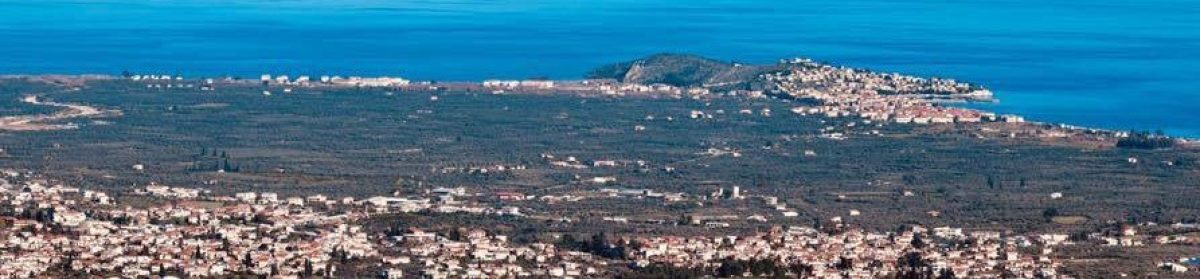
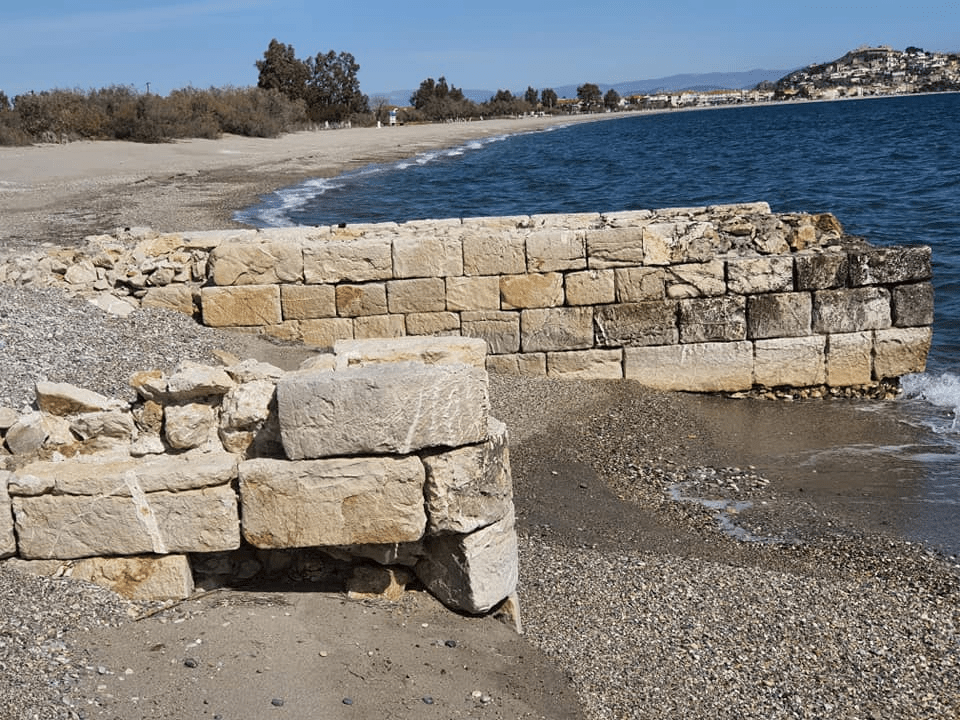


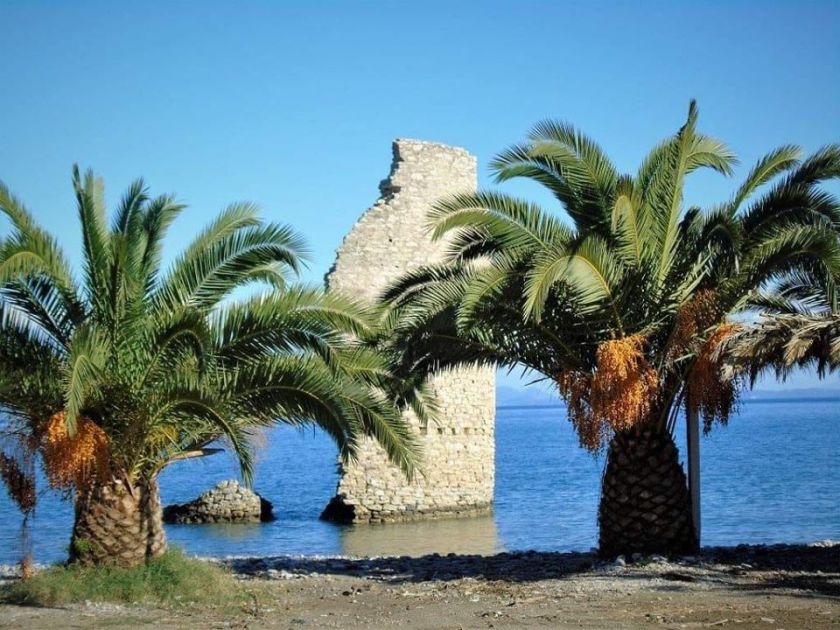

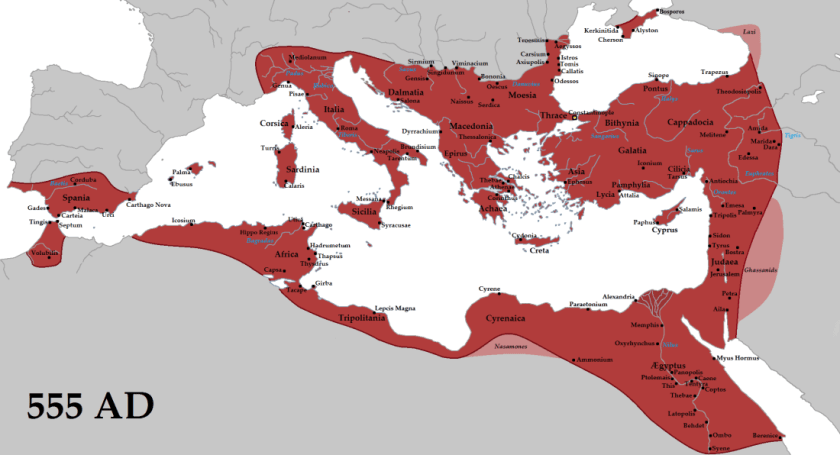
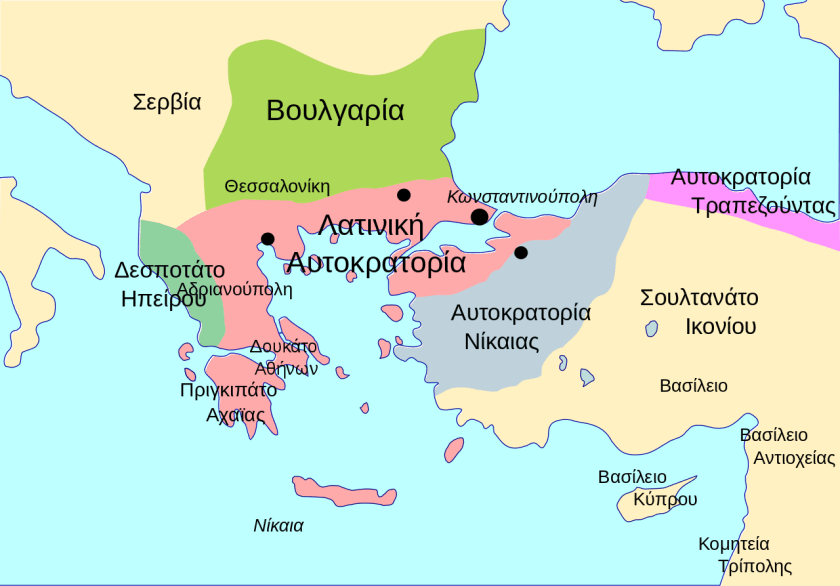


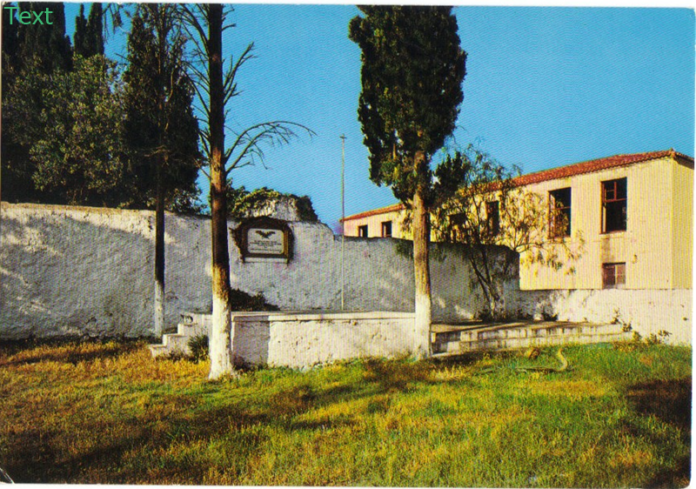
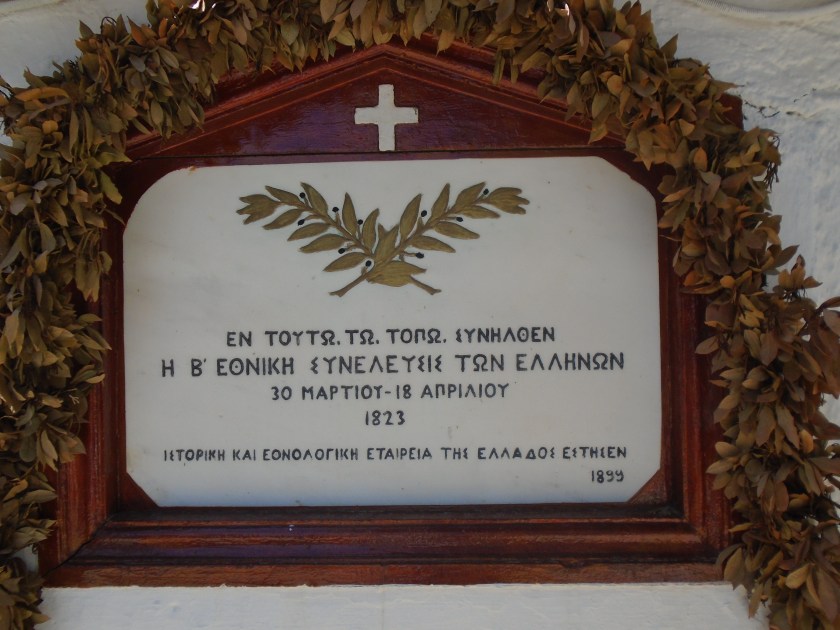


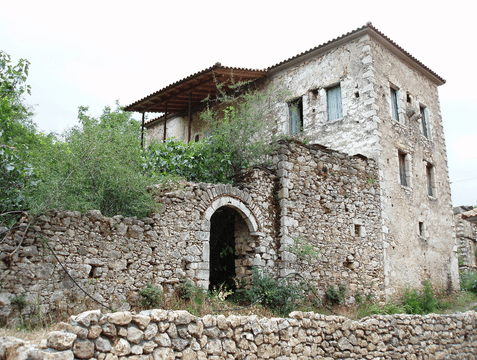


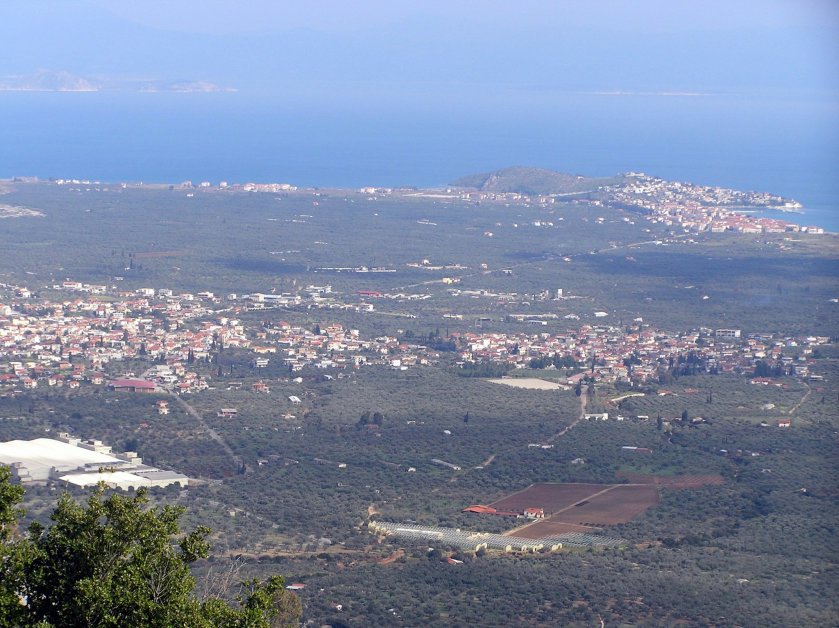
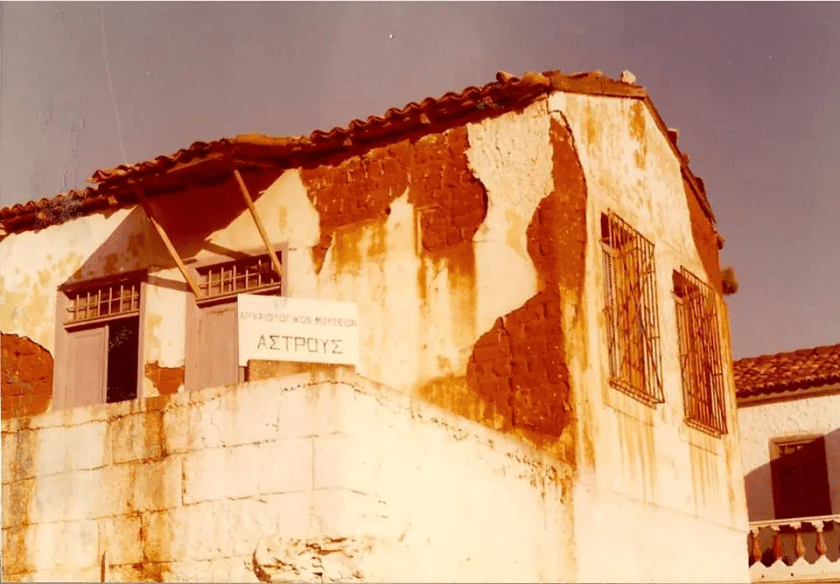
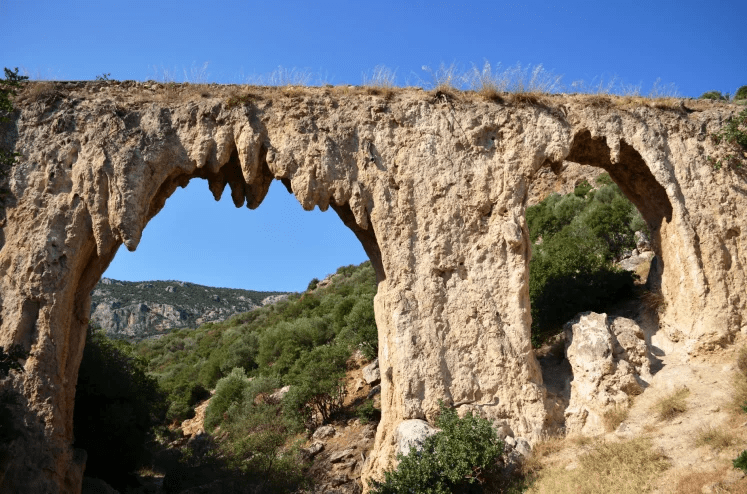

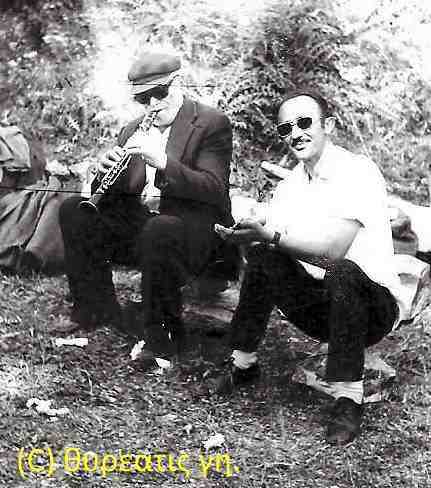
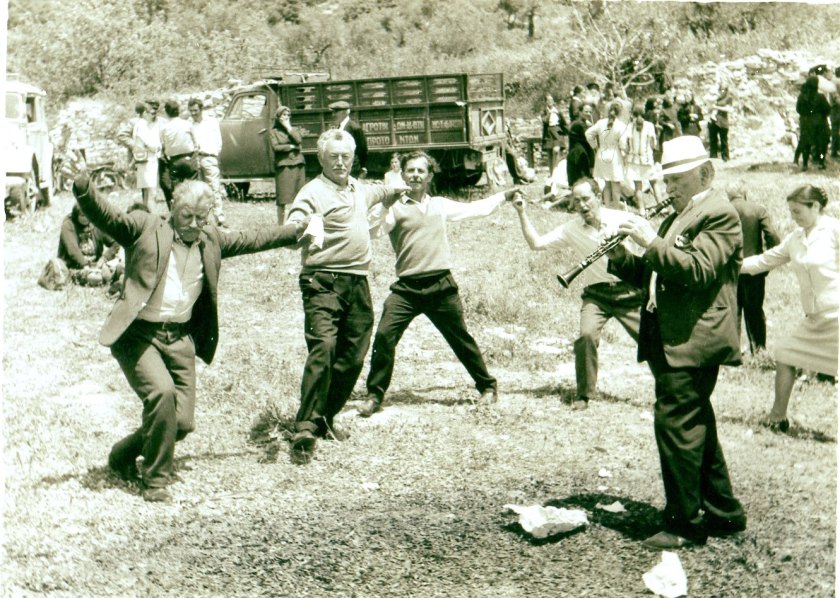


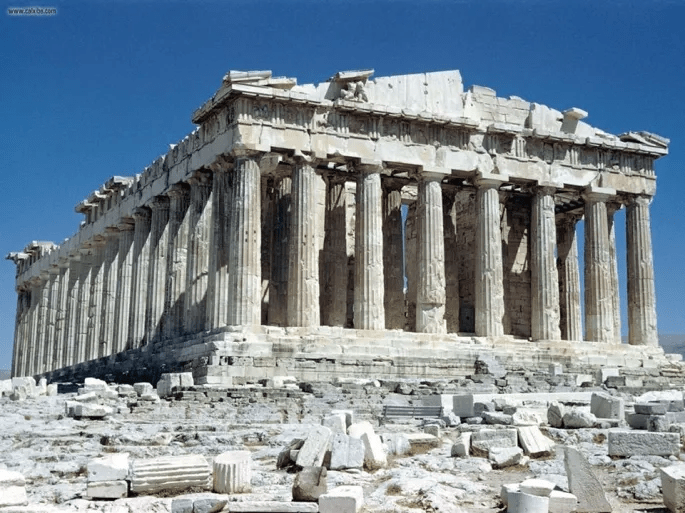


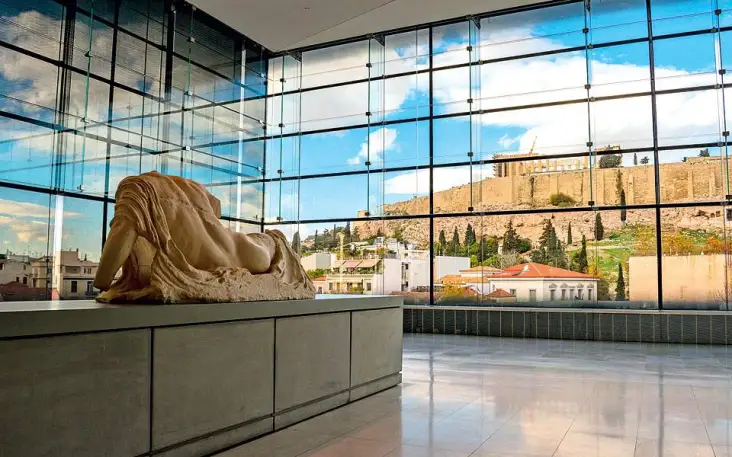

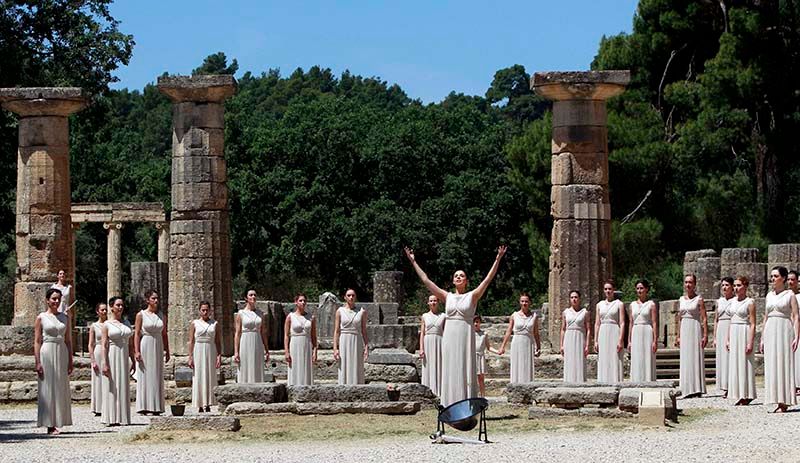


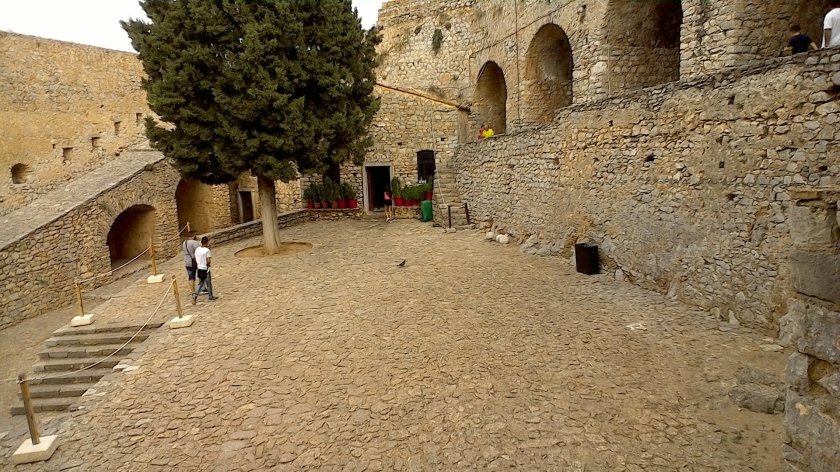


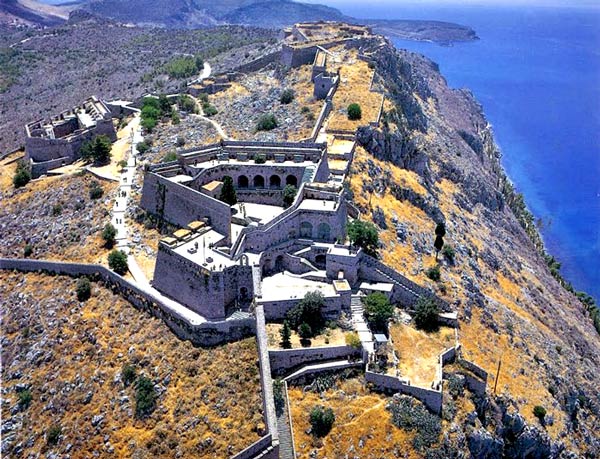

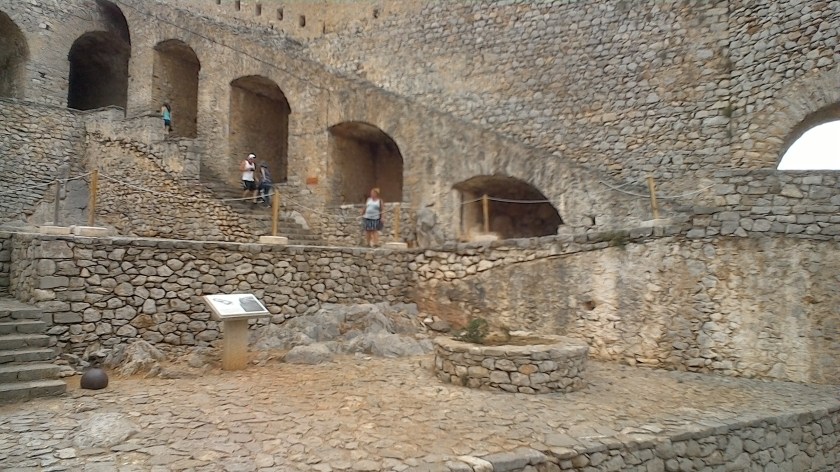
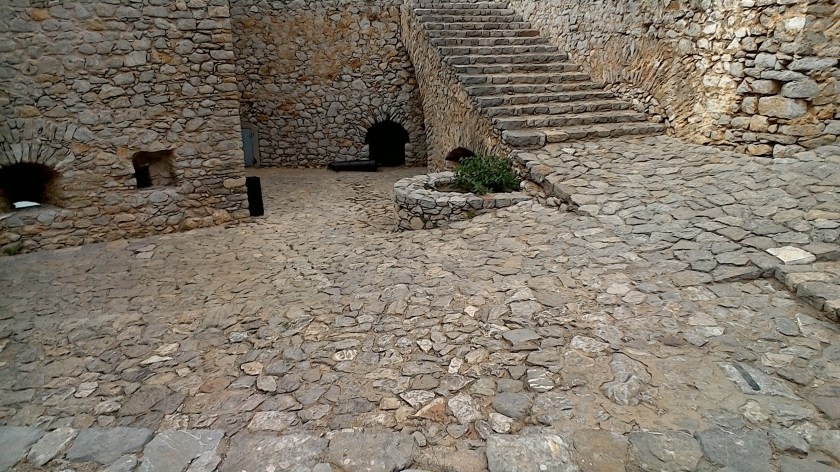


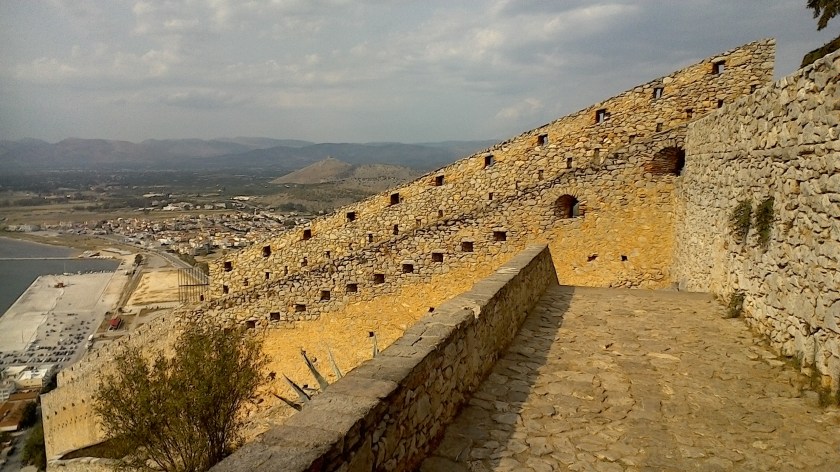


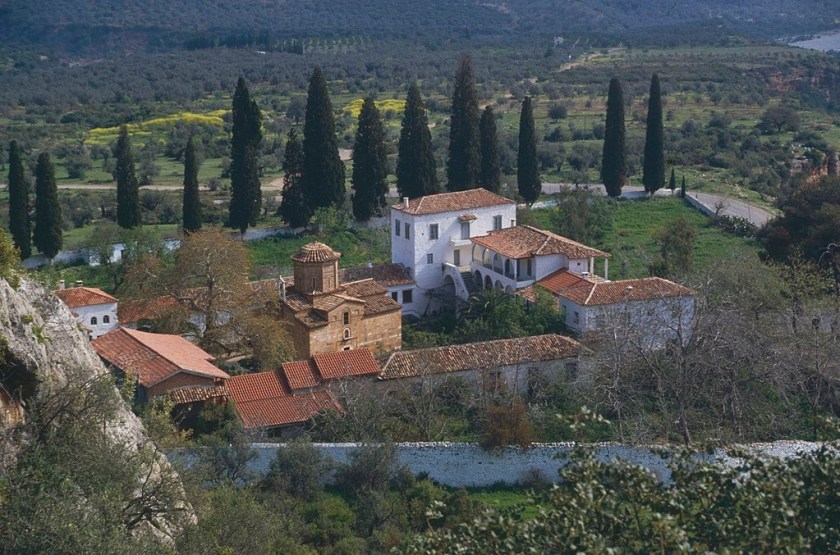

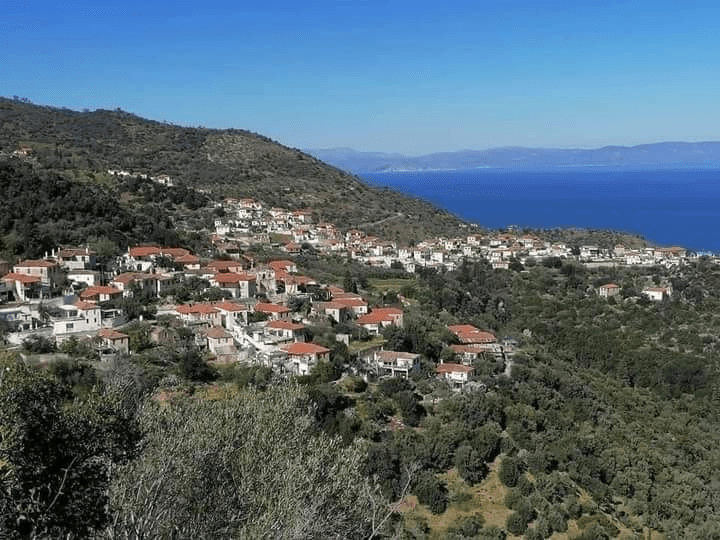


 astrosgr.com - Το Ιστορικόν Άστρος Κυνουρίας