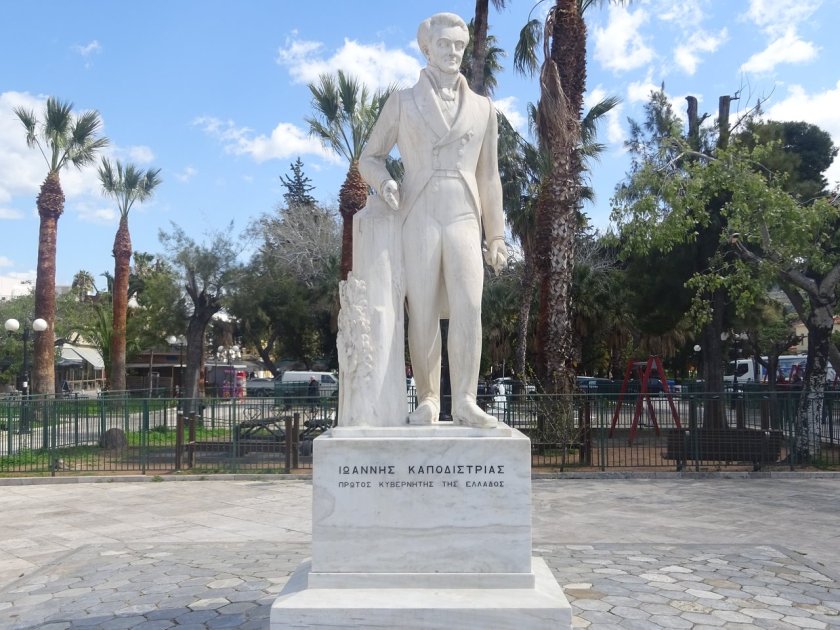
Ioannis Kapodistrias (1776 – 1831) was Minister of Foreign Affairs of the Russian Empire and later the first Governor of the new Greek state (1827-1831).
Nafplio in 1827, after a decision of the National Assembly, became the first capital of Greece until 1834, when Athens became the capital of the State. Nafplio is 33 km away from Astros and is a vast museum with many attractions and historical monuments, we chose some of the excellent website of the municipality of Nafplio. The most important are Kapodistria Square and Palamidi Castle, where the prison of the old man of Moria is located .
I.N. St. Spyridon “One of the darkest pages of modern Greek history unfolded outside the entrance of Agios Spyridon. Here, in the early hours of September 27, 1831, Ioannis Kapodistrias was assassinated by Georgios and Konstantinos Mavromichalis from Mania. “
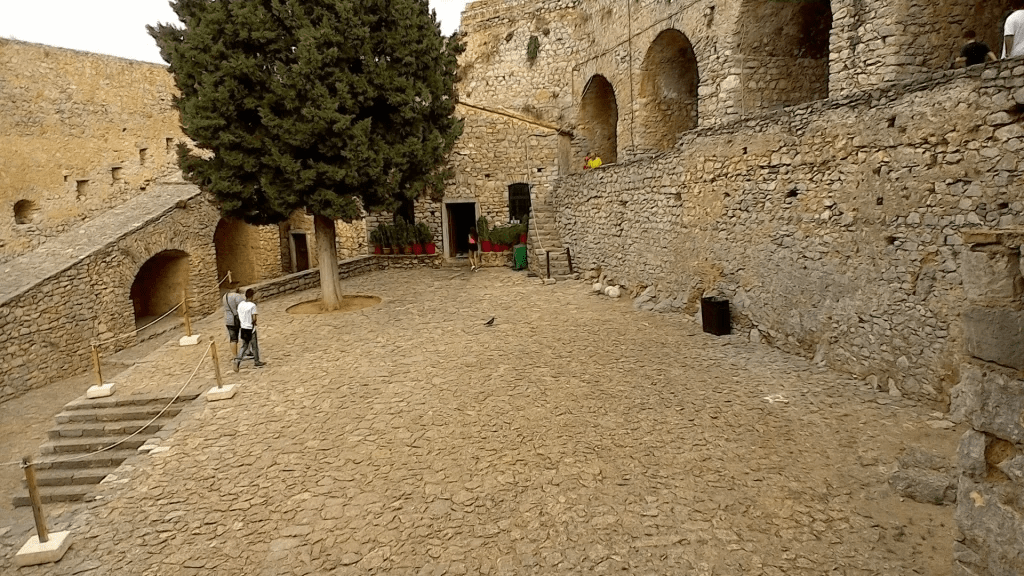
In the castle of Palamidi is the prison of the old man of Moria. In the background on the left is the entrance of the dungeon, which when you go down the stone steps out of emotion and awe catches your breath. The stone steps lead to the place, where with his tsarouchia the iron-clad old man of Moria dug the rock out of his anger for the Kotzabasides.
The cobbled cobbled path in Palamidi outside the prison of Kolokotronis makes us shiver, thinking here walked the old man of Morias chained by the Kontzambasides, who never left our lives, we look at it for a long time and think a lot πίσω church, in the gallery where people in yellow can be seen
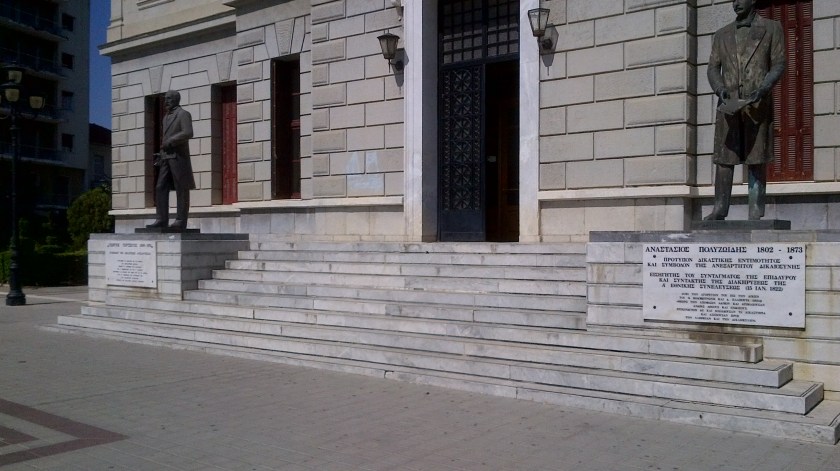
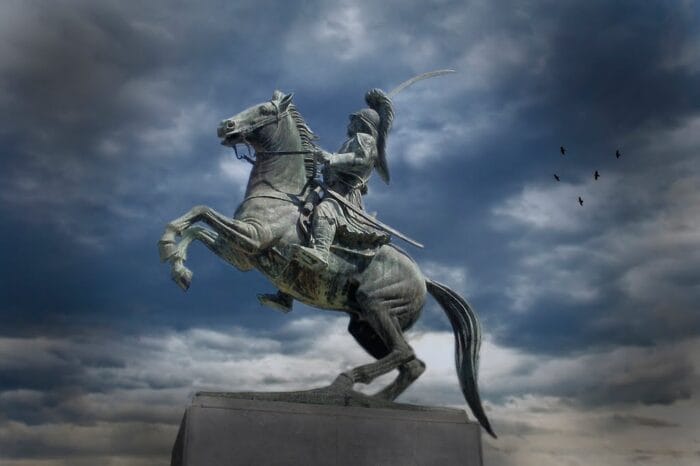
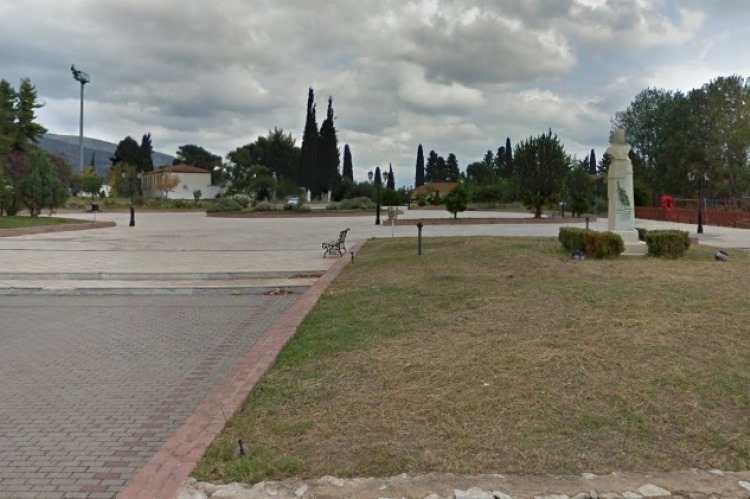
Tripoli is 40 km away from Astros, it is the capital of the prefecture of Arcadia, it is located in the center of the Peloponnese and has a lot to offer. The people of Tripoli boast about their beautiful city and typically add “we have the largest square in Greece” which is Areos square and there is the imposing statue of the old man of Moria. At the edge of the square west and east there are other statues of the heroes of 1821 and north of the courthouse with the statues of the judges who refused to try the old man of Moria Anastasios Polyzoides and Georgios Tertsetis, timeless symbols of the struggle for independent justice.
The entire Areos square, the “largest square in Greece”, belongs exclusively to Theodoros Kolokotronis, period and pavilion. The people of Tripoli deserve the congratulations of all for the incomparable and admirable way they present their subject, “we all bow humbly” to the unique Theodoros Kolokotronis, everything is his and he deserves everything.
Theodoros Kolokotronis in Areos square <not in Kolokotroni square> in Tripoli.
Anastasios Polyzoidis and Georgios Tertsetis: timeless symbols of the struggle for independent justice.
“I CONSIDER THE DECISION UNFAIR AND THEY DISMISSED AN INNOCENT AND GLORIOUS MAN, DANGEROUS AND DISMISSED THE COURTS AND RESPECTED THE TRUTH”
From in ..
There were only two judges who stood up and refused to sentence Theodoros Kolokotronis to death in the much-praised trial of the fighters of the Greek Revolution in Nafplio, in 1834: Anastasios Polyzoides and Georgios Tertsetis.
Anastasios Polyzoidis
From Wikipedia, the free encyclopedia
It is reported that he took part in the First National Assembly of Epidaurus (although this is not confirmed by the Minutes [7]). He was the main author (Alexandros Mavrokordatos also participated) of the Declaration of Independence of Greece, which was included as such in the Provisional Government of Greece, which was also the first constitution of the state “
“In 1832 he was appointed by the Duchy as a member of the five-member court of Nafplio that tried Kolokotronis, Plapoutas and others. Tertsetis then together with the president of the court Anastasios Polyzoidis, knowing very well the innocence of the accused, refused to sign the decision to sentence them to death by beheading for ultimate betrayal.
The spirit of his morals and the values of his humanist are shown by the following excerpt of the speech he delivered during this trial:
“I am not from Sparta, I am not an Athenian, my homeland is all of Greece. This is how the brave Plutarch expresses himself, he is almost two thousand years old, in one of his books. We were born in a happier time, that is, when religion and philosophy enlightened, proclaimed, sealed the doctrine of love and equality, we can say that we are neither from Greece, nor from Italy, nor from Germany, nor from England, our homeland do we have the human race. As much earth as the beautiful ether embraces is our dear homeland.
This move caused their final cessation, imprisonment and brutal abuse by the Regency. “
The democratic Athenians, people of moderation, letters and arts, admired the bravery of the Spartans and that was the message of the Caryatidεs on the Acropolis.
The Athenians, in order to show their respect and admiration for the women of Sparta who raised brave men, who themselves could not do so effectively, placed the Caryatids, women from the Karyes of Sparta, in the Erechtheion next to the virgin. Also to remind the Athenians and more to the Athenians to think and even to imitate the Caryatidεs.
Caryatis are the names of the sculptures that have a female form and are used to support buildings. The word Karyatis in ancient Greek means Daughter of Karyes, a city near Sparta. It is a variation of Kore and is used in architecture instead of columns as a decorative support on gates, facades, cornices, friezes, roofs and so on. The corresponding architectural element that has a male form is called Atlas.
The Caryatidεs in the Erechtheum of the Acropolis belong to the art school of the rich style and artistically influenced the architectural decorative art until the end of the 19th century. We often find elements of imitation in Mannerism, an artistic flow of the 16th century\
Leonidio is 50 km from Astros and on the road after Arkadiko Chorio there are many beaches Arkadiko, Kryoneri, Tyros Beach, Tigani, Lygeria, Livadi, Sampatiki, Thiopavto, Plaka, Poulithra, Fokianos
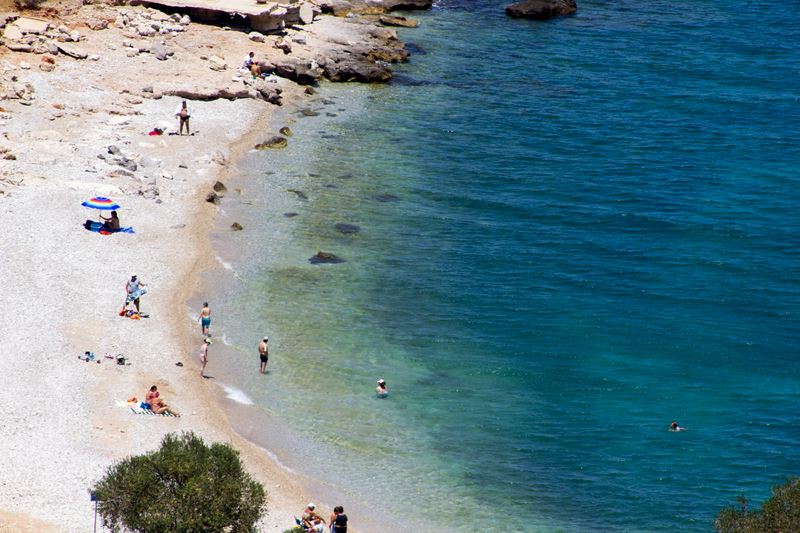
The “sun and the sea”, and the many beaches of the Argolic are enchanting. It is no coincidence that the locals out of admiration for the beaches of the Argolic, briefly let the visitor see with his own eyes and draw his own conclusions, “as you go there” you will see and enjoy the magic of nature… .. We do not need to tell you about the beauty of the Argolic.
This is what our ancestors used to say about the enchanting beach of Sampatiki, which took its name from the admiration of the locals; Next to Sampatiki beach are the also enchanting beaches of Thiopavto and Livadi.
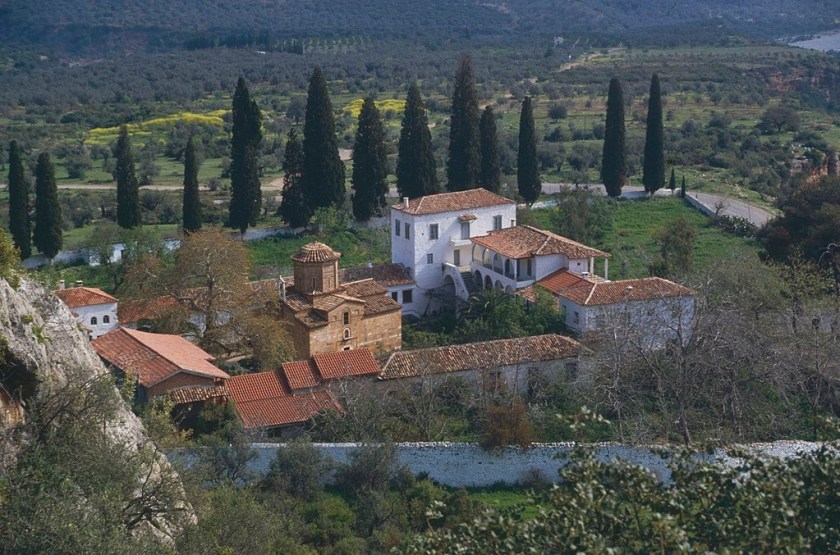
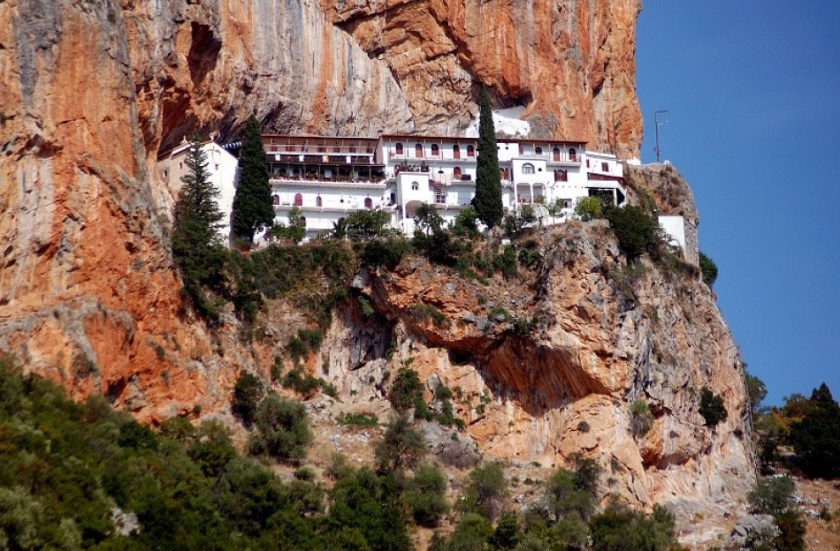
About 8 km from Sampatiki is Leonidio and at a distance of 23 km hung on the rock and in its own way inaccessible, a symbol of Tsakonia, the holy monastery of Elona.
From the Greek Travel Pages
Sampatiki
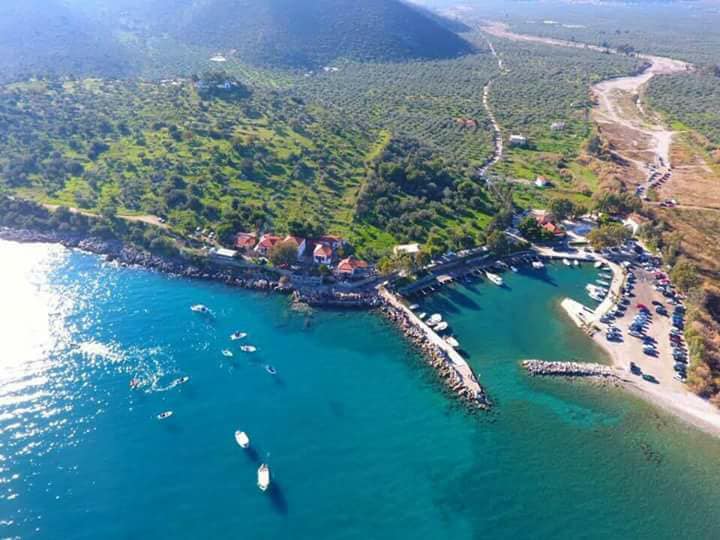
After Tyros on the road to Leonidio is the idyllic bay of Sampatiki on the south side of a small peninsula. With crystal clear waters and beautiful natural environment is probably the most beautiful beach of Arcadia. On the north side is the settlement of Livadi with a large nice beach. Sampatiki and Livadi are old fishing settlements and are inhabited mainly by the inhabitants of the nearby village of Pramatefti.
The beach of Sampatiki with its picturesque port and beautiful small settlement is an attraction for many vacationers in summer. On the beach is the church of Panagia, while in the bay many fishing boats moor. A common and picturesque image is the spreading of nets by fishermen along the beach.
Opposite is the smaller beach of Theopefto. On the other side of the hill, the beach of Livadi continues to the north until it merges with the slope, where there is a small beach of stunning beauty with rocks in the sea. Above on the slopes of the mountains are the villages of Melana and Pramatefti.
Nature is enchanting. In summer the traffic here is lively. In the area there are rooms for rent and taverns with good fish. At a short distance (5 km) is Leonidio.
Thucydides 2.27.1,2] “In the same summer, the Athenians displaced all the inhabitants of Aegina, men, women and children…. They did it out of hatred against the Athenians and because the Aeginians had helped them when the great earthquake had taken place and when the Helots had revolted. Thyreatis land is located on the border of Argeia land and Laconian and reaches the sea. “Some of the Aeginians settled there and the others scattered all over Greece.”
Archaeological Sights and Museums of the Thyreatis Land
We welcome the anniversary events to celebrate the 200th anniversary of the Greek Revolution.
We proposed to our municipality, to all those responsible, to the committee “Greece 2021” and to the common mind, the four issues of the Earth Thyreatis that undoubtedly played a catalytic importance for the organization and success of the liberation struggle. The “camp of the Berbena” played an essential and very important role in the Greek revolution.
Undoubtedly there are many other “self-evident” and well-known that the local communities celebrate and we will also promote them, such as the important battle of the liberation struggle in historic Vervena and historic Doliana.
It is no coincidence that our ancestors “lived for four hundred and so many years in the abomination and resurrection day”. In world history no nation has resisted for four hundred years and finally victoriously drove out the conquerors.
These and many more that we have, are undoubtedly very important for the success of the liberation struggle and the common mind tells us we must always distinguish and promote in local, regional and national space and in the anniversary events to celebrate the 200th anniversary of the Greek Revolution. .
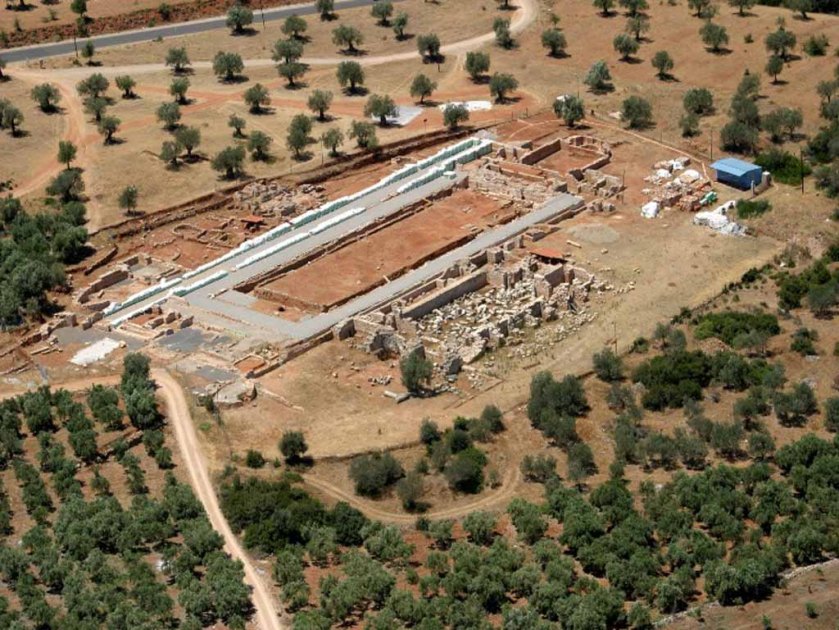
In ancient Bervena in antiquity lived the Bervenians, an Arcadian genus, while the area of today’s village belonged to ancient Arcadia. The oldest relics that have been identified in the area date back to the 2nd millennium BC. and these are stone pickaxes found at Petra. Relics of Artemis from the 9th century BC were found in the place of Panteleimon. until the Hellenistic years. In this place during the 6th c. e.g. an all-marble temple of Doric style was built.
In the revolution of 1821, Vervena played an important role, mainly due to their strategic position. The “camp of the Bervena” was the first organized camp of the struggle, it had about 2,500 fighters (the other three were from Valtetsi, Chrysovitsi and Piana) and one of the most important camps during the first days of the struggle. Here Kolokotronis had set up his headquarters, in the Tower of Augustus, before his attack against the Turks for the conquest of Tripolitsa. The first organized “Tutorial of the Struggle” also operated in historic Vervena, where the military organization, martial arts and military discipline of the spontaneous revolutionary fighters were taught. The Peloponnesian Senate was also stationed in historic Vervena to coordinate the liberation struggle. In the center of the village, is the three-storey vaulted tower-residence of the Darveris family, where the first national printing house sent from Trieste, necessary for the organization of the Greek state, was established during the years of the Revolution. On June 21, 1821, Dimitrios Ypsilantis arrived in Vervena from Odessa, Russia, where he was officially received by the Peloponnesian Senate, which is mentioned on the marble plaque, which was hung in 1920 at the reception point.
All the villages of Thyrea, without exception, helped the revolution. The Proestos and Elders of Prastos, in consultation with Kolokotronis and the people of Verveni, Karabela and Kritiko, established in Vervena the famous “Cellar”, ie the chamber of the Army, to supply Prastos with food to the army, which was attended by many Prastian fighters. Agiopetritis Protestos, Anagnostis Kontakis, writes that: “if it were not for Prastos, who fed the army for 4 months, the struggle for freedom would have been lost”. General caretaker was George Trochanis from Agianniti.
The historic Vervena and the historic Doliana (and the drum of the Turkophagus) are known from the first very important victories in the liberation struggle on May 18, 1821, which at that difficult time filled the rebellious Greeks with the necessary confidence.
The Greeks defeated the Turks in Doliana, with a few men about the Turks under the leadership of the legendary “Turkophagus”. Nikitaras in the battle of Doliana slaughtered many Turks and since then won the nickname of “Turkophagus”.
Kolokotronis mentions in his memoirs: “The horde of Berbens touched them closely. “After weighing near Doliana, the Turks also besieged Nikitas, and so Nikitas and his men came out, and took them down to the plain, hunting.”
At the same time, the Greeks victoriously repulsed the Turks in Vervena and chased them to Doliana, where they joined the men of Nikitaras and continued the pursuit of the Turks as far as Tripoli.
The Turks after their defeat in Vervena and Doliana were permanently closed in Tripolitsa.
The liberation of the nation is not donated but is won on the battlefields with the blood of our heroic ancestors who practically did their patriotic duty. Unfortunately in Dragouni on May 18, 1821, the Turks with the supremacy of the cavalry defeated the Greeks and there the Agiannitis chief Panos Zafeiropoulos Georgakis Digenis and Agiannites fighters were killed. Panos (Akouros) Zafeiropoulos participated in the battle of Vervena.
The battle of historic Vervena and historic Doliana on May 18, 1821 thwarted the dismantling of the Bervena camp and the plan of the Turks. It also boosted the morale of the revolutionaries and paved the way for the fall of Tripoli.
Undoubtedly the “Bervena camp” played a catalytic role in the organization and success of the liberation struggle.It is no exaggeration to say that the liberation of our homeland started from the “camp of the historic Berbena”.
Ο δήμαρχος μας για καθαρά πολιτικούς εντυπωσιασμούς, για αυτό ενδιαφέρεται, δείχνει τα κρυμμένα έγγραφα του 2011 , που αναμφισβήτητα υπάρχουν ευθύνες και περισσότερες το 2015 , αλλά δεν κοιτάει στο καθρέπτη και επίσης κρύβει όλα τα άλλα έγγραφα από το 2011 ,2015 ,2020,2021 και σήμερα. Αυτά θα τα βρει και θα τα αναφέρει ο επόμενος δήμαρχος, για τους δικούς του ίδιους λόγους ,έτσι δουλεύει το σύστημα.
Ας μιλήσουμε λίγο για τα πράσφατα παιχνίδια.
Δεν έχουμε δει όλα τα έγγραφα. θα τα βρούμε και υπάρχουν πολλά…δικαιούμαστε να τα δούμε διοικητικά και νομικά , αλλά θα θυμίσουμε στους συμπολίτες μας ότι γνωρίζουμε από αυτά που έχουμε δεί και από τις συζητήσεις στα καφενεία,τι να κάνουμε αυτά γνωρίζουμε. ‘Εχουμε πρόσφατα ζητήσει θεσμικά απο την ΕΦΑΑΡΚ και το δήμο μας να μας δώσουν μερικά έγγραφα που τα θεωρούμε σημαντικά και θα τα πάρουμε κάποτε.
Παρακάτω είναι ένας κατάλογος με σχετικα έγγραφα.
Απο την ΕΦΑΑΡΚ
Θέμα: Σχετικά με την εκκρεμότητα εκπόνησης νέας μελέτης ελέγχου στατικής επάρκειας του Αρχαιολογικού Μουσείου Άστρους
Σχετ.:1) Η με αρ. πρωτ. ΥΠΠΟΤ/ ΔΑΒΜΜ/91790/2329π.ε./12.01.2011 Υ.Α. έγκρισης της μελέτης άρσης ετοιμορροπίας του Αρχαιολογικού Μουσείου Άστρους (ΑΔΑ: 4Α92Γ-99)
Το με αρ. πρωτ. ΥΠΠΟΑ/ΓΔΑΜΤΕ/ΔΑΒΜΜ/254597/22017/3397/15.09.2016 έγγραφο της ΔΑΒΜΜ (αρ. εισερ.: 301900/180956/3709/19.09.2016)
.
Το με αρ. πρωτ. ΥΠΠΟΑ/ΓΔΑΜΤΕ/ΔΑΒΜΜ/ΤΜΒΜΜ/302550/31214/1760/647/27.07.2018 έγγραφο της ΔΑΒΜΜ.
Το με αρ. πρωτ. ΥΠΠΟΑ/ΓΔΑΠΚ/ΕΦΑΑΡΚ/375217/268751/3365/28.02.2019 έγγραφο της Υπηρεσίας μας σχετικά με την εκκρεμότητα εκπόνησης νέας μελέτης στατικής επάρκειας.
Το με αρ. πρωτ. 4257/22.04.2019 έγγραφο του Δήμου σας για επιτόπια αυτοψία.
Το από 12.09.2019 ενημερωτικό σημείωμα της Υπηρεσίας μας προς τον νέο Δήμαρχο Βόρειας Κυνουρίας
Απο τη ΔΑΒΜΜ
α) Η υπ’ αριθ. πρωτ. ΥΠΠΟΤ/ΔΑΒΜΜ/91790/2329π.ε./12-01-2011 Υ.Α. (ΑΔΑ: 4Α92Γ-99) έγκρισης της μελέτης άρσης ετοιμορροπίας του Αρχαιολογικού Μουσείου Κυνουρίας
β) Το υπ’ αριθ. πρωτ. ΥΠΠΟΑ/ΓΔΑΠΚ/ΕΦΑ ΑΡΚΑΔΙΑΣ/139648/84904/1697/26-04-2016 έγγραφο της ΕΦΑ Αρκαδίας.
γ) Το υπ’ αριθ. πρωτ. ΥΠΠΟΑ/ΓΔΑΜΤΕ/ΔΑΒΜΜ/139665/11280/1873/08-06-2016 έγγραφο της ΔΑΒΜΜ (ΤΟ ΕΧΩ-ΓΚ)
δ) Το υπ’ αριθμ. πρωτ. ΥΠΠΟΑ/ΓΔΑΠΚ/ΕΦΑ ΑΡΚΑΔΙΑΣ/244604/146538/2951/22-07-2016 έγγραφο της ΕΦΑ Αρκαδίας.
ε) Το υπ’ αριθ. πρωτ. ΥΠΠΟΑ/ΓΔΑΜΤΕ/ΔΑΒΜΜ/254597/22017/3397/15-09-2016 έγγραφο της ΔΑΒΜΜ (ΤΟ ΕΧΩ-ΓΚ)
ζ) Το υπ’ αριθμ. πρωτ. ΥΠΠΟΑ/ΓΔΑΠΚ/ΕΦΑ ΑΡΚ/269519/192825/2370/22-06-2018 έγγραφο της ΕΦΑ Αρκαδίας.
η) Το υπ’ αριθ. πρωτ. ΥΠΠΟΑ/ΓΔΑΜΤΕ/ΔΑΒΜΜ/ΤΜΒΜΜ/302550/31214/1760/647/27-07-2018 έγγραφο της ΔΑΒΜΜ (ΤΟ ΕΧΩ-ΓΚ)
στ) Το από 5-11-2020 ερώτημα μέσω ηλεκτρονικού ταχυδρομείου (υπ’ αριθ. πρωτ.
ΥΠΠΟΑ/ΓΔΑΜΤΕ/ΔΑΒΜΜ/ΤΜΒΜΜ/620078/70/5-11-2020) του κ. Γ. Κουρογιώργα
Ας τα πάρουμε σε σειρά για καλύτερη κατανόηση απο τους αναγνώστες μας.
1)Το Μουσείο Άστρους έκλεισε το 2008 με απόφαση του ΥΠΠΟΑ.(έχουνε την απόφαση)
2) Ποτέ το ΥΠΠΟΑ δεν αποφάσισε να κλείσει το Ιερό Χώρο ( τον έκλεισε χωρίς απόφαση αδικαιολόγητα από κουταμάρα και μετά απο δέκα χρόνια και χιλιάδες έγγραφα και αναφορές…… αναίρεσε τις κουταμάρες του,τις αντιφατικές κατασκευασμένες δικαιολογίες του και τον άνοιξε προσωρινά).Δέν έχουμε την απόφαση για το κλείσιμο γιατί δεν υπάρχει απόφαση, το ΥΠΠΟΑ αυθαιρετα έκλεισε το χώρο.
3) Το ΥΠΠΟΑ με την απόφαση του Υπουργού το 2011 και συγκεκριμένους όρους αποφάσισε να ανοίξει το Μουσείο
Η υπ’ αριθ. πρωτ. ΥΠΠΟΤ/ΔΑΒΜΜ/91790/2329π.ε./12-01-2011 Υ.Α. (ΑΔΑ: 4Α92Γ-99) έγκρισης της μελέτης άρσης ετοιμορροπίας του Αρχαιολογικού Μουσείου Κυνουρίας
4) Το 2015 το έργο εγκρίθηκε ουσιαστικά με την παράδοση ,παραλαβή , γιατί έπρεπε να εγκριθεί, από τους αρμόδιους φορείς ,το ΥΠΠΟΑ,τη Περιφέρεια και το Δήμο Βόρειας Κυνουρίας.Τά έγγραφα τα έχει ο δήμος μας και θα τα δούμε κάποτε.
5)Την 22-7-2016 με το έγγραφο Α.Π. ΥΠΠΟΑ/ΓΔΑΠΚ/ΕΦΑ ΑΡΚΑΔΙΑΣ 244604/146538/2951, μεταξύ άλλων αναφέρει “…Οι εγκριθείσες εργασίες ξεκίνησαν τον Απρίλιο του 2014 και ολοκληρώθηκαν το Δεκέμβριο του 2015″….Έπειτα από όλες τις ανωτέρω εγκεκριμένες εργασίες, οι αρχαιότητες επανατοποθετήθηκαν τόσο στην αποθήκη όσο και στο χώρο της έκθεσης. Το Μουσείο είναι έτοιμο να επαναλειτουργήσει αλλά δεν υπάρχει μόνιμο ημερήσιο προσωπικό”….
6)Την 12-01-2017 με το έγγραφο Α.Π. ΥΠΠΟΑ/ΓΔΑΠΚ/ΕΦΑΑΡΚ/1616971/ 30 “Επισημαίνουμε επίσης ότι από τον Δεκέμβριο του 2015 το Μουσείο αποκαταστάθηκε και είναι έτοιμο να λειτουργήσει μετά από την εκτέλεση του έργου επισκευαστικών εργασιών στο κέλυφος του κτηρίου (βλ. το αριθμ.ΥΠΠΟΑ/ΓΔΑΠΚ/ΕΦΑ ΑΡΚΑΔΙΑΣ -301900-180956-3709/15-11-2016 έγγραφο μας )”….
7)Την 17-05-2017 με το έγγραφο Α.Π. ΥΠΠΟA /ΓΔΑΠK /ΕΦΑAΡΚ /147627/93905/ 1341 …“απαιτείται η πρόσληψη μόνιμου φυλακτικού προσωπικού δεδομένου ότι στο Αρχαιολογικό Μουσείο Άστρους εδώ και δύο χρόνια τουλάχιστον, δεν υπηρετεί ούτε ένας μόνιμος ημερήσιος φύλακας”….
8)Την 18-5-2018.…με το έγγραφο Α.Π. ΥΠΠΟA /ΓΔΑΠK /ΕΦΑAΡΚ /218494/158967/1928 …”Η Υπηρεσία μας έχει μεριμνήσει ώστε το Μουσείο να είναι ανοικτό σε συγκεκριμένες περιπτώσεις , διαθέτοντας τακτικό φυλακτικό προσωπικό από το Αρχαιολογικό Μουσείο Τεγέας .Σας επισυνάπτουμε Δελτίο Τύπου με συγκεκριμένες ημερομηνίες κατά τις οποίες το Αρχαιολογικό Μουσείο Άστρους θα είναι ανοικτό κατά τους μήνες Μάιο-Αύγουστο 2018. Τέλος η Εφορεία μας , αναμένει την Προκήρυξη του ΑΣΕΠ για μόνιμο φυλακτικό προσωπικό στο Μουσείο Άστρους”…..
9)Την 20 Ιουνίου 2018 “με την υπ’ αρ. 8Κ/2018 Προκήρυξη του ΑΣΕΠ (ΦΕΚ 19/τ ΑΣΕΠ/20-6-18> ζητείται η πλήρωση μιας μόνιμης θέσης τακτικού ημερήσιου φύλακα αρχαιοτήτων για το Αρχαιολογικό Μουσείο και Χώρους Άστρους.
Αυτά γνωρίζαμε ,αλλά ψάχνοντας πας στη πόλη, βρήκαμε και άλλα κρυμμενα… και θα βρούμε και άλλα.Ας μην τα πολυλογούμε.
γ) Το υπ’ αριθ. πρωτ. ΥΠΠΟΑ/ΓΔΑΜΤΕ/ΔΑΒΜΜ/139665/11280/1873/08-06-2016 έγγραφο της ΔΑΒΜΜ (ΤΟ ΕΧΩ-ΓΚ)
ε) Το υπ’ αριθ. πρωτ. ΥΠΠΟΑ/ΓΔΑΜΤΕ/ΔΑΒΜΜ/254597/22017/3397/15-09-2016 έγγραφο της ΔΑΒΜΜ (ΤΟ ΕΧΩ-ΓΚ)
η) Το υπ’ αριθ. πρωτ. ΥΠΠΟΑ/ΓΔΑΜΤΕ/ΔΑΒΜΜ/ΤΜΒΜΜ/302550/31214/1760/647/27-07-2018 έγγραφο της ΔΑΒΜΜ (ΤΟ ΕΧΩ-ΓΚ)
Στα 4 έγγραφα της ΔΑΒΜΜ μετά την παράδοση και παραλαβή του έργου βρήκαμε τις μελέτες. Στο πρώτο χρονικά έγγραφο της …. /1873/08-06-2016 , εκεί ήταν «μελέτη», επίσης ήταν « η εν λόγω μελέτεη» στο δεύτερο έγγραφο της 3397/15-09-2016 και αργοτερα το 2018 και 2020 έγιναν ξαφνικά «μελέτες», «υπόλοιπες απαιτούμενες μελέτες ¨αυτό χρειάζεται νομική ερμηνεία για να το καταλάβουμε καλύτερα.
Επίσης το σπουδαιότερο πρέπει να βρούμε και τα άλλα έγγραφα και την διαδικασία πως ξεκίνησε η απαίτηση αρχικά για την «μελέτη» και πως και για ποιό λόγο έγιναν αργότερα «υπόλοιπες απαιτούμενες μελέτες».Δεν πιστεύουμε η ΔΑΒΜΜ να είδε κανένα όνειρο για τις μελέτες , κάτι υπάρχει νωρήτερα και δεν το ξέρουμε, αλλα θα το βρούμε.
Τα παρακάτω έγγραφα έχουμε ζητήσει απο τον δήμαρχο μας και άλλα από την ΕΦΑΑΡΚ
1) Το έγγραφο της ΔΑΒΜΜ «το οποίο έχει κοινοποιηθεί στο Δήμο μας από το 2011»
2)Τα έγγραφα παράδοσης και παραλαβής του έργου το 2015
3) Τα έξοδα για το έργο το 2011-2015
4)Τον αριθμό και τα έξοδα για τις μελέτες από το 2008 μέχρι 2021
5)Τα έγγραφα με τις απαιτήσεις της ΕΦΑΑΡΚ για την εκπόνηση των δύο μελετών που έγιναν το 2018 και το 2021 και όλα τα σχετικα έγγραφα με τις δύο αυτές απαιτήσεις και μελέτες.Οι μελέτες έγιναν μετά το έγγραφο του 2016 της ΔΑΒΜΜ και αυτό έχει βαρύνουσα σημασία.
6) Το τελευταίο έγγραφο της υπουργού για να εκπονηθούν οι «απαιτούμενες μελέτες» (η είναι το ιδιο με το έγγραφο της ΔΑΒΜΜ το 2011?) «και αυτό έχει βαρύνουσα σημασία».
Από εδώ και κάτω αρχίζουν τα «παιχνίδια». του ΥΠΠΟΑ και του Δήμου Βόρειας Κυνουρίας
Το ΥΠΠΟΑ περίπου το 2018 ,(2017?) ρώτησε το δήμο να κάνει την μελέτη για το μουσείο , για να το ανοίξει.
Δεν το έχουμε . Θέλουμε να δούμε αυτό το έγγραφο έχει μεγαλη σημασία.
Ο Δημος μας έκανε την μελέτη.
Η από 31.05.2018 διαβίβαση της στατικής μελέτης με τίτλο «Έλεγχος στατικής επάρκειας Αρχαιολογικού Μουσείου Άστρους» από την Τεχνική Υπηρεσία του Δήμου Βόρειας Κυνουρίας στην Υπηρεσία μας
Το ΥΠΠΟΑ πέταξε την μελέτη αυτή στα σκουπίδια.
Το ΥΠΠΟΑ ζήτησε άλλη μελέτη το 2019
Το με αρ. πρωτ. ΥΠΠΟΑ/ΓΔΑΠΚ/ΕΦΑΑΡΚ/375217/268751/3365/28.02.2019 έγγραφο της Υπηρεσίας μας σχετικά με την εκκρεμότητα εκπόνησης νέας μελέτης στατικής επάρκειας
Είχαμε προειδοπειήσει έγκαιρα το δήμαρχο μας να μην τσιμπήσει στην παγίδα του ΥΠΠΟΑ και να ενημερώσει για όλα την τοπική κοινωνία. Ο δήμος διοικητικά και νομικά αποδέχθηκε την πρόταση του ΥΠΠΟΑ. Ευχαριστούμε το κ.Μαρτίνο που έκανε την μελέτη. Νομικά και διοικητικά το ΥΠΠΟΑ υποχρεούται να κάνει την δουλειά του και να ανοίξει το Μουσείο με τις κατάλληλες ενέργειες της μελέτης. Οι Ελληνικές και Ευρωπαικές αρχές αυτό θα απαιτήσουν από το ΥΠΠΟΑ. Να εφαρμόσει και την συμφωνία του 2020-2021.
Το ΥΠΠΟΑ πέταξε για δεύτερη φορά την δεύτερη μελέτη στα σκουπίδια.
Το ΥΠΠΟΑ όταν έλαβε την πρόσφατη «μελέτη» , όχι τις μελέτες, που είχε απαιτήσει νωρήτερα, έψαξε αδικαιολόγητα πίσω στο μακρυνό 2011 και βρήκε τις άλλες «μελέτες».
Δεν ανέφερε τίποτα για την απόφαση και τους όρους του υπουργού το 2011, για την έγριση και παραλαβή του έργου από το ΥΠΠΟΑ ,τη Περιφέρεια και το Δήμο Βόρειας Κυνουρίας το 2015, «το μουσείο είναι έτοιμο να λειτουργήσει» με πολλά έγγραφα του ΥΠΠΟΑ από το 2015 μέχρι το 2018, την απόφαση ,την ανακοίνωση και το άνοιγμα του μουσείου το 2018, και φυσικά ούτε την συμφωνία και την μελέτη που έγινε το 2018 και το 2021. Τα «ξέχασε» να τα αναφέρει έγγραφα και ο δήμαρχος μας, στην πρόσφατη συνάντηση με την υπουργό , ας πούμε από ευγένεια , αφέλεια η κουταμάρα. Δεν είδαμε την αναφορά του δημάρχου στο ΥΠΠΟΑ ,αλλά αν δεν την δούμε , αυτά υποθέτουμε ότι έγιναν, ας μας διαψεύσει ο δήμαρχος θα χαρούμε να δούμε την αναφορά του , μακάρι να έχουμε κάνει λάθος.
«Φτου και από την αρχή» , η συνταγή δουλεύει, το ΥΠΠΟΑ πρόσφατα ζητάει να γίνουν «μελέτες» , διαβάσατε σωστά όχι πια μελέτη «μελέτες»,,,,, πολλές «μελέτες»,,,,και άλλες υπόλοιπες «μελέτες».
Πρόσφατα έχουμε πάλι προειδοποιήσει το δήμαρχο μας.
“Αν θέλουμε να σοβαρευτούμε το ΥΠΠΟΑ έχει επίσης ευθύνες και το ΥΠΠΟΑ πρέπει να κάνει όσες μελέτες θέλει και να ανοίξει το μουσείο, μην τα «χάφτετε» όσες μελέτες και αν κάνετε θα σας απαντήσουν πρέπει να κάνετε και άλλες «μελέτες» …. και άλλες «μελέτες» ….Από ενήλικες απαιτείται στοιχειώδης συντονισμός και αποτελεσματικότητα, μην το κάνετε μόνοι σας , θα αποτύχετε….. “
Συνοπτικά εδώ που φτάσαμε πρέπει η υπουργός να διατάξει τη ΔΑΒΜΜνα αναλάβει να κάνει τις «μελέτες» η ίδια η με την εποπτεία της και την ευθύνη της , αφού απόρριψε τις προηγούμενες απαιτούμενες μελέτες από το ΥΠΠΟΑ ,διαφορετικά η ΔΑΒΜΜ δεν θα εγκρίνει τις άλλες «μελέτες» ποτέ , ας μην κοροϊδευμόμαστε.
Θέλουμε να προτείνουμε δημόσια στο κ. Μαρτίνο να κάνει μόνος του συμφωνία με το ΥΠΠΟΑ ,πριν κάνει το λάθος και χρηματοδοτήσει άλλες «μελέτες», και τον ευχαριστούμε για τις έμπρακτες προσφορές του παρά τις ατέλειωτες φαιδρές γελειότητες του ΥΠΠΟΑ..
Το μουσείο έκλεισε το 2008 με την πρόφαση της ρωγμής γιατί ραγίσανε δύο κεραμίδια, το ΥΠΠΟΑ αποφάσισε να επισκευάσει όλα τα κεραμίδια το 2011 , το έργο εγκρίθηκε και παραδόθηκε το 2015 από το ΥΠΠΟΑ ,τη Περιφέρεια και το Δήμο Βόρειας Κυνουρίας , το ΥΠΠΟΑ άνοιξε το μουσείο το 2018 και πρόσφατα η αρμόδια υπουργός βρήκε στα συρτάρια της τις παγίδες της άλλης πρόφασης και τις ονόμασε ” μελέτες” , για κάθε ενδεχόμενο ατέλειωτες «πολλές μελέτες………»
Ας ξαναδιαβάσουμε την ανακοίνωση του δήμου μας για να καταλάβουμε ότι όλα γίνονται για τις «μελέτες» .
«Πρέπει να κινηθούμε άμεσα για τηνεκπόνησητων υπολοίπωνμελετώνπου εκκρεμούνσύμφωνα με το έγγραφο της ΔιεύθυνσηςΑναστήλωσηςΒυζαντινώνκαι ΜεταβυζαντινώνΜνημείων, τοοποίο έχει κοινοποιηθεί στοΔήμομας από το 2011. Να κερδίσουμε τον χρόνο που χάθηκε την προηγούμενη δεκαετία, να εκπονηθούνοι μελέτεςμέσα στοπρώτοεξάμηνοτου 2022, ώστενα αναζητήσουμεχρηματοδότησηγια τα έργα που απαιτούνται για την επαναλειτουργία του Αρχαιολογικού Μουσείου Άστρους από την νέα προγραμματική περίοδο».Μετά τις «μελέτες» , αν ποτέ εγκριθούν … αν δεν ζητήσει το ΥΠΠΟΑ και άλλες «μελέτες» …»ώστενα αναζητήσουμεχρηματοδότηση…..»
Ερωτούμε τους εαυτούς μας και απορούμε(ποιόν να ρωτήσουμε).
Ποιά είναι η πρόσφατη αναφορά του δήμου στο ΥΠΠΟΑ , σας παρακαλούμε αναρτήσετε την στην ιστοσελιδα του δήμου μας.
Που βρίσκονται τα δύο έγγραφα του ΥΠΠΟΑ για την απαίτηση των δύο τελευταίων μελετών το 2018 και το 2021 , που θα τα βρούμε κρυμμένα.
Κύριε Δήμαρχε σας παρακαλούμε ,αναρτήσετε στην ιστοσελίδα του δήμου την απόφαση της υπουργού ...«για την επαναλειτουργία του Αρχαιολογικού Μουσείου Άστρους»…«για την δέσμευσή της να αναλάβει το Υπουργείο την χρηματοδότηση του έργου. «Το ΥΠΠΟΑ ανέλαβε την χρηματοδότηση του έργου», αυτό είναι πολύ σημαντικό για την τοπική κοινωνία , να δούμε την απόφαση της υπουργού ΜΕ ΜΕΓΑΛΑ ΓΡΑΜΜΑΤΑ.
«Για τηνεκπόνησητων υπολοίπωνμελετών» Πόσες μελέτες πρέπει να κάνουμε, τις μέτρησε ποτέ κανένας ? Πόσα στοίχισαν οι μελέτες αυτές?
Πόσα στοίχισαν όλα τα κεραμίδια το 2015?
«έχει κοινοποιηθεί στοΔήμομας από το 2011» Γιατί το βρήκαμε στα συρτάρια μας σήμερα και δεν ψάχναμε να το βρούμε το 2015 η το 2018? Και το σημαντικότερο γιατί συνεχίζουμε να κρύβουμε σήμερα όλα τα έγγραφα σχετικά με το μουσείο και τα έγγραφα παράδοσης και παραλαβής του έργουτο 2015? Πόσα άλλα κρυμμένα έγγραφα υπάρχουν? Γιατί κρύβουμε την απαίτηση του ΥΠΠΟΑ για την τότε «μελέτη» το 2018 και 2021 , (όχι μελέτες )?
«να εκπονηθούνοι μελέτες» και τι θα γίνει όταν μετά από τις μελέτες που ξέχασε το 2015 , το 2018 . το 2021 , όταν το ΥΠΠΟΑ τις «ξέχασε» και άνοιξε το μουσείο το 2018 και τις βρήκαμε σήμερα… θα βρει αργότερα και «τις άλλες μελέτες» που πιθανόν ξέχασε σήμερα….? Ποιός δουλεύει ποιόν…
Το ΥΠΠΟΑ ,η Περιφέρεια και ο Δήμος Βόρειας Κυνουρίας, που ευθύνονται για το έργο, δεν έβρισκαν «τις μελέτες» δέκα χρόνια…. και τώρα σίγουρα τις βρήκαν , ας μην το χαρακτηρίσουμε εδώ, η τοπική κοινωνία ξέρει τι γίνεται και έχει βγάλλει τα δικά της συμπεράσματα……..έρε κόσμε ….γιατί πέφτουν αστραπές τον Αυγουστο… να βρούμε τις μελέτες είναι μεγάλο έργο….δέκα χρόνια πέρασαν να βρούμε τις μελέτες , αυτό είναι αποτελεσματικότητα του Ελληνικού κράτους στο μεγαλείο της….. και τους πληρώνουμε να βρίσκουν «τις μελέτες», μετά από δέκα χρόνια…
«ώστενα αναζητήσουμεχρηματοδότηση» για να ξαναβρούμε τις μελέτες , από τους κουτόφραγκους, και θα περιμένουμε άλλα διακόσια χρόνια και η υπουργός αποφάσισε, θα δημοσιεύσει και την απόφαση της σύντομα, θα περιμένουμε….. ¨Οπως μας λεέι ο δήμαρχος μας στην ανακοίνωση «Ευχαριστούμε την Υπουργό για την δέσμευσή της να αναλάβει το Υπουργείο την χρηματοδότηση του έργου» αυτό είναι χρηματοδότηση , μετά από διακόσια χρόνια , αν δεν αλλάξει η αρμόδια υπουργός την γνώμη της μέχρι τότε , αν δεν έχει πάρει σύνταξη από τον Ελληνικό λαό….. αν έχουν χρήματα οι κουτόφραγκοι… αν έχει βρει τις άλλες μελέτες , τότε θα «αναλάβει» την χρηματοδότηση μετά από διακόσια χρόνια , ας βγάλουμε και τις φωτογραφίες διακόσια χρόνια νωρήτερα.
Ήρθε καιρός να σοβαρευτούμε , να ωριμάσουμε «βίαια» και να ενηλικιωθούμε «βιαιότερα».
΄Έχουμε επισημάνει έγκαιρα πριν ένα χρόνο.«Δυστυχώς συνεχίζουμε το ίδιο βιολί. Κάναμε την πρόφαση της ρωγμής “πρόφασητηςστατικότητας”,o Λουφολιάς έλεγε σωστά σε παρόμοιες περιπτώσεις .
The majestic church of Agios Ioannis Prodromos in Agiannis was renovated and became a patriarchal exarchate in 1638. Plenty of icy water springs just below the church of Agios Ioannis Prodromos in Agiannis. Just as the water flows through five canals, one is very low, as if the water seems to be coming through the church.
We welcome the anniversary events to celebrate the 200th anniversary of the Greek Revolution.
It is no coincidence that our ancestors “lived for four hundred and so many years in the abomination and resurrection day”. No nation in world history has resisted for four hundred years and finally victoriously drove out the conquerors.
Agios Ioannis (Agiannis) of Kynouria, was the capital of the Greek state in 1822 and offered many and important things in the revolution of 1821.
Astros and Agios Ioannis (Agiannis) were for at least eight hundred years and from the first organization of the Greek state administratively a community, as today, and most importantly the inhabitants of Agiannites and Astrinos are the same inhabitants, they had and still have houses in Agianni and Astros. For many centuries before the revolution of 1821 in different reports and maps the two settlements Astros and Agiannis are mixed, Astros refers to Astros, becomes Agiannis, Kalivia Astros, Agiannitika huts and Agiannis refers to Agiannis, becomes Astros, Astros and Agiannis of Astros. It seems that Astros started from the xerokambi and the castle of Oria, Estella, which is located near Agiannis until the castle of Paralio Astros or also Estellas, and its core was the inhabitants of Agiannis and today’s Astros. Astros and Paralio Astros came from the village of Agios Ioannis, as well as other settlements. Let us remember what Thucydides told us, “the inhabitants are the states”, the cities and the castles are not states.
The Municipality of Thyreas, based in the settlement of Agios Ioannis, was established by a decree of 9 (21st) November 1834/12 May 1835, Government Gazette 16A – 24/05/1835 In 1841 the settlement of Astros is defined as the winter seat of the municipality and the settlement of Agios Ioannis is defined as the summer seat of the municipality, Government Gazette 5A – 08/03/1841. The settlement of Paralio Astros is annexed to the municipality of Thyreas Government Gazette 32A – 08/12/1845 and the settlement is detached from the municipality of Thyreas and is designated as the seat of the community of Paralio Astros Government Gazette 252A – 24/08/1912.
Agios Ioannis (Agiannis) in 1845 is defined as the summer seat of the province of Kynouria, initially the winter seat of the province of Kynouria was Prastos and later Leonidio.
In 1912, the old Municipal system of 1834 was abolished and the communities were established. The following communities emerged from the Municipality of Thyreas: Astros, Vervena, Xiropigadou, Paralio Astros, Meligos, Platanos and Haradros. From 1912 the settlement of Astros was the seat of the community of Astros seat of the community. Government Gazette 250A – 18/07/1915). For historical reasons, Astros evolved into the Municipality of Astros in 1985. Since 1997, Astros has been the seat of the Municipality of North Kynouria.
The first official mention of the city with the name “Astros” is found in a gold bull of the year 1293. Saint John of Arcadia is mentioned for the first time in 1435 in the Chronicle of the Fall of George Sfrantzis and probably took its name from the church of St. John the Baptist , located at the bottom of the village. From the Patriarchal sigil of the year 1719, the patriarchal and Stavropegian privilege of the Loukous Monastery is renewed. This document mentions Agios Ioannis as a village near Loukous. In addition, he mentions that in 1550, the Loukous Monastery was completely renovated with the help of 6 Agianni furriers, who lived in Constantinople.
The people of Agianni never really surrendered to the conquerors and as a proof of their way they managed to keep their schools open throughout the Turkish yoke and kept the flame of the nation hidden and openly lit.
The majestic church of Prodromos in Agiannis was renovated and became a patriarchal exarchate in 1638. A very important document of that time is a sigil of 1638. According to this document “the country of Agios Ioannis is declared a crossroads after the church of the same name” and was defined < In the church of Agios Ioannis, the church of Agios Vassilios is subject to the village >>. This proclamation was mediated by Agiannite merchants living in Constantinople.
From the same sigil of 1638 we are informed that Agiannis became a patriarchal exarchate “for the sake of course of the School of Agios Ioannis, operating much older”. According to this passage, a school operated in Agios Ioannis, long before 1638. In Agios Ioannis, there were also “inferior” schools, such as that of Papakiand secret schools, first in the Metochi of the Monastery of Loukous, Agios Dimitrios and later in the narthexes of the churches of the village.
In 1715, the inhabitants of Agios Ioannis “Nafplio” were allowed to establish a school, which is certainly Agios Ioannis of Arcadia, since during the Venetian occupation, the village belonged ecclesiastically and administratively to Nafplio. This school was “higher” and was called the School of St. John. This school was a forerunner of the historical Karytsiotis School.
In 1765, a school was founded in the church of Agios Dimitrios, part of the Loukous Monastery in Arcadia.
Our great benefactor Dimitrios Karytsiotis <1741-1819> was born in Agios Ioannis <Agiannis> and according to the tradition of Agianniti, he left “with a tsarouchi”. and in 1805 he built in Astros the branch of the School of Agios Ioannis. The school building in Astros now houses the keyed Archaeological Museum of Astros. The school of Karytsioti, operated during the years 1798 – 1826 and gained a great reputation, as students from various parts of Greece gathered.
When Ibrahim in 1826 burned down our homeland and the Karytsiotis school in Koutri in Agiannis, also then there was no state and our politicians were forced to run to the mountains to be saved. Our ancestors, the people of toil and everyday life, did not bend or surrender. They did what they could in the ashes to say in their own way the state is here, as they still offered their homes to be used for schools, after the school in its place had burned down.
“According to the historian Nikolaos I. Floudas, who saved the relevant Agianniti tradition, after the burning of the Karytsiotis School by Ibrahim Pasha, the students were taught in the basement of this mansion (there was a preacher Ioannis Mattheos today under a crypt that reached the neighboring house of Ioannis An. Vlachakis, had at its ends turakia (stone seats), where students were taught) as well as the neighboring mansion of Fourliga (Grigoriou Kourogiorgas).
“The mansion of the Kourogiorgas – Fourliga family in Agios Ioannis. It is located in the place “Elagos – Agios Vassilios”, near the source Soulinari. A lower school of the village was housed here during the Turkish occupation.
The mansion of Agiannitis prostos Ioannis Mattheos today Kourogiorga – Kapila. In the basements and in the crypt of this house, the students of the lower school (housed in the neighboring house of Fourliga) were taught during the invasion of Ibrahim in 1826 “.
“In 1829 in the village there was a Mutual School with about 150 students. In 1867 the so-called “Old School” was built.
In the period 1960 – 1965 a new Primary School was erected In 1867 the so-called “Old School” was built in the neighborhood of Soulinari.
The people of Agianni and Astrin “squid” realized very early, at least 500 years ago, that schools and “letters” were the only way to “change the lives of their children” and gave everything even today to schools and letters.
From the beginning of the revolution in 1821 there were discussions between the protestors and the chiefs to become a government of the Greek revolutionaries that would be based in Agianni. Eventually the Karytsioti school played a primary and decisive role in making Agiannis the capital of revolutionary Greece from August 15 to October 1, 1822. The “government” located very close to the Karytsiotis school of Agiannis was the seat of government. The loopholes under the windows of the building can be seen. Later in 1825 it was also unsuccessfully proposed that Agiannis become the seat of the Greek government again.
Panos (Akouros) Zafeiropoulos, is one of the most important, or rather the most important Agiannitis before the revolution of 1821 and his contribution to the Thyratida Earth and the homeland is incalculable and passed in the fine print of history, is not mentioned in the history books is strangely unknown for its great offers in our country.
The mansion of Zafeiropouloi in Agios Ioannis is located very close below the school Karytsiotis of Agiannis and above the spring Soulinari. Here Akouros saved and temporarily transported the smoked 1500 books of the Karytsiotis school, before transferring them for better protection to the castle of Paralio Astros.
At the beginning of July 1826, the military corps of Panos Zafeiropoulos slaughtered 400 Arabs in an ambush set up by Mehmet aga of Tripoli. This was a very heavy blow to the Ottomans. That is why Ibrahim Pasha completely destroyed Agios Ioannis and the whole province of Agios Petros ” Ibrahim slaughtered and burned the entire Peloponnese, but was never able to defeat Akuros, although he had temporarily captured him, not even on August 5 and 6, 1826 at the castle of Paralio AstroSomeone had to resist and it is our great honor, that was Panagiotis Zafeiropoulos from Agiannitis (Akouros).
From the burning of the Karytsiotis School in Agiannis, 1500 books were saved, which were kept in 1827 in the house of the Zafeiropouloi (Castle of Paralio Astros). These books were, according to tradition, placed in an old wooden library located in the offices of the School. Many of these books have been saved and recorded today. These books were mostly texts of ancient philosophers and writers, ecclesiastical texts, textbooks of physics, mathematics, etc. “
The historic Agios Ioannis (Agiannis) of Kynouria, was the capital of the Greek state in 1822.
The villages of Parnonas were Christianized around the 9th century and out of excessive respect many added the word Agios to their name, such as Agios Ioannis, Agios Petros, Agios Nikolaos, Agios Andreas, Agios Basilios, agioi Asomatoi,Agios Panteleimonas, Agia Sofia,Agios Georgios,Kosmas and filled the place with churches and monasteries. For this reason Parnonas was named and the “Mount Athos” of Southern Greece.
It is indicative in Agiannis, in Prastos and in all the mountain villages there were many churches.
Agios Ioannis (Agiannis) before the revolution of 1821 had a total of 16 churches along with the chapels around the village, this says something about the respect of the inhabitants and the prosperity of the village for many years.
The population of Prastos in medieval times amounted to 9,000 inhabitants and Prastos then had 9 parishes, 30 churches. Monasteries
From the “Mount Parnon and Moustos Wetland Management Agency, 2015. Guide for the protected area of Mount Parnon and Moustos Wetland. Nature, Culture, Ecotourism. Astros of Arcadia
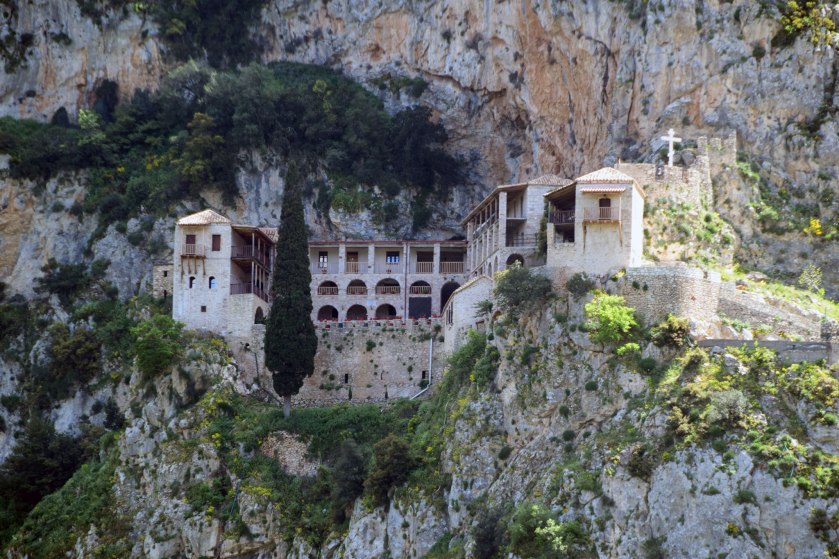
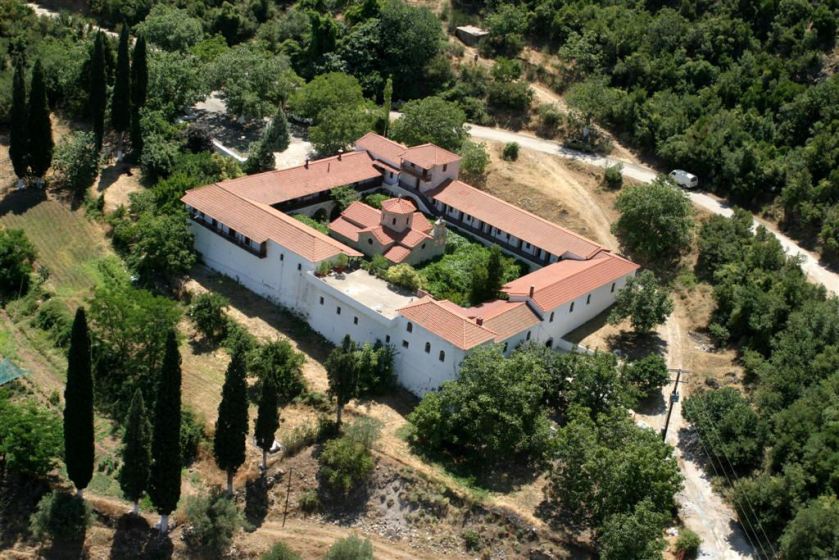
Dozens of monasteries of Parnonas, sometimes rooted in steep cliffs, roots of the faith and soul of Christianity and sometimes on hills, ascension to the uncle and the dream. Founded for many centuries, they are a complex part of the history of the place, high examples of architecture, places of mental euphoria and rejoicing, paths of redemption and hope.
The mountain of Parnon was named “Second Mount Athos” or “Mount Athos of Southern Greece”, because it was inhabited during the reign of Constantine Pogonatos (668-685 AD) by Christianized inhabitants from Mount Athos, but also because no other Greek mountain presents such a large concentration of monasteries. The Christian presence on Mount Parnon up to its coastal shores is uninterrupted from the early Christian years (4th-7th century AD). This is confirmed by Christian archeological finds located in the wider area of Thyrea. From the descent of the Slavs and then in the region follow the so-called “dark times”. Despite the devastation caused by the Avar Slavic invasion, the Greek population did not perish, while according to findings it flourished again in the 11th century. This is evidenced by the architectural sculptural members that are exhibited in the hall of the Library of Vourvourou. Remains of the Paleolithic Period are preserved on Parnonas (late Byzantine years) as well as findings that reveal a building boom in the early Ottoman years (1600 AD). Some of the monasteries in the wider area of Parnon, both in Arcadia and in Laconia are presented in the following pages.
From Astros.
Nearby are the monasteries of Loukous (4 km) Palaiopanagia (5 km), Agia Triada (15 km) Malevi (26 km), Timiou Prodromou (36 km) Orthokostas (19 km), Elonas (63 km) in Leonidio , the church of Agia Theodora (94km) in Vasta near Megalopolis and Mystras (88km).
Of particular interest is the church of Agios Ioannis Prodromos in Agiannis. The abundant icy water of the spring Prodromos flows through five canals, one is very low just below the church, as if the water seems to come through the church. Also the hagiographies of Agios Georgios in Agiannis, which were destroyed by Ibrahim in 1826 (17km).
Church of Agios Ioannis the Forerunner in Agiannis Kynourias
See the links below for detail posting for each topic
Ο “Χερουβικός Ύμνος” όπως ακουγόταν στην ΑΓΙΑ ΣΟΦΙΑ μέχρι το 1453 – YouTube ΨΑΛΜΩΔΙΕΣ ΣΤΗΝ ΑΓΙΑ ΣΟΦΙΑ- Έτσι ακούγονταν 1500 χρόνια πριν – YouTube astrosgr.com/en / John Koutogiorgas Back to Monasteries and Churches Back to astrosgr.com/en /Dedicated to Thyreatis Land
Church of Agios Ioannis the Forerunner in Agiannis Agiannis was the capital of Greece of the Provisional Government of the Revolution, from August 15 to October 1 and “the neighborhood of Soulinari was the metropolis of Agiannis”, as our fellow citizen Giannis D. Kourbelis tells us. The village had a total of 16 churches along with … Continue reading“Parnonas: the “Mount Athos” of Southern Greece”
From the “Mount Parnon and Moustos Wetland Management Agency, 2015. Guide for the protected area of Mount Parnon and Moustos Wetland. Nature, Culture, Ecotourism. Astros of Arcadia Loukous Monastery is one of the most important living monasteries in Arcadia. It is located on the road between Astros and Kato Doliana and is 4 km away … Continue reading“Holy Monastery of Loukous”
From the “Mount Parnon and Moustos Wetland Management Agency, 2015. Guide for the protected area of Mount Parnon and Moustos Wetland. Nature, Culture, Ecotourism. Astros of Arcadia Parnonas: The current monastery of Paleopanagia, is located in a verdant ravine, 7 km from Astros. There was a Byzantine monastery perhaps in another place, honored in … Continue reading“Holy Monastery of the Assumption of the Virgin Paleopanagia”
From the “Mount Parnon and Moustos Wetland Management Agency, 2015. Guide for the protected area of Mount Parnon and Moustos Wetland. Nature, Culture, Ecotourism. Astros of Arcadia Parnonas: The monastery of Malevi is one of the most famous in Arcadia. Built on the slopes of Mount Parnon, at an altitude of 950 m., It is … Continue reading“Holy Monastery of the Assumption of the Virgin Malevi”
From the “Mount Parnon and Moustos Wetland Management Agency, 2015. Guide for the protected area of Mount Parnon and Moustos Wetland. Nature, Culture, Ecotourism. Astros of Arcadia Parnonas: Near the village of Perdikovrisi, in the gorge of the river Tanos, is the monastery of Timios Prodromos. It is built on a steep rock, in … Continue reading“Holy Monastery of Timios Prodromos, Perdikovrisi”
From the “Mount Parnon and Moustos Wetland Management Agency, 2015. Guide for the protected area of Mount Parnon and Moustos Wetland. Nature, Culture, Ecotourism. Astros of Arcadia Parnonas The monastery of Artokosta or Orthokostas, is the “King Monastery” of Kynouria, with its traditional form preserved. It is located on a verdant slope and among … Continue reading“Monastery of Panagia Artokostas”
From the “Mount Parnon and Moustos Wetland Management Agency, 2015. Guide for the protected area of Mount Parnon and Moustos Wetland. Nature, Culture, Ecotourism. Astros of Arcadia Parnonas The monastery is located in a wooded forest area, between chestnuts and firs, 12 km from the settlement of Kastantitsa to Stravotrachi. Today the repaired katholikon … Continue reading“Agios Nikolaos-Panteleimon Kontolinas Kastanitsa”
From “Astros” at a distance of about 67 km is the holy monastery of Elona, which as a symbol of Tsakonia is hung and inaccessible on the red rock. In the route of Astros Leonidi there are many enchanting beaches that “the sun and the sea of the Argolic” are in their grandeur. From Astros … Continue reading“The Holy Monastery of Panagia Eloni or Elona”
The villages of Parnonas were Christianized around the 9th century and out of excessive respect many added the word Agios to their name, such as Agios Ioannis, Agios Petros, Agios Nikolaos, Agios Andreas, Agios Vassilios, Agioi Asomatoi, Agios Paneos Agios , Kosmas and filled the place with churches and monasteries. They also called many sites […]
The majestic church of Agios Ioannis Prodromos in Agiannis. Plenty of icy water springs just below the church of Agios Ioannis Prodromos in Agiannis. Just as the water flows through five canals, one is very low, as if the water seems to be coming through the church. In the 1960s Easter in Agiannis was a […]
Church of Agios Ioannis the Forerunner in Agiannis Agiannis was the capital of Greece of the Provisional Government of the Revolution, from August 15 to October 1 and “the neighborhood of Soulinari was the metropolis of Agiannis”, as our fellow citizen Giannis D. Kourbelis tells us. The village had a total of 16 churches along with … Continue reading“Parnonas: the “Mount Athos” of Southern Greece”
From the “Mount Parnon and Moustos Wetland Management Agency, 2015. Guide for the protected area of Mount Parnon and Moustos Wetland. Nature, Culture, Ecotourism. Astros of Arcadia “.
“The enchanting and brilliant Parnonas, beautiful and diamond beaches, fishing villages and spas, the picturesque villages of Parnonas with their unique physiognomy, identity and architecture, the mythology, the dozens of archeological sites, the rich history, the inexhaustible folklore, the inexhaustible monuments, monasteries and hermitages, Tsakonia, the flora of the area with rare medicinal and aromatic plants, the interesting fauna, the wetland of Moustos, amazing gorges and plateaus, Dini, caves, threshing floors, wells, stone bridges, waterways , castles, prisons, towers and tower houses, inns, lime kilns, olive presses, flax, traditional ovens, dry stones, flocks and herds, old paths, earth festivals, festivals, “encounters” and so many other “treasures” of able to enchant and win over even the most demanding visitor. “With the main feature of the area being the ‘encounter’ of the beautiful mountain with the sparkling sea, the Municipality of North Kynouria invites its visitors on a magical journey.”
Before the recent health crisis in 2019, thirty-four million visitors came to our country and the number is increasing every year. We had a 62% increase in ten years (in 2010 it was 21 million, in 2006 it was 14 million). Most of us visit for our rich history and basically to enjoy the “sun and the sea in the Aegean islands” and to see our most important archeological sites.
The Most Important Archaeological Sites and Museums in our country are:
Undoubtedly there are many other places, which we will mention later.
In the ancient Greek world “the center of the world” was Delphi. The historic Astros of Kynouria is not the center of the world, but it is close to everything. From Astros you can make day trips to the most important archeological sites we have in our homeland, which one day we must all visit to get to know the ancient Greek world.
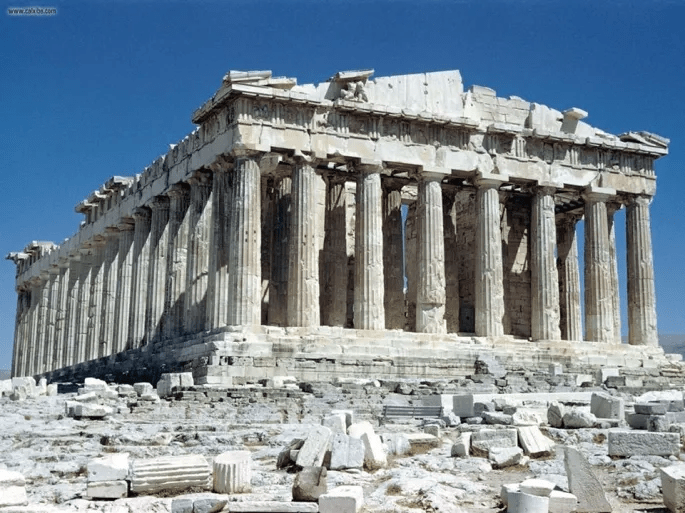
Personally, every year I visit “the three most important wonders of our homeland”, the prison of Kolokotronis in Palamidi (Nafplio), the Parthenon and the Argolikos in Astros on the beach “portes”….
Important Archaeological Sites and Museums for day trips, distances from Astros.
1) Nafplio 33 km, Palamidi and Bourtzi 33 km, Epidavros 70 km
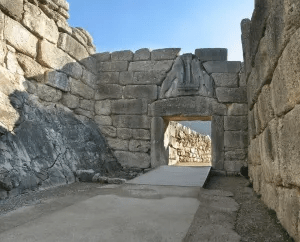
2) Argos 34 km ,, Tiryns 33 km. Mycenae 43 km, Corinth 93 km, Loutraki 100 km
3) Arkadiko Chorio 15 km, Leonidio 48 km, Holy Monastery of Panagia Elonas 65km
4) Tripoli- Kalamata – Koroni 155 km Methoni 186 km,, – Navarino- Pyrgos, Ancient Olympia <no crown 170 km, <from Koroni 306 km> The church of Agia Theodora in Vasta (93 km).
5) Tripoli – Sparta 82 km, Mystras 88 km, Monemvasia 170,
6) Patras from Corinth 219 km (and from Tripoli-Olympia 296 km),
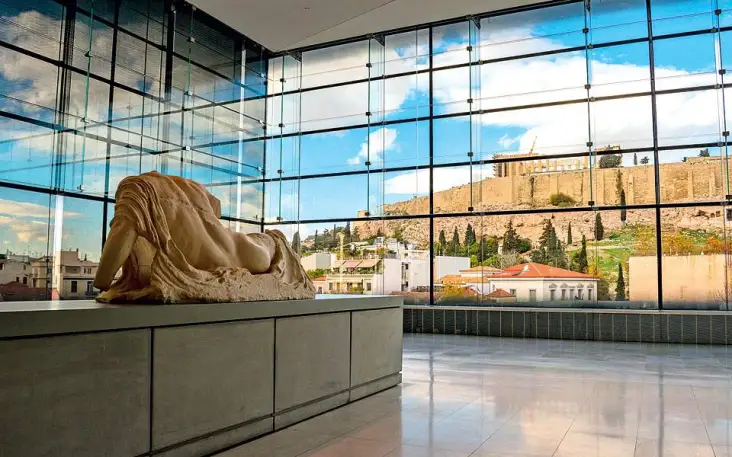
7) Athens 170 km <Parthenon, Acropolis and the Acropolis Museum>
8) Delphi, the center of the ancient Greek world <288 km>
Archaeological Sights and Museums of the Thyreatis Land
The Argolic has enchanting beaches and the “sun and the sea” of the Argolic is charming, whoever comes once after comes constantly.
“With the main feature of the area the” meeting “of the beautiful mountain with the sparkling sea, the Municipality of North Kynouria invites its visitors on a magical journey.”
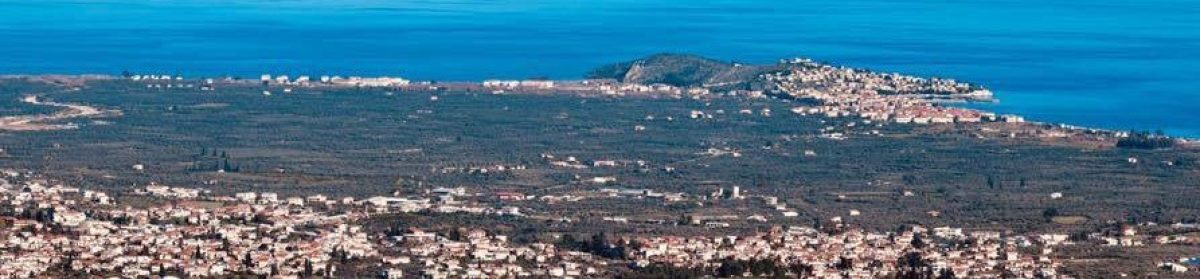
The most picturesque Paralio Astros, “the island” Paralio Astros, is perched on the hill and the ancients called the hill the “island”. Paralio Astros has nothing to envy from any Aegean island, it has it all, it is only two hours from Athens, it is very close “to the mountain” Parnonas, from its port the access to the “Aegean islands” is easy, is located close to the most important archaeological sites of our country and is very close to the historic Astros, the historic Agiannis and beautiful historical traditional villages.
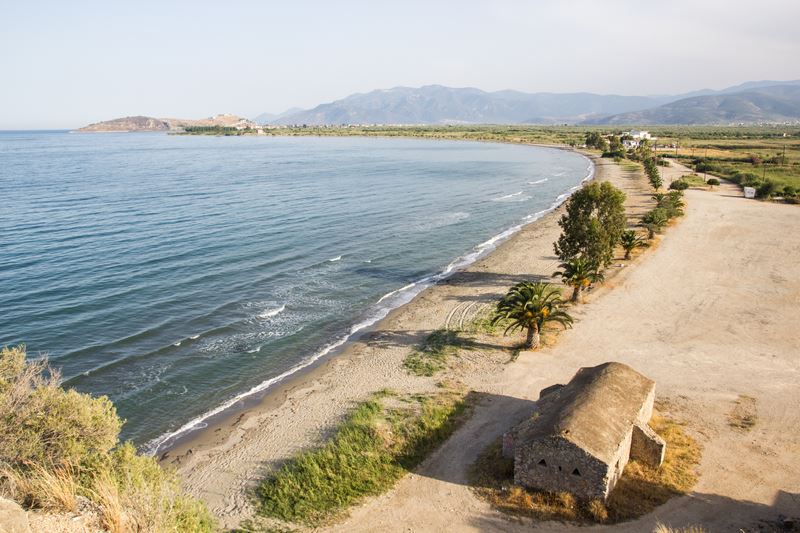
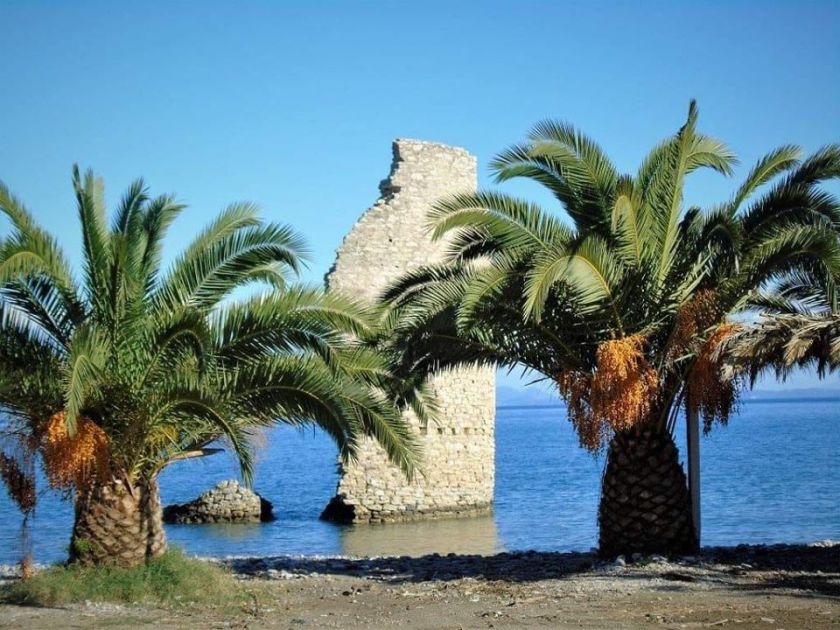
Portes beach is within walking distance ❤ km> from Astros and <2.5 km> from the port of Paralio Astros, a magical walk.
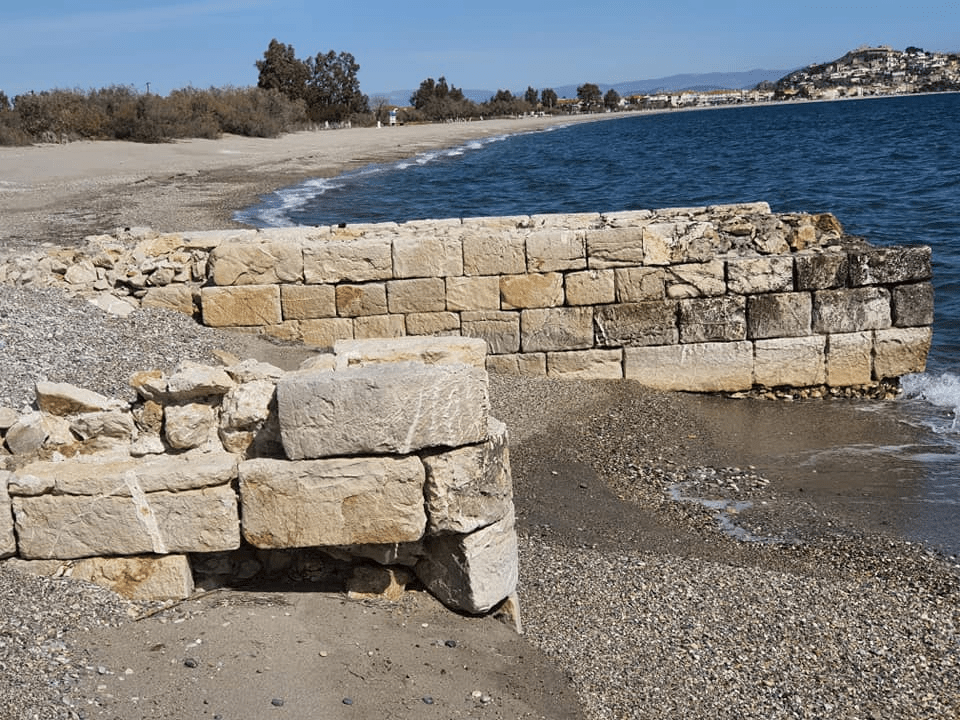
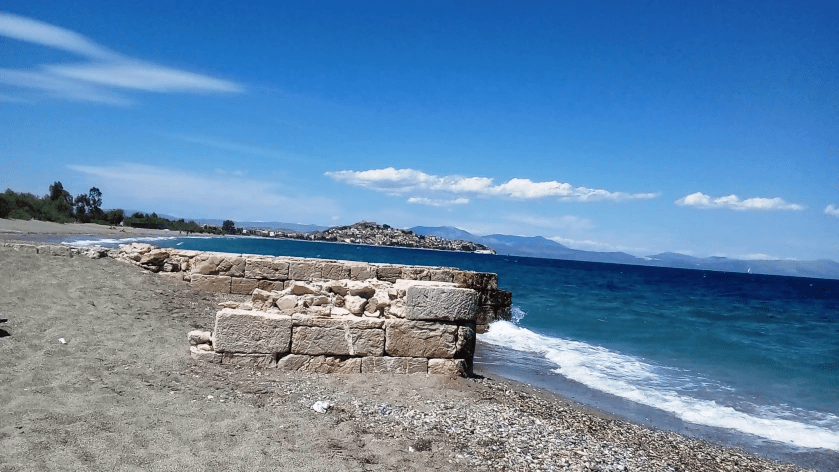
“At Portes beach ended one of the two drainage canals, built by Bavarian engineers, during the reign of Otto… (The other is our well-known canal from Moustos to the sea). The purpose of the drainage channels was to reduce the area of the Moustos swamp and thus alleviate the problem of malaria, which was the scourge of the area.… The Doors were two iron doors, attached to the three elegant “legs”, which did not block the water of the Moustos to roll in the sea, but when Batis was caught the Doors closed with the blows of the first waves… Thus they prevented the marsh from being refilled with sea water… This project, limiting the extent of the marsh and the problems it created, acted as a catalyst for the development of the whole area ». (The text by our friend Nikos Mylonas)
The Argolicgulf has enchanting beaches and the “sun and the sea” of the Argolic gulf is charming.
“With the main feature of the area the” meeting “of the beautiful mountain with the sparkling sea, the Municipality of North Kynouria invites its visitors on a magical journey.”
The sun and the sea of the Argolic Astros and Agiannis perfectly combine “the mountain and the sea”, which is why many prefer Astros for their holidays. The change of landscape from the blue of the sea to the green of the plain and the mountain is a pleasant.
Whoever tries once comes back and becomes permanent….
At Portes beach ended one of the two drainage canals, built by Bavarian engineers, during the reign of Otto… (The other is the well-known canal from Moustos to the sea). The purpose of the drainage channels was to reduce the area of the Moustos swamp and thus alleviate the problem of malaria, which was the scourge of the area.… The Doors were two iron doors, attached to the three elegant “legs”, which did not block the water of the Moustos to roll in the sea, but when Batis was caught the Doors closed with the blows of the first waves… Thus they prevented the marsh from being refilled with sea water… This project, limiting the extent of the marsh and the problems it created, acted as a catalyst for the development of the whole area .
“The island” Paralio Astros,
The most picturesque Paralio Astros, “the island” Paralio Astros, is perched on the hill and the ancients called the hill the “island”. Paralio Astros has nothing to envy from any Aegean island, it has it all, it is only two hours from Athens, it is very close “to the mountain” Parnonas, from its port the access to the “Aegean islands” is easy, is located close to the most important archaeological sites of our country and is very close to the historic Astros( 4 km), the historic Agiannis (21 km) and beautiful historical traditional villages.
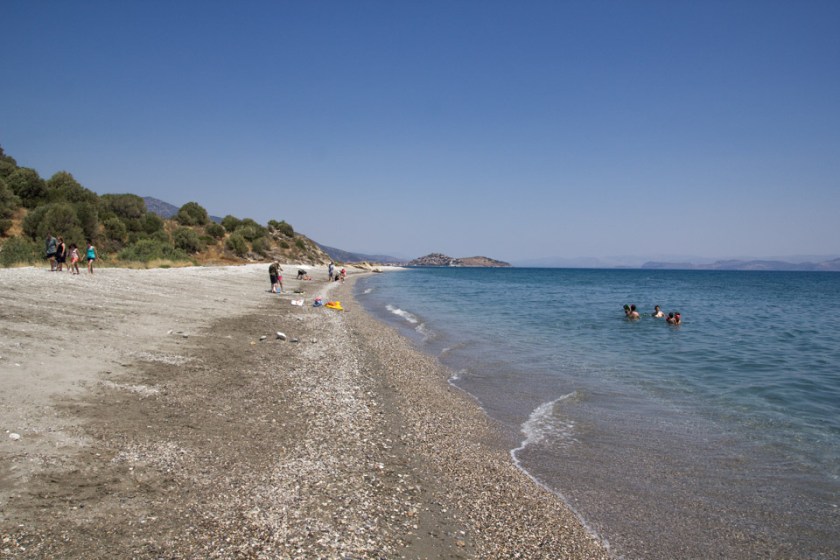
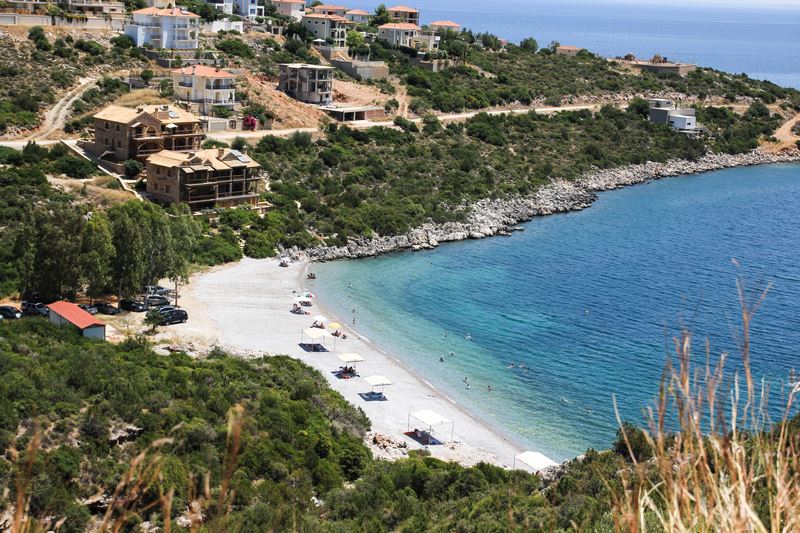
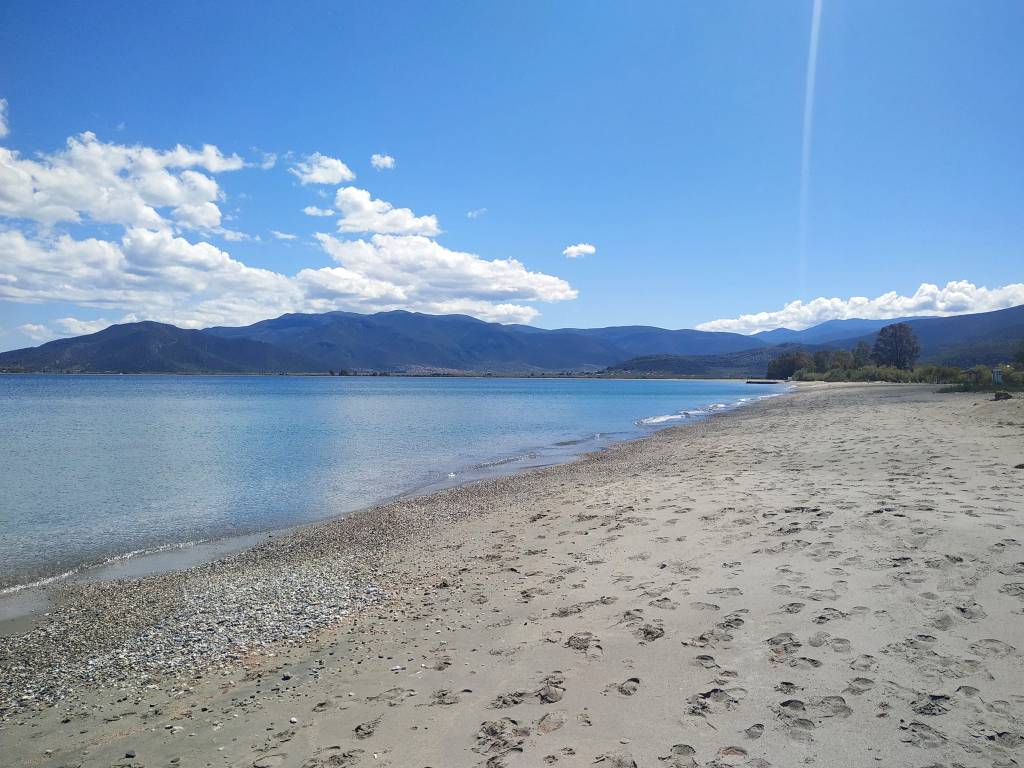
For visitors Kynouria has a number of activities depending on the mood and physical endurance! Of course in summer the beaches of the area are full of life and invite the visitor to enjoy them. Portes, Atsiganos, Anavalos, Xiropigado, Heronissi, Arkadiko village and Kryoneri, are just some of the options we suggest! Those who wish to explore the beautiful waters of the area, can dive in the Arcadian village, Xiropigado and Paralio Astros.
The most links below of the beaches are from the website of our municipality. The beaches below are in a geographical order from Athens, “Argolikos is an endless enchanting beach”
We have not done the whole above route, we have done almost half, but if we had our own “boat” we would do it a few times…….
“The Aegean Islands” are beautiful and offer many attractions that we all “must” visit. After all, it is not a coincidence that the prevailing view <the Greek name Atlantis helps this view> that in the Aegean existed about 12,000 years ago and Atlantis <Atlantis> which was the center of the world …..
There are many ways we can visit the Aegean.
From the picturesque port of Paralio Astros in the summer there are many cruises to the “Aegean islands Spetses, Hydra
Those interested in marine experiences and fishing can learn more on the page below. Plan your fishing vacations in Greece or the South East Mediterranean sea
The distances are from Astros, Paralio Astros is 4 km away from Astros
From Athens airport follow the route to Athens, Corinth, Tripoli, exit to Argos (At the exit Sterna after Nemea), Argos, Tripoli (from the old road), exit to Astros (Left after the Mills), Astros.
Astros is approximately 200 km from Athens Airport. 170 km from Athens , 34 km from Argos, 33 km from Nafplio, 40 km from Tripoli, 48 km from Leonidio, 82 km from Sparta and 90 km from Mystras,
In Astros and Paralio Astros there are many hotels and restaurants with traditional food, as in most neighboring villages.
Other options for Accommodation / Food: it is in Nafplio (33 km), in Tripoli (40 km),
Accommodation & Catering from the website of our municipality
Archaeological Sights and Museums of the Thyreatis Land
From our Municipality
The picturesque port of Agios Andreas at a distance of 3 km from the village overlooking the Myrtos Sea. Clear sea for all activities. The port does not have anarchic tourist development and offers relaxation and absolute tranquility. One beach has pebbles and stones and is the children’s favorite, while crossing the river is a second large beach with fine pebbles and transparent waters and a trademark of the ruined windmill that is in the water. The area is known to lovers of water sports, due to the winds, while south of the port there is a rocky shore suitable for spearfishing.
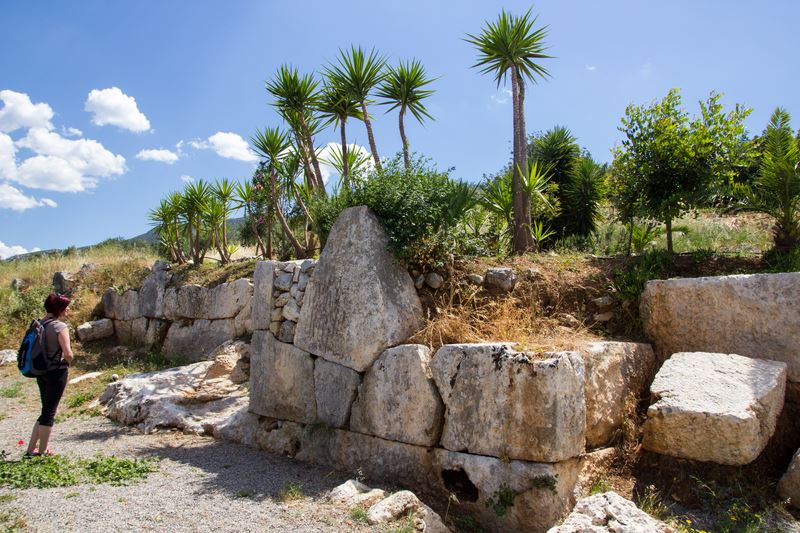
Next to the sea there is the “island of Agios Andreas” where one can see ruins of a cyclopean wall that belong according to the testimonies to the ancient city of Anthini. Parts of the outer precinct with towers of the 5th-4th century are preserved. e.g. Later the city was moved lower to the sea, where Late Roman ruins and additional fortifications from Byzantine times are preserved. Near the castle is preserved half a damaged arched stone bridge.
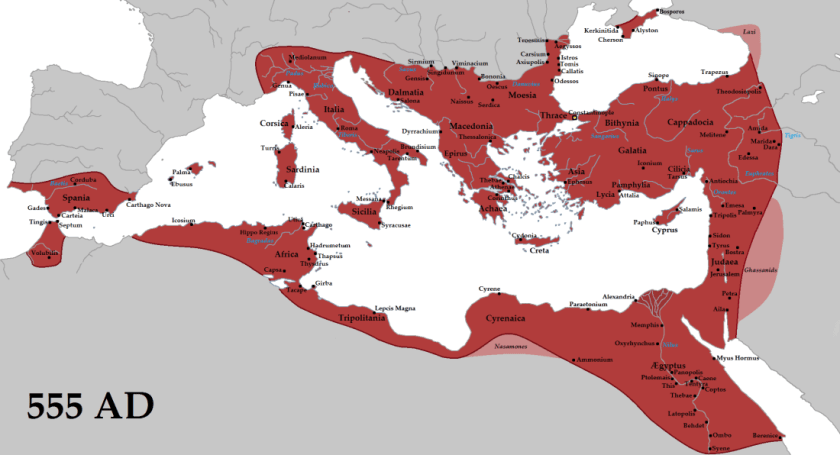
On the map above the Byzantine Empire in 555 AD it was at its peak
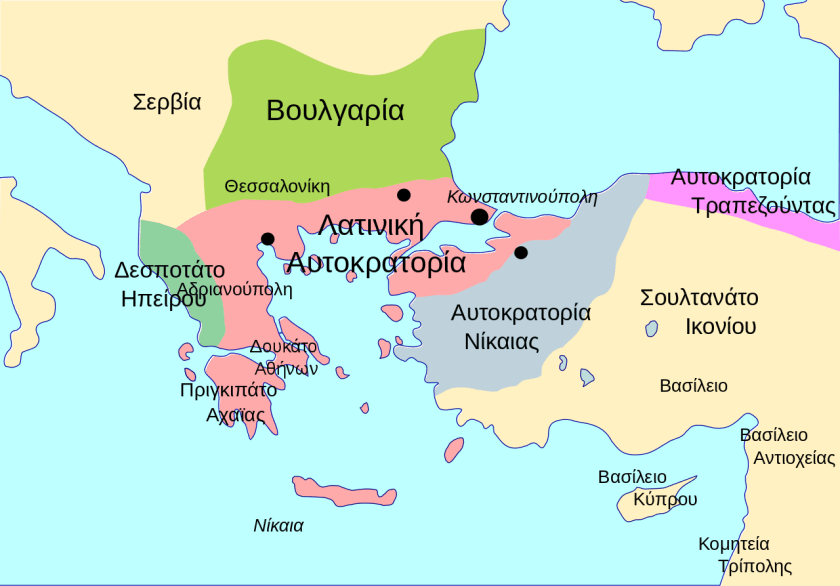
The three maps brilliantly describe the history lessons that are very relevant today ,the war it is not over…..
On May 29, 1453, “Black Tuesday” and a frustrating day for the Greek nation, Christianity and Western civilization, “Polis Ealo”, the Queen city was conquered and enslaved by the Ottoman “barbaric” conquerors. The fall of Constantinople to the Ottomans was described as “the disgrace of the Latins” because the few fanatics who teach their children hatred of Western civilization have not stopped the war until today and the “west” accepts them without any reaction, ignoring their own fall. it becomes daily inevitable.
“Power wears out and money corrupts” in 1453 and today, we have not forgotten the “all sacrifice” prime ministers of a scorched earth …
From Wikipedia, the free encyclopedia
“The Byzantine Empire of the first years of the 13th century was in turmoil and in decline. “The economy was going from bad to worse, corruption in the state apparatus was growing, and the exploitation of the people by state officials and the systematic neglect of the provinces by the emperors had alienated the provinces from the capital.”
Essentially, the end of the Byzantine Empire began in 1204 with the fourth crusade that the “Praetorians” of power invited to the Queen city to take back the lost “spoons” from the other Praetorians. The empire after 1204 was divided into smaller “empires” and incessant civil wars between them from 1204 to 1453. they finally handed over the Queen city to the Ottomans.
Byzantine Empire after 1204 was divided into smaller “empires” and the civils wars were not ended.
The Ottomans, undisturbed by the civil wars between the Praetorian emperors, began their own grand plan to take the city, which had begun before 1204 and was completed almost 300 years later, something the Latins of Disgrace do not understand today. ».
The “marbled King” was eventually left alone with 2,000 mercenaries, 5,000 political guards and 170 Sfakians to defend the city in front of 150,000 fanatical Ottomans.
Earlier, he had outlined the proposal of Mohammed II to surrender the city in exchange for his freedom and the Despotate of Morea.
“And the city is not given to you by me, nor by the other people who live in this common opinion, we all die voluntarily and we do not live our lives.”\7
The Byzantine Empire in 1450 was ready to surrender and be enslaved to its enemies.
The Ottomans working in their plan for 300 years and they never had stop.
It was a “black Tuesday” on May 29, 1453, when Constantine Paleologos, the last emperor of Byzantium, “fell” in front of the Gate of Agios Romanos, defending the Queen.
The heroes of Sfakion continued the resistance and the massacre of the Ottomans even after the fall until the death of the latter.
The “marbled King” emperor Constantine Paleologos exclaimed loudly before his impending death.
“Do not exists one Christian to take my head from me?”
Four hudrend years later when the Greek revolution in the second year showed the difficulties that existed, our English friends sent an admiral to reconcile the wars. The admiral met the old man of Morias in Nafplio and asked him to reconcile with the Turkish conquerors and the old man of Morias gave the answer.
Below, the old man of Moria says it all in two words.
– We never surrendered, we fought the Turkish conquerors non-stop for four hundred years in the plains and in the mountains, and to better understand the admiral continued. Fire and ax to the collaborators of the conquerors. The admiral understood well and the meeting ended quickly.
On May 29, 1453 “Polis Ealo” but the war by fortunately a few fanatics continues today, let our friends wake up one day in the “west” to avoid their own fall.
“The” Holy Space “of the 2nd National Assembly of the Greeks” with code GR-01724 in the electronic version of the Committee “Greece2021”
December 2021
The “Greece 2021” Committee was established by a decision of the Prime Minister in order to coordinate the formulation of the TITLE OF PROPOSAL TYPE OF ACTION anniversary program for the celebration of the 200 years after the Revolution of 1821.
To achieve its purpose, the Commission has chosen from the outset to extend an open invitation to all, so that everyone – body, club, organization, company, individual – can suggest how they want to celebrate this unique anniversary. The aim was for the National Program for the Celebration of the 200 years after the Revolution of 1821 to be formed by the society itself. At the same time, the Commission sought the greatest possible participation from all over Greece, as well as from Greeks abroad, but also from the friends of Greece, developing collaborations and mobilizing bodies of Local Government, the Greek Authorities abroad and Hellenes Abroad.
He set the framework for the anniversary to be celebrated throughout the anniversary year 2021, and to propose actions and events that honor not only the Revolution of 1821 but the entire course of 200 years of modern Greece, as well as the Greeks who they left a strong mark on this process. In addition, in the same context, the Commission sought actions and events that would open up prospects, set goals for Greece’s future course and leave a legacy for the country.
For the submission of proposals, the Commission has developed a special electronic platform, easily accessible through its website. The platform started operating in December 2019 and remained open for submission of proposals until 31 July 2020. Due to the intense interest, the possibility of submitting proposals through a form for another month was given, as announced on the Commission’s website. Self-financed actions continued to be proposed to the Commission throughout 2021.
The response to the Commission’s call exceeded all expectations. A total of 1,827 proposals were submitted to the platform by a variety of bodies, organizations, institutions, companies and individuals, in Greece and abroad, in 47 countries on all five continents.
In order to honor and highlight the wide participation of society as a whole and of each individual, but also to leave a historical record for the future, the Commission presents this digital edition. The publication shall include basic information on the proposals submitted in response to a celebration set out by the Commission and for which the bodies and / or persons who submitted them agreed to be included.
To start off the Greece2021 section on this website, we first would like to tell you about the important roles that Astros, Kynourias Agiannis and other places in the area played in the War of Independence, for which we are now celebrating the 200 anniversary or bicentennial.
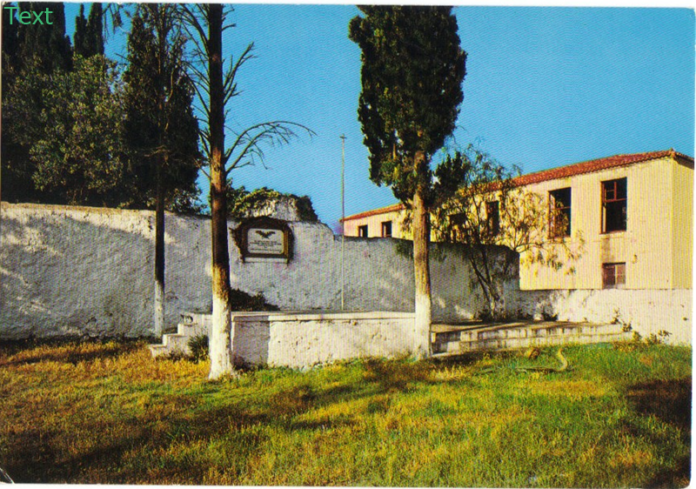
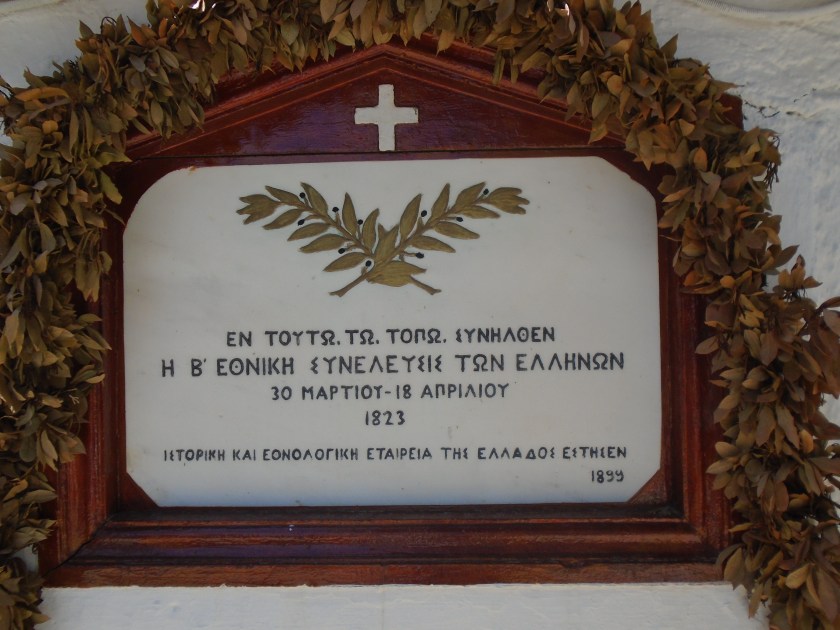
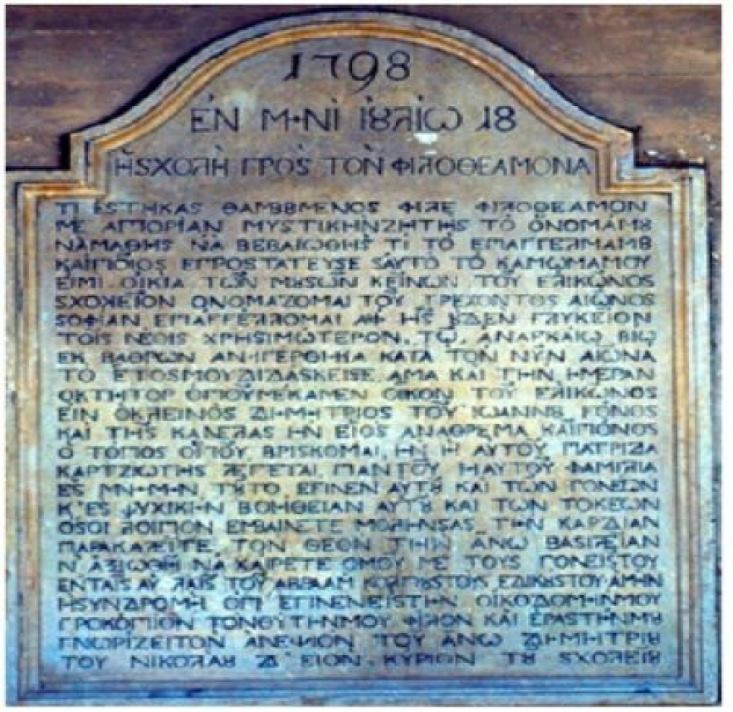
The plaque shown below was placed on the wall of the “Holly Space” at Astros in 1899, to commemorate the location of the Second National Assembly of the Greeks which took place here from the 30th of March to April 18, 1923.
” In this location, the Second National Assembly of the Greeks took place on March 30, 18 April 1823″
The “Holy Space” of the Second National Assembly of the Greeks is undoubtedly one of the most important historical monuments of the 1821 revolution, not only for Kynouria but also for the Greek homeland, that so many heroes fought to free from the shackles of the Ottoman empire.
Astros and its surroundings are widely know because of the Second National Assembly taking place here. But there are still a lot of people who still don’t know its significance in the revolutionary war, and its role in the the subsequent formation of the modern Greek state.
One of our goals with AstrosGreece.gr is to use it as an outlet to share more knowledge and information about the significance of the Second National Assembly of the Greeks in Astros. Aslo for the improvement and acknowledgement of significant things that have bee overlooked or ignored
To that end we’ve done some significant outreach to the authorities over the last years and could use your help in to promote our history.
EVERYONE KNOWS ΑΣΤΡΟΣ ΚΥΝΟYΡΙΑΣ FROM THE SECOND NATIONAL ASSEMBLY OF THE GREEKS…
“Greece 2021” We are pleased to announce “The” Holy Space “of the 2nd National Assembly of the Greeks” and code GR-01724, IT IS HERE IN FRONT OF US
Dear Mr. Kourogiorgas,

We are  pleased to confirm that we have received your proposal entitled "The"  Holy Space "of the 2nd National Assembly of the Greeks" and code  GR-01724, which we intend to include in a special edition that we are  preparing and will include a description of all the proposals identified  with the four axes of the Commission and which contribute to this  common national undertaking on the occasion of the 200th anniversary of  the Revolution of 1821.

Your written consent for this publication, as provided in the current legislation, will be requested in the second year.
With  regard to the possibility of the Commission supporting your proposal,  we will contact you shortly after the final plenary session and the  Commission's assessment of the financial means available.
Thank you very much for your participation in the national call.

Yours sincerely, Eleni Kyprioti

Responsible for Managing Platform  Proposals Greece 2021 Committee http://www.greece2021.gr  secretariat@greece2021.gr T: 7002021000, 216000400
We have proposed to our municipality, to all those responsible for the “Greece 2021” committee and to the common mind, the four topics of the Thyrea that undoubtedly played a catalytic importance for the organization and success of the liberation struggle.
These and other things the common mind tells us we must always distinguish and promote in local, regional and national space, and in the website of our municipality and in the anniversary events for the celebration of the 200 years of the Greek Revolution
The “Holy Space” of the Second National Assembly of the Greeks
The Archaeological Museum of Astros and the “Sacred Space” of the Second National Assembly of the Greeks are modest and imposing, they are “museums” in themselves.
The assembly responded with the proclamation, to the world and the greats of the time. “We are determined to become independent, as an autonomous and independent nation.” a little topical today…
The indigenous Pelasgians had a golden rule that for millennia until today the inhabitants of Thyrea faithfully applied, mutual respect, consensus, conciliation and the Greek measure. The “squid” Astrinos, faithful to the tradition of millennia of people of the Greek measure and national reconciliation, were called at that time by the nation to compromise the warring camps for a national dialogue and achieved it with results, under the influence and leadership of Agianitis, responsible for military security in time of war of the National Assembly, Panos Zafeiropoulos or Akouros. Astros was chosen for the National Assembly, because in Astros there were many squids and it was undoubtedly a place of common acceptance and would better help the nation.
The Archeological Agency in 1899 built the inscription on the site and the locals after the end of the Second “National Assembly” named the site “Sacred Space”, out of obvious respect, for the great contribution it offered to the Greek Nation. Here, for exaggeration, the “sanctuary” does not have a religious meaning but a National meaning, the place was recognized by the inhabitants as very important, as a “Holy Place”. The decisions of the National Assembly were very important for the establishment and organization of the Greek State.
2) The Karytsiotis School of Agiannis
From the same sigil of 1638 we are informed that Agiannis became a patriarchal exarchate “for the sake of course of the School of Agios Ioannis, operating much older”. According to this passage, a school operated in Agios Ioannis, long before 1638. In Agios Ioannis, there were also “inferior” schools, such as that of Papakyriakos and secret schools, initially in the Metochi of the Loukous Monastery, Agios Dimitrios and later in the narthexes of the churches of the village. The people of Agianni never really surrendered to the conquerors and as a proof of their way they managed to keep their schools open throughout the Turkish rule and kept the flame of the nation secretly and openly awaited.
Our great benefactor Dimitrios Karytsiotis <1741-1819> was born in Agios Ioannis and according to the Agianniti tradition, he left “with a tsarouchi”. in which young people from Agios Ioannis, from all over mainland Greece and our islands studied and in 1805 he built the branch of the School of Agios Ioannis in Astros. The Karytsioti school played a primary and decisive role for Agiannis to become the capital of revolutionary Greece, from August 15 to October 1, 1822 and to hold the Second National Assembly of the Greeks in Astros in 1823. The “government” which is very close in the school of Karytsiotis of Agiannis was the seat of government. Astros is mainly known in our homeland by all Greeks and to expatriates abroad by the Second National Assembly of the Greeks that took place in 1823, for which the whole world knows us. The “squid” Astrinos, from the squid they used to write in the famous School of Karytsioti, offered a lot to the homeland during those difficult moments for our nation when everything was hanging by a thread to drown the revolution in blood. But before the National Assembly, the catalytic construction of the Karytsiotis School had preceded.
3) Agios Ioannis (Agiannis) of Arcadia
From the beginning of the revolution in 1821 there were discussions between the protestors and the chiefs to become a government of the Greek revolutionaries that would be based in Agianni. Eventually the Karytsiotis school played a primary and decisive role in making Agiannis the capital of revolutionary Greece from August 15 to October 1, 1822. The “government” located very close to the Karytsiotis school of Agiannis was the seat of government. The loopholes under the windows of the building can be seen. Later in 1825 it was also unsuccessfully proposed that Agiannis become the seat of the Greek government again.
Panos (Akouros) Zafeiropoulos, is one of the most important, or rather the most important Agiannitis before the revolution of 1821 and his contribution to Thyreatida Earth and his homeland is incalculable and passed in the fine print of history, it is not mentioned in the history books and is strangely unknown for its great offers in our homeland.
4) The “camp of the Bervena”
The battle of May 18, 1821 in historic Vervena and historic Doliana thwarted the dismantling of the camp in Vervena and the plan of the Turks. It also boosted the morale of the revolutionaries and paved the way for the fall of Tripoli. Undoubtedly the “Bervena camp” played a catalytic role in the organization and success of the liberation struggle. From the “camp of the historical Bervena” the liberation of our homeland began essentially and militarily. These are a few things about our heroic ancestors, but let’s get to today.
“To realize where we are and to decide where we want to go.” the president of the Committee tells us “Greece 2021 ″ Mrs. Gianna Angelopoulou.” The future is decided today – shaped by the actions of all of us in the present. We all need to be present tomorrow. Only words are not enough for that. Progress requires both effort and manner. He wants the body and the mind to work. The challenges of the future are already here… ” The pretext of the “crack” and the trap of another study (mercy now with the innumerable studies….) Of the pretext of the “static adequacy” of the building of the Archaeological Museum of Astros will not pass in the end, the local community has the first say and the competent eventually they will understand and listen to us, everyone must take on the responsibilities of today…. “Only words are not enough for that.”
“The Holy Space” of the 2nd National Assembly of the Greeks, the courtyard of the school and the Karytsioti School is modest and imposing, it is a “museum” in itself. Marbles and monuments are important and are present in all museums. We have more than monuments this wonderful modest and imposing space, WHICH IS A MUSEUM ON ITSELF, tied to our modern history which not many have. We will open our museum soon.
We have proposed to our municipality, to all those responsible, to the committee “Greece 2021” and to the common mind, the five issues of the Earth Thyreatis, which undoubtedly played a catalytic importance for the organization and success of the liberation struggle.
The most important topics we have in the Thyreatis Earth and we must always distinguish and promote in the anniversary events of 1821.
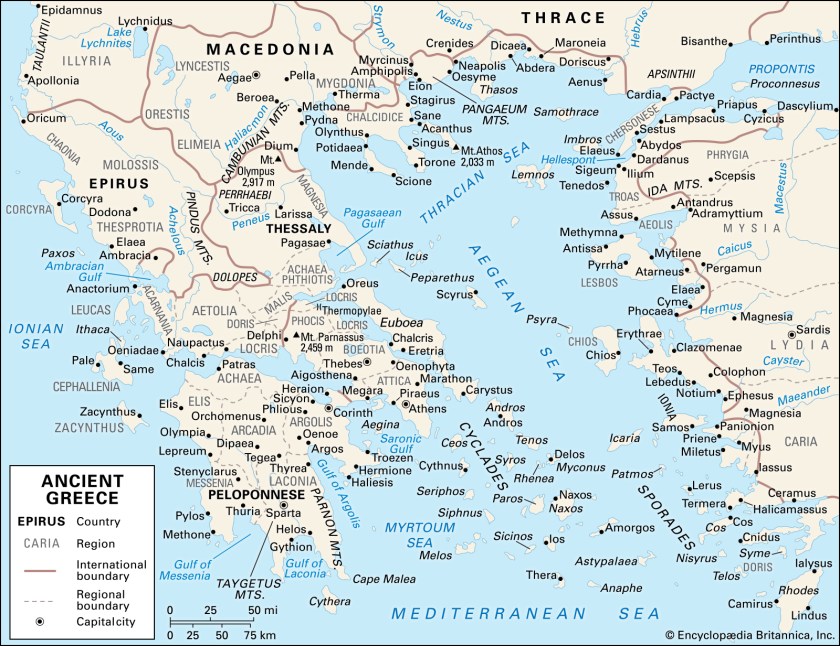
«Το ιστορικό Άστρος Κυνουρίας βρίσκεται στη δυτική παραλία του Αργολικού ,εκεί που στο παραπάνω χάρτη διακρίνεται ηαρχαίαπόλητηςΘυρέας, νότια από την πρώτη πόλη της Ευρώπης το ιστορικό Άργος και την έδρα του Μυκηναϊκού πολιτισμού Μυκήνες»







































 astrosgr.com - Το Ιστορικόν Άστρος Κυνουρίας