Voltaire was undoubtedly considered the most important man of the 18th century, but also of world history. His contribution to humanity is incalculable because he founded “freedom of speech”, as a basic right of every citizen of the world.
Although there was immense darkness around him, he opposed the freedom of man, condemned and condemned with his free spirit many times in a satirical way at every opportunity the establishment of his time and the monarchy. Of course for his views he was imprisoned in the Bastille for insulting the regent and the nobles and was exiled. He lived almost all over Europe, most of the years in Switzerland, as he was undesirable for his views in France and wherever he was.
The big problem with people is that most of them, as “agents”, “managers”, “rich” and “experts”, “educated” our people call them, do not deal with what should be studied. On the contrary, they deal with the wrong subjects, “luxuries and mosaics” and their tomar, they come to the wrong conclusions about the hot issues of society and many times they have an opinion for their own reasons and for what they do not have, because they know everything.
And not all of them are enough for us, we also have the “collaborators”, the gangsters and the kotzambasides who never leave our lives.
The remarkable thing is that Voltaire, although he was “rich” and “expert”, did not waste his life with aristocracy, luxuries and mosaics, but chose prisons, exiles and shook the world.
Eventually Voltaire stood up and overthrew totalitarianism and despotism in Europe and all of humanity. “It is considered the central figure and embodiment of the Enlightenment of the 18th century.”
Without Voltaire, it would be fair to say, there would be no French and American revolution, nor the modern rule of law in all of humanity as we know it today.
Below we mention views of Voltaire. The emphasis is ours.
«François-Marie Arouet (November 21, 1694 – May 30, 1778), better known by his pseudonym Voltaire, was a French writer, historian and philosopher, famous for his wit, his attacks on her Catholic Church and the defense of secularism, freedom of speech and the separation of church and state.
It is considered a central figure and embodiment of the Enlightenment of the 18th century. He is also considered – not unjustly – the most important man of the 18th century. “
Voltaire views
I do not agree with what you are saying, but I will defend to the death your right to say it (it is mentioned that Voltaire never said it, but historically the phrase has been established in him).
Think for yourself and let others enjoy the privilege of doing so.
To hold a pen you must be at war.
It is difficult to free fools from the chains they love.
Everyone is guilty of all the good things they did not do.
Common sense is not so common.
Do not think that money does everything or you will end up doing everything for money.
When it comes to money, everyone has the same religion.
If I hate tyrants, I hate gangsters much more.
He who forgives the crime becomes an accomplice.
It is forbidden to kill. That is why all murderers are punished, unless they kill in large numbers and under the sound of trumpets.
We judge a man by his questions and not by his answers.
Those who can make you believe absurdities can make you commit atrocities.
Man is free from the moment he wants to be.
It is dangerous to be right in matters in which the established principles are wrong.
To find out who is in power, just think about who you are not allowed to criticize.
The many laws in a country are, like many doctors, a sign of weakness and disease.
Injustice ultimately produces independence.
And if there was no God yet, we would have to invent one.
It is a pity that to be a good patriot you have to become an enemy of the rest of humanity.
We are all made of weaknesses and mistakes.
Let us forgive each other our nonsense: it is the first law of nature
This patchwork of self-proclaimed “Holy Roman Empire” never existed, in any way, neither Holy, nor Roman, nor Empire.
When the one who is talking to him understands nothing and when the one who is talking to him does not understand anything either, this is metaphysical.
Superstition is for religion what astrology is for astronomy, the three daughter of a wise mother. These daughters have dominated the earth for too long.
We never live, we are always in the expectation of life.
The illusion is the first of the pleasures.
Everything is fine today, this is our illusion.
God is a comedian who plays in an audience that is too scared to laugh.
I die to worship God, to love my friends, not to hate my enemies and to condemn superstition.
He later wrote about his education that he had learned nothing “except Latin and nonsense.”
Robespierre, the “Incorruptible”, in the time of his omnipotence has established and followed convincingly the limited term of one day, because he knew power corrupts. As much as it may seem excessive, the power he had was only for one day and was renewed every day.
“Robespierre is now considered a controversial figure. Others considered him a dictator and others a good, fiery and, above all, exemplary moral revolutionary.
The most famous version is that he was a man of unparalleled morality who, in his attempt to create an ideal world as he imagined it, was forced to exterminate his enemies, whom he considered deeply corrupt and populist, thus highlighting the contradiction between the ideal and the real. application in the relentless world of the struggle for worldly power.
Although, due to his personal honesty, his unblemished private life and his ruthless character, he had been called “incorruptible” by his contemporaries, he did not hesitate to consolidate his status, to send daily through the Revolutionary Court to the throat and throat “Hundreds of French citizens are dissidents, royalty, moderates, anarchists, thieves, suspects, men, women, and even children convicted in summary proceedings.”
For those who want to learn more see the link below.
“Maximilian Robespierre (May 6, 1758 – July 28, 1794) was a French politician, a dominant figure in the French Revolution of 1789.
He was born in the city of Arras on May 6, 1758 and was beheaded in Paris on July 28, 1794. He lived a very difficult and poor childhood, but he managed to study law in Paris and returned to his hometown to practice law and at the same time to study poetry and music. art, elected member of the Academy of Arras.
In 1789 he was elected a representative in the Assembly of Classes in which he did not initially receive any distinction and special attention. Only Mirabo, who was watching Robespierre’s meticulous speeches, said: “This young man will go ahead because he believes in what he says”. At that time, Robespierre was still moderate and in favor of the kingdom, and he had proposed the abolition of the death penalty.
Entering politics and rising to power
In 1789, while still opposed to the death penalty, Robespierre was elected a representative in the Assembly of Classes. Shortly afterwards the French Revolution broke out. Camille Demoulin’s friend, a dynamic young student (who was later beheaded by Robespierre) will lead those who will be the first to shout “To the Bastille!” and the people will occupy the symbol of totalitarianism, the prisons of the Bastille, on July 14, 1789.
The following year (1790) Robespierre was elected President of the left wing of the Jacobins. After 1791, the “Incorruptible”, as he used to be called, no longer has any doubt about the King’s guilt. Louis XVI is on trial and Robespierre was to say about his conviction: “The greatest criminal in the world should not be tried, he is already convicted!”. The death sentence of the King is a fact and Louis is executed on the guillotine on January 21, 1793. On June 2, with Robespierre in control of the Conventional Assembly, the Jacobins outlaw their opponents, the Girondins, and take full power.
Terrorism and new measures
Robespierre ruled for the next few months almost dictatorially, relying on new bodies, such as the Revolutionary Courts, which tried and guillotined the so-called “enemies of the people” and the powerful Common Salvation Committee. He was the “Triandria” (of which he was the leading figure) together with the close associates of Saint Just and Couton
9th Thermidor coup and the fall of the Incorruptible. The new measures provoked even greater reactions. On the 9th of Thermidor of the 2nd year of the Revolution, that is, on July 27, 1794, Robespierre appeared at the Conventional Assembly and stated that he had in his possession a list of enemies of the people, among them members of the Assembly, whom he did not mention. This meant arresting and executing them through summary proceedings. Fearing that they might be on the list, most members of the Convention caused a pandemic. and did not let the lawyer from Aras speak. Not even his friend Saint-Just, a prominent orator who seduced the crowds, could say anything. Instead, a member of the National Assembly challenged him to say the names, forcing Robespierre to be surprised and make various excuses, after which many members demanded his arrest as an enemy of the unity of the people. It was a well-organized conspiracy, which in a few moments ousted the just mighty tyrant.
Robespierre and his friends, realizing the unfavorable climate for them, will leave with difficulty with the area of the Conventional Assembly and will go to the town hall. Unfortunately for them, they seemed weak at that critical moment as well as extremely unlucky. Instead of resorting to military forces that he still controlled, Robespierre took refuge in the town hall, where there were no military forces. Also, the corps leader who ran to his aid was, although a brave officer, drunk and irresponsible, with the result that the aid was delayed at a time when most units were loyal to Robespierre and could still control the events.
Eventually, the gendarmerie raided the City Hall to arrest him, where, according to one version, a young gendarme named Merda would punch Robespierre in the jaw with a pistol. However, the prevailing version is that Robespierre injured himself. Anyway, as soon as the “Incorruptible”‘s chin was crushed, Saint Just did not bring any more resistance, Couton rolled in his wheelchair to escape and almost killed himself while sliding on the stairs, Le Ba committed suicide while his brother, Augou Robespierre was injured trying to escape from the balcony of the town hall by jumping from a high enough height on the paved road (he was not killed, because he fell on two people), while the people were watching the dramatic events icy.
Many people, supporters of Robespierre, rose up and demanded his release, while he now looked like a captured savage, surprised as he was by the unexpected turn of events, stunned, with torn clothes. Eventually, he was imprisoned in Conciergerie, next to the cell where Marie Antoinette had previously been imprisoned. You only came out of there for beheading. ”
“Albert Camus (November 7, 1913 – January 4, 1960) was a French philosopher, writer and author, one of the most popular philosophers of the 20th century, and one of the founders of irrationality.” He was awarded the Nobel Prize in Literature in 1957 “.
The 1957 Nobel Prize in Literature was awarded to Albert Camus “for his important literary production, which clearly illuminates the problems of human consciousness in our time.”
Below is an excerpt from Albert Camus’s Nobel speech at Stockholm City Hall, December 10, 1957
“In the same way, the role of the writer is not free from difficult tasks. By definition it cannot be put in the service of those who make history today. is in the service of those who suffer. Otherwise, he will be alone and deprived of his art “
“On the margins of the dominant philosophical currents, Camus insisted on meditating on the human condition. Refusing to express faith in God, in history or in logic, he opposed Christianity, Marxism and Existentialism. It has never stopped fighting against ideologies and abstractions that abhor human nature. “
His most important books are The Stranger, The Plague, The Fall, Caligula and his philosophical essays The Myth of Sisyphus and The Rebellious Man
“The author who expressed the philosophy of the Absurd, influenced by the nihilistic style that was on the rise in his day, never invested in daydreaming. He exposes the hypocrisy of everyday life, is indifferent to social constructions and needs them, he is not interested in finding meaning where it does not exist. Even today, our desire to make our lives meaningful is such that the possibility that there is no meaning does not cross our minds.
If you do not fit into the molds of society, they see you as a stranger and that is exactly the subject of this book. “Camus wrote” The Stranger “in order to entice readers to think about their mortality and the true meaning of their existence.”
“The concept of irrationality and the relationship between irrationality and suicide are the topics of this essay. Since man acknowledges the difference between his rational desire for understanding and happiness and the silence of the world, can he judge whether life is worth living? This is the fundamental question of philosophy. But if the absurd seems obvious to me, I have to keep it with a clear effort and accept to live experiencing it. My rebellion, my freedom, my passion, will be its consequences. Man, sure that he will die completely, but denying death, freed from the supernatural hope that bound his hands, will be able to experience the passion of life in a world given to its indifference and perishable beauty. But creation is for him the best opportunity to keep his conscience awake in the face of the brilliant and thoughtless images of the world. The struggle of Sisyphus who despises the gods, loves life and hates death becomes the symbol of human destiny. “
A year earlier, in 1956, it was this French writer, philosopher, playwright and combative journalist, completing “The Fall” (Atrapos Publications, 2014): a book that deals most eloquently with two pillars of Western culture. , the (false) ethics of our daily life, that is, and the artificial prosperity.
Jean-Baptiste Clemens, then, begins in this infamous place a self-criticism that develops into a perpetual internal struggle. The model of man, which is universally accepted both professionally, socially and personally, begins through his confession to form a counter-model that declines word by word. A personality made of the worst materials that are in abundance in every corner of the western world: greed, hypocrisy, egocentrism.
(…) They all want to get rich. Why; Ever wondered? For strength, of course. Especially, however, because the riches relieve you of the immediate crisis, take you out of the crowd of the underground metro, to lock you in a nickel-plated car, isolate you in large guarded parks, in wagon-li, in luxury cabins. Wealth, dear friend, is not yet acquittal, but procrastination, something that is always worth taking
A book that is not just worth it, but it needs to be read. And if we should emphasize a single element emanating from t reading it is this and only this: Attention, attention! Creates associative identities. This, I imagine, was the main goal of Camus when he filled his blank pages with ink that were transformed into “Fall”.
Freedom is nothing but an opportunity to become better.
Charm is a way to get the answer “yes” without having to ask a clear question.
I rebel – so we exist.
What is a revolutionary? A man who says no.
Man is the only creature who refuses to be what he is.
The need to always be right, the seal of a vulgar spirit.
Do not walk in front of me because I may not follow you. Do not walk behind me because I may not lead you. Walk beside me and become my companion.
Truth, like light, is blinding.
The slave begins to seek justice and ends up waiting to wear a crown.
To be happy, we must not worry too much about others,
After all, it takes more courage to live than to commit suicide.
From the moment we all die, it is obvious that where and when does not matter.
Everything is made from a habit. We are ridiculous numbers of a society that acts out of habit, we hate or love out of habit and we think the “big problems” out of habit.
Every time I hear a political speech or read those who govern us, for years I feel terror, because I do not hear anything that sounds human. Always the same words that tell the same lies.
I read the following about Nikolaos Plastiras and remained speechless for several days.
When he died “An Army debit card (SYP 108) was also found in his personal belongings for a bed he had lost during the operations in Asia Minor and 8 drachmas with a note to be given to the State for the value of the bed, so that owes to the Homeland ”.
Now that I have met, I want to share with our readers what I consider important for Mavros Kavalaris, so that we can all get to know him better and compare him with our current politicians.
Let’s think about it one more time. The debt of the Army (SYP 108) for a bed that he had lost during the operations in Asia Minor, was carried with him for thirty years by the three times prime minister of the homeland, !!!!!!!!!… ..unparallel ethos….
Once upon a time, most of our politicians were like Plastiras.
I remembered another relatively nice story. In the 60’s there was a very well-off family in Messinia. The mother of the children of this family happened to be in command and gave much more money than the others to her eldest son Stavros Costopoulos, who was a politician. His brothers did not understand why their mother was giving so much money to her political son and one day they asked her. The answer was simple. “He is a politician and he needs them more than you.” Politicians once cared about the public and “glory” and paid a lot of money to achieve it.
Today the society knows very well, our politicians do not think to reduce their “double” pensions, they never thought to reduce their salaries, which are not negligible, let the daily salaries and pensions be reduced to all Greeks, even the worse the same politicians without any shame voted to make cuts to pensioners of 346 euros.
Chairs, family rule and nepotism are commonplace today. Even today we vote for descendants of politicians who are not accidental, they and their ancestors politicians, have found the trick to have all the ruling parties, right, center, left (ERE, PASOK, SYRIZA) and sit in their parliamentary chairs for many years, because they have “experience” μερα. Today many believe that engaging with the public is a good profession.
K. Kastoriadis briefly emphasizes to us “From the moment and from which irrevocable representatives have been elected, the first and main job of these irrevocable representatives – unless we believe in Santa Claus – is how to secure their re-election. Everything else is secondary ”.”
The democratic defense of the citizens will soon begin, with the limited term of seven years of all our elected representatives, to change our course on the evil ladder and will force us to find politicians like Nikolaos Plastiras with unparalleled morality.
Citizens must one day understand that engaging with the public is their duty and is the only way to get us off the ground we are in today, because no one else will do it for us. Let’s start with the obvious and the essentials that we forgot and let the well-meaning “experts” do for us. Only if we build democratic institutions and democratic political parties, and we all read daily and apply what we agreed and voted on, the rules of procedure and the statutes, will we be able to change course and see fate in the sun one day.
Sooner or later we have to figure it out, no one else will save us or do the work we have to do.
General Nikolaos Sampson, a friend of Plastiras, describes in a letter the following: “When Plastiras died, he did not leave behind a house, real estate or bank deposits. The inheritance he left to his orphaned refugee daughter was 216 drachmas, a ten-dollar bill and a laconic oral will: “All for Greece!”.
… “And the doctor, who was present and signed the relevant death certificate, counted on his injured body: 27 swords and 9 bullet marks” “
The publisher Dimitris Lambrakis once gave Plastiras a nice gold pen and after the general called his friend Andreas he said: “I do not put gold signatures. I have enough of my little pen. Send it back. – But he will be offended. – Does not matter. Let me cut off the water from the estate. I do not want gifts Andrea. Because gifts also bring retribution!
In 1952, Plastiras became prime minister He was bedridden by the illness that afflicted him when one day he received the visit of Queen Frederick. Entering his modest rented apartment, she was surprised to see the prime minister using a ranch for his sleep, and asked him intimately: “Niko, why are you doing this?” and the answer came disarming. “I am accustomed, Your Majesty, to the ranch in the army and I cannot leave it.”
“The trial of six has been recorded in Greek history as the trial before an extraordinary military court to which they were referred by the Revolutionary Commission that had taken power with the 1922 revolution to punish those considered responsible for the consequences of the Asia Minor campaign, commonly for the Asia Minor Catastrophe ..
On November 15, at 7.15 am, General Alexandros Othoneos read the final verdict of the court [13]: , Nikolaon Straton, Petros Protopapadakin, Georgios Baltatzin and Nikolaon Theotokin in the sentence of Death…
At dawn, the Minister of Defense, Pangalos, visited Plastiras, asking him to speed up the executions. This is because Captain Talbot had sailed from Genoa to Piraeus with a destroyer in order to deliver a British ultimatum to the Greek Foreign Minister, in which he asked the Greek side to fully comply with his instructions, clarifying that in case of execution of the accused Britain would Greece was not defended in the Lausanne negotiations and would not lend to them. [14] His arrival was expected from hour to hour.
At 9 a.m. in Averoff prison, the revolutionary commissioner Grigoriadis announced the court decision to the accused. No one was surprised except Hatzanesti. The future dead were given two hours to say goodbye to relatives and friends. At 10.30 they were taken to Goudi to be executed…… Those sentenced to death were executed at 11: 27΄ ”
The British Captain Tablot arrived late and ran to give the ultimatum to Nikolaos Plastiras. Mavros Kavalaris answered him somewhat like this: The Greek people had already performed their patriotic duty and it was too late for ultimatums.
“After the” December “of 1944 he was called to take over the government as a widely accepted figure, on January 3, 1945”
Mavros Kavalaris had to take the chestnuts out of the fire for another difficult moment for the nation, because in the turmoil of the sea all the great leaders of the time were afraid and were hiding or they were incompetent…. gunpowder.
See the link below for more.
“Nikolaos Plastiras (November 4, 1883 – July 26, 1953) was a Greek military and politician. He became known for his military action during the Balkan Wars (where he became known as Mavros Kavalaris) and the Asia Minor campaign and was often involved in politics by participating in or organizing movements. Nikolaos Plastiras ruled Greece three times, once in 1945 and twice in 1951-1952.
He actively participated in the “Association of Non-Commissioned Officers” which aimed at the meritocracy and the consolidation of the Army and was parallel to the “Military Association” of officers, made by the Movement in Goudi in 1909.
After the Asia Minor catastrophe and the September 11 Revolution of the military forces in Chios and Lesvos, in 1922, he took over the leadership of the revolutionary committee (from which he acquired the nickname ‘Leader’). In September 1922 he went to Athens where he overthrew the government and forced King Constantine I to resign in favor of his son George II and formed a revolutionary government but did not participate in it.
After the elections in December 1923, he handed over power to the elected government. In January 1924 he resigned and was demobilized with the rank of Lieutenant General. The Fourth National Assembly declared him “Worthy of the Homeland”.
Before the announcement of the results was completed, on the night of March 5 to 6, 1933, Plastiras organized a Movement in favor of Venizelos and with his approval, with the excuse that the rise of the anti-Venizelists to power would mean the end of the Republic. The movement failed and fled to Lebanon and then to France. In the next Military Movement, on March 1, 1935 (again with the Venizelos’ approval) again offered his support even though he was still abroad, and after his failure he was sentenced to death in absentia, as was Venizelos, who, however, all received amnesty with the restoration of the Reigning Republic at the same time, by King George II.
In September 1937, Plastiras began intense anti-dictatorship activities against the Metaxas regime, and became Chairman of the Anti-dictatorship Committee, with members including Sophocles Venizelos, Agamemnon Schliemann, and Komnenos Pyromaglos. In an interview with a French journalist, he expressed his view on the dictatorship, stressing that “it is not a system of progress and raising the intellectual level of peoples. »[
After the “December” of 1944, he was called to take over the government as a widely accepted figure, on January 3, 1945.
He tried to prevent the Civil War, and participated in the Varkiza Agreement ………. He twice formed a coalition government from the center parties in the period 1950-1952 (April 15, 1950 – August 21, 1950 and November 1, 1951 – October 11, 1952) which was characterized as a “center break”. As prime minister, he pursued a moderate policy with rich activity. He dealt with the elimination of the consequences of the Civil War and the economic and social reconstruction, with a social democratic program of nationalizations, social benefits, distribution of land to the homeless, granting of votes to women, etc. “
The great representative of the Greek Enlightenment, the theoretician and father of democracy Protagoras briefly described on one page the two basic and catalytic conditions of democracy and society, “shame and trial” (shame and law).
According to the myth of Protagoras, Prometheus stole from the gods Athena and Hephaestus and gave people the “artful wisdom plus fire”. Wisdom and art allowed man to survive the wild beasts of his primitive environment but at the same time to differentiate himself from animals in order to be able to create human civilization.
Zeus punished Prometheus for his disrespect and bravery, to free people from their shackles, not to reconcile with the misery of their situation that all the established tells them, but to struggle with their ingenuity and hard work to improve their living conditions.
Wisdom and art alone, however, were not enough to save people. Despite all this, Zeus, out of grief for the people he saw them lost and eaten among themselves, sent Mercury to give people extra “shame and judgment” to be saved and to live in an organized, just and civilized society. their.
“Artistic wisdom” is knowledge and “fire” is the means to achieve its goals and man can survive in his hostile primitive environment. “Artistic wisdom” and “fire” distinguished humans from horses and animals.
Shame is man’s feeling for his usually immoral actions, which are not accepted according to the unwritten rules of society.
The law is the respect of the written laws, the rights of other people and the acceptance by man to give to his fellow human beings what belongs to them.
Shame and law contribute to the harmonization of human relations and consolidate social cohesion, although they are not identified with politics, but they are necessary preconditions for its conquest and practice.
Hermes asked Zeus how to distribute “shame and judgment” among people. To give them like the arts to some specialists, like the doctor or the shipbuilder, that few specialists are enough to do the work for their fellow human beings or he has to give them to all people.
Zeus answered clearly and sharply. “To all and to all have a share in them. If few had a share in them, as in the other arts, then there would be no cities “or societies of people …
But Protagoras’ masterpiece and the greatness of democracy are below. Protagoras did not stop introducing shame and law as catalytic preconditions of democracy and society, he went too far, so as not to leave any doubt about anything, he said it all.
Let us pay attention to what our respected professor Kyriakos S. Katsimanis, Assistant Professor in the Department of Philosophy of the Faculty of Philosophy of the University of Athens, tells us below about Protagoras and democracy, which in two pages briefly describes the quintessence of democracy
When there was a discussion in the Church of the Municipality about technical issues “about construction or shipbuilding” only the experts, ie builders and shipbuilders, are called as consultants. “If an irrelevant citizen tried to express his opinion on them, he would meet with the disapproval of those present with eunuchs, and if he persisted, he would be forcibly removed by order of the rectors.”
But when the discussion was about the governance of the city, “for shame and justice”, then all the ordinary citizens spoke and the others listened to them with great attention.
All ordinary citizens, dots and dashes, spoke about shame and justice. This was democracy for Protagoras.
The right and the duty of all citizens to freely express their views (asceticism & parsimony) on issues concerning the city was a necessary and necessary condition for the smooth and proper functioning of democracy.
The views of our respected professor K. Katsimani on citizenship, “statehood” and democracy are also very relevant and relevant to the above.
That “citizenship”, is not in line with apathy and joining silent majorities, but requires the exercise of parsimony, active participation in collective processes and the practical expression of interest for the public.
The messages of Greek antiquity are also important, according to which the politically indifferent was characterized as “ugly”, that is, useless 27, while the politically “neutral” due to cowardice or opportunism was stigmatized as as “dishonorable”, ie he lost his political rights 28.
And finally, young people must realize that patriotism can neither be a profession nor be used as an alibi for its own benefit, but each time it must, depending on the facts and circumstances, be concretized as a substantial contribution to society, the people and the nation. “
27. The characterization comes from the Epitaph of Pericles (Thuc. II, .40, 2, 3-5).
28 .According to a law introduced by Solon, as mentioned in the Athenian State of Aristotle, 8,5,1-6.
Today society has lost its shame and justice, shame and justice. But there are other worse ones. We read and listen in the public debate and the press every day to the “experts” who made science and change the meaning of words and facts, as it suits them best, because in essence they talk about their tomar, their descendants and their own chairs.
Our respected professor Kyriakos S. Katsimanis emphasizes us.
“In general, the semantic distortion is promoted by the introduction of words that are used in full, but without having precisely defined their semantic content, which is, of course, not at all accidental28.
Thucydides outlines the distorting effects of the moral and political crisis on the use of language: “and the arbitrary claim of names in works was exchanged for justification” changed the established meaning of words, depending on how it suited them. “
But Protagoras and Zeus continue in the deep waters of democracy. We recall that we said above that Zeus told Mercury about the way of distribution to the people of hell and trial.
“To all and to all have a share in them. If they had a small share in them, as in the other arts, then there would be no cities. “
And so that there is no doubt, Zeus came to an end.
“And to impose the following law on my behalf: the one who cannot have a share in the shame and the trial to be killed, because it is a disease for the cities.”
The father of the Protagoras democracy deliberately exaggerates the death penalty, to show blatantly the seriousness of the lack of shame and law in our societies and the bad consequences they have in general.
If we want to survive as a society and as a nation we must soon find again the feeling of shame and the trial of Protagoras… ..
The limited term for all public functions has its roots in Protagoras’ positions on democracy, because in Protagoras there are no “experts”, professional politicians, to speak exclusively and as it suits them for shame and justice.
The people, in order to survive, applied, among other things, contempt, the “bitten black” and our own Loufolias correctly and succinctly said “comply to have a good time”.
The great representative of the Greek Enlightenment, the theoretician and father of democracy Protagoras briefly described on one page the two basic and catalytic conditions of democracy and society, “shame and trial” (shame and law). According to the myth of Protagoras, Prometheus stole from the gods Athena and Hephaestus and gave people the “artful wisdom … Continue reading“Protagoras: Shame and law are the basic and catalytic conditions of democracy and society.”
Ionas philosopher who changed the world. “Thales was one of the most important scientists of all time” Intellectual and financial freedom create the perfect conditions for a spiritual take-off. The Ionians, were the Greeks of the first diaspora, became free from the established way of life and thought, and far from any influence of the … Continue reading“Thales the Milesian: World culture begins with Thales & The nuclear bomb of thought”
Epicouros (341-270 BC) Epicouros is still today a very misunderstood Greek philosopher, who was fought by the establishment of all times, because his teaching and his positions on the man of his time bothered some and for this reason they tried to distort it as much as they could. It would not be an exaggeration … Continue reading““Epicouros: The true face of the ancient world””
Prometheus Bound by Aeschylus is the most important book of all time and all cultures, that we should all read and know. According to the myth of Protagoras (490-420 BC), Prometheus stole from the gods Athena and Hephaestus and gave people the “artful wisdom plus fire”. Wisdom and art have allowed man to survive the … Continue reading“Aeschylus and Prometheus Bound, the most important book of world culture.”
The naval battle of Salamis on September 22, 480 BC, is one of the most important historical events of Western civilization and by extension of humanity. If the Greeks lost in Salamis, today’s world would be different. In 480 BC after the overwhelming defeat of the Persians began the “golden age” or otherwise the “glorious … Continue reading“Themistocles is the most important military man of mankind.”
Voltaire was undoubtedly considered the most important man of the 18th century, but also of world history. His contribution to humanity is incalculable because he founded “freedom of speech”, as a basic right of every citizen of the world. Although there was immense darkness around him, he opposed the freedom of man, condemned and condemned … Continue reading“Voltaire, “the most important man of the 18th century.””
Robespierre, the “Incorruptible”, in the time of his omnipotence has established and followed convincingly the limited term of one day, because he knew power corrupts. As much as it may seem excessive, the power he had was only for one day and was renewed every day. “Robespierre is now considered a controversial figure. Others considered … Continue reading“Maximilian Robespierre, the “Incorruptible” and the limited term of one day.”
“I imagine Sisyphus was happy.” Albert Camus “Albert Camus (November 7, 1913 – January 4, 1960) was a French philosopher, writer and author, one of the most popular philosophers of the 20th century, and one of the founders of irrationality.” He was awarded the Nobel Prize in Literature in 1957 “. The 1957 Nobel Prize … Continue reading“Albert Camus: “His thinking was courageous””
Ioannis Kapodistrias <1776-1831> studied Medicine, Law and Philosophy. In 1828-1831 he was the first Governor of Greece. As governor he refused to accept a salary, while he disposed of all his property for the purposes of the state. His first involvement with politics began in the Ionian State, where he served from 1801 to 1806 … Continue reading“Ioannis Kapodistrias, the first Governor of Greece to create a “state out of chaos”-1″
This mountain castle is considered to be the fortress mentioned in the Aragonese Chronicle of Morea as Estella (translation of the Greek word Astros) and has become known by the popular name “Castle of the Hour”, which is found in other parts of Greece, due to the popular tradition regarding its occupation The castle of Estella or of Oria was built by William Villarduinos to subdue the disobedient Tsakonians in Sitaina, Kastanitsa and Prasto, where the Tsakonians were, “on the mountains” suso en law montanyas, as mentioned in his Chronicle.
The Castle of Estella the Hour is located on the Xerokambi plateau, on a steep hill like a “natural pyramid”, between the villages of Agios Ioannis and Agios Petros, also known as the castle in Xerokambi.
According to the Ministry of Culture, Estella Castle in Xirokambi in Agiannis “is protected by the Archaeological Law 3028/2002”.
“The fort has been built in a strategic position, on the only road that connected Argolida with Laconia and the coastal road with central Kynouria. During the years of Ottoman rule, the name Estella was forgotten and the people associated it with the widespread myth of the Hour or Beautiful Lady ………… ..
The castle is located on a rocky hill, making the castle inaccessible. On the western smooth slope, there was a double fortification enclosure, which surrounded the hill, which in the east ends at the waterfalls of Lepida. The outer wall was built of dry stone and enclosed inside a large settlement with more than 150 small houses, measuring approximately 4×8 meters. Thirty meters before the top, a second row of walls is erected that has been built with stones and plaster and is preserved to a length of 100 and a height of 3 meters. There, there is a narrow outer gate, which widens inwards to accommodate 4-5 defenders of the castle, leads to the spacious plateau of the top where the foundations of 3 houses are visible, but also a square tower that is preserved at a height of 3 meters . »
Based on this identification and reference to the Aragonese Chronicle, the castle must have been built no later than the 14th century and most likely the 13th.
The castle of Estella belonged to the medieval dragoon of Dragalevos (Dragalevos, Gardalevos, Dragaligos and Dragalivos), which occupied the wider area around Astros and was the northern part of today’s Kynouria. In 1463, the area passed into the hands of the Venetians, while in 1467 it was occupied by the Turks. “
For many centuries before the revolution of 1821 in different reports and maps the two settlements Astros and Agiannis are mixed, Astros refers to Astros, becomes Agiannis, Kalivia Astros, Agiannitika huts and Agiannis refers to Agiannis, becomes Astros, Astros, and Agiannis of Astros. It seems that Astros started from the xerokambi and the castle of Oria, Estella, which is located near Agianni, to the castle of Paralio Astros or also Estella, (which is also mentioned in many maps as a castle), and its core was its inhabitants Agianni and today’s Astros and certainly the settler of Paralio Astros Agiannitis Akouros agreed with them who knew his place better than all of us. Astros and Agiannis have been a community for at least seven hundred years and most importantly the inhabitants are the same, they had and still have houses in Agiannis and Astros. Let us also remember what Thucydides told us, “the inhabitants are the states”, not are states cities and castles.
Leaving the historic monastery of Malevi in the direction of Astros, and just before we reach Agios Ioannis, we see on our right the fortified hill of the Castle of Oria. It is a fortress of the Frankish occupation, from the top of which the visitor has an amazing view to a large part of the eastern Peloponnese.
The scenery is completed by the impressive waterfall, which starts from the base of the hill and flows towards Platanos.
Astros central tower (Castle Estella in Agiannis)
Anastasios I. Ballas, Peloponnesian, Volume CG of the Society of Peloponnesian Studies, Prize of the Academy of Athens
History
The identification of the castle occupied and troubled the researchers. The identification of the place “Astros” with the castle is difficult due to the existence of similar names in several places on the coast and inland of northeastern Kynouria, with the result that the terms Astros, Astritsi and Estella are confused in geographical catalogs, old maps and historical maps.
Today, this mountain castle is considered to be the fortress mentioned in the Aragonese Chronicle of Morea as Estella (translation of the Greek word Astros) and has become known by the popular name “Castle of the Hour”, which is found in other parts of Greece. , due to popular tradition regarding its occupation.
Based on this identification and reference to the Aragonese Chronicle, the castle must have been built in the 14th century at the latest and most likely on the 13th.
The castle of Estella belonged to the medieval dragoon of Dragalevos (Dragalevos, Gardalevos, Dragaligos and Dragalivos), which occupied the wider area around Astros and was the northern part of today’s Kynouria. In 1463, the area passed into the hands of the Venetians, while in 1467 it was occupied by the Turks. From that time on, Estella Castle seems to have been abandoned, as it ceased to be of military importance to the Ottomans after its occupation.
Structural, Architectural, Fortification Elements
The shape of the castle follows the natural configuration of the ground, the western side of which is smooth and the eastern one more steep. It consists of two fortifications that protect the western most vulnerable side, while the outer wall surrounds a settlement and the inner at the top of the hill the citadel. The total area of the castle is about 22 acres.
No entrance has been found in the outer courtyard. In the inner courtyard the main entrance of the acropolis can be seen, while near the northern end of the wall there is a second one. There are indications for a third entrance in the southeastern part of the wall.
The outer wall is made of dry stone. The stones are processed, slab-shaped. The fortification of the citadel consists of stonework with plaster. Inside the enclosure there is a square floor surveillance tower that is preserved at a height of 3 meters. It is made of stone with plaster, while on the west side of the tower there is the use of bricks.
Inside the outer enclosure and outside the interior, traces of a settlement are found that consist of several single-aisled rectangular structures made of dry stone. A two-storey building only stands out because of the vestibule and the two spaces it has.
Legends and Traditions
Legend has it that the beautiful daughter of Castellano (“Oria”) was deceived during the raid on the castle by the Turkish mercenaries of the Byzantines, after a long siege. The daughter fell victim to a trick of disguising (a pregnant woman or a monk) a besieger, who entered the interior and opened the gate to the others.
The Castle in Art and Speech In the surrounding villages the song of Oria is preserved, which was danced mainly during the Carnival in Tsamiko rhythm. This song is mentioned by Buchon in his book “La Grece Continentale et la Moree” (1843). Like the castle of Orgy I did not see a castle anymore There they fought it Years, thirteen months You will give birth to a Turk A short Turk was saying That it is Roma Pillow healed Open to me the deceit of Aretini Because I’m castrated And in my month Have my pity As long as the door is open A thousand myrtles entered And they did not leave a soul The princess was not killed They put it in a barrel And they rolled it But he did not die and another I saw all the castles and I was scared, I did not see the castle castle of Oria, It has silver doors and silver keys. Turks fought it for twelve years, The castle is not trampled without betrayal. And a short Turk and Roman The pillow was flattened and castrated The castle walks around and mourns: Open to me the deceit of Aretiana, Why am I castrated in my month as well. Vassilopoulos saw it and was sad… As soon as the door opened, a thousand entered And they pressed it until it calmed down. Everyone spilled on the stars, everyone on the coins And the one to the daughter who is in the glasses…
From Wikipedia, the free encyclopedia
The waterfalls of Lepida “The springs of the Lepida waterfalls start from the Xirokambi plateau, between the village of Agios Ioannis and the Holy Monastery of Malevi. The river, descending from the plateau, crosses the gorge and forms small pedestals in its course …… ..
The first waterfall is located at a distance of 3 km from the village of Agios Ioannis. Access to its base is by dirt road and after a short hike on a path of about 200 meters. The second waterfall (called “Melissi”) is located at a distance of 1.5 km from the village of Platanos, on the road to Astros and at a distance of 19 km from the latter. It is reached after 800 meters of hiking from the nearest highway, following the riverbed.
The ideal time to visit is in the spring, as the flow of water stops during the summer months.
Canyoning descents and roppel descents are often organized in the gorge.
Panos (Akouros) Zafeiropoulos, is one of the most important, or rather the most important Agiannitis before the revolution of 1821 and his contribution to Thyreatida Earth and the homeland is incalculable and passed in the fine print of history, is not mentioned in the history books and is strangely unknown for its great offers in our country.
The mansion of Zafeiropouloi in Agios Ioannis is located very close below the school Karytsiotis of Agiannis and above the spring Soulinari. Here Akouros saved and temporarily transported the smoked 1500 books of the Karytsiotis school before transporting them for better protection to the castle of Paralio Astros.
At the beginning of July 1826, the military corps of Panos Zafeiropoulos slaughtered 400 Arabs in an ambush set up by Mehmet aga of Tripoli. This was a very heavy blow to the Ottomans. That is why Ibrahim Pasha completely destroyed Agios Ioannis and the whole province of Agios Petros “
Ibrahim slaughtered and burned the whole Peloponnese, but he could never defeat Akuros, although he had temporarily captured him, not even in the battle of 5 and 6 August 1826 in the castle of Paralio Astros, someone had to resist and it is our great honor this was Agiannitis Panagiotis Zafeiropoulos (Akouros).
500 books were saved from the burning of the Karytsiotis School in Agiannis, which were kept in 1827 in the house of the Zafeiropoulais (Castle of Paralio Astros). These books were, according to tradition, placed in an old wooden library located in the offices of the School. Many of these books have been saved and recorded today. These books were mostly texts of ancient philosophers and writers, ecclesiastical texts, textbooks of physics, mathematics, etc. “
2: The Library of the Karytsiotis School. Christina Koulouri. 1991. http://www.zafeiris.gr/linked/koulouri.pdf From the Castrologist Paralio Astros Castle – Greek Castles – Kastra.eu \ “
On Paralio Astros and on the southern top of the hill (island) that dominates the port, there is a castle from the years of Frankish rule. It is often referred to as the Castle (or Tower) of the Zafeiropoulos.
History
In the later years of Ottoman rule the castle was formed into a strong defensive complex.
In the 18th century, three brothers, the Zafeiropoulos brothers, wealthy merchants abroad, returned to their homeland to fight against the Turks and built three houses on the castle site, while shaping its interior. These houses are typical examples of the pre-revolutionary architecture of the area and survive to this day, the first two in half-ruined and the third in ruined condition.
Structural, Architectural, Fortification Elements
It has a four-sided plan and maintains a large part of the fortification enclosure and one of its fort towers. Two external gates of the castle are also preserved.
The Castle in Art and Speech
The construction of the castle is attested by a letter sent in August 1684 to the Venetian general Morosini by a committee of Manians, in which it is stated that the Ottoman conqueror “…
Embrace to build another (castle) in Zarnata, where is the end of our place …”
But also from the French traveler Spon, who visited Moria in 1675, and writes, meaning the castles of Kelefa and Zarnata: Όταν “When we were not far from Manin, we had the pleasure of being informed by some Maniatas, who were sailors on our ship, of the present situation of their place. We were told that some time ago the Turk had cunningly obliged him agree to build and build two castles on the shores of… “»
Sources Smaragdis I. Arvaniti -The castle of Paralio Astros Kynouria first remarks, Athens 2007
The Castle of Paralio Astros or of Zafeiropoulos today is waiting patiently for a basic maintenance, restoration and promotion by the competent authorities.
Απαιτείται πολλή δουλειά ,πολλά έγγραφα , επιμονή και αρκετός χρόνος για να πετύχουμε τα αυτονόητα.
Το ΥΠΠΟΑ είχε κλείσει χωρίς απόφαση για δέκα χρόνια (2008-2018) , τον “Iερό Χώρο” της Εθνοσυνέλευσης και το Προαύλιο της Σχολήs Καρυτσιώτη και με απόφαση το 2008 το Αρχαιολογικό Μουσείο Άστρους για την πρόφαση της ρωγμής. Μετά από πολλά έγγραφα για δύο χρόνια τελικά επεκράτησε ο κοινός νους και το ΥΠΠΟΑ άνοιξε προσωρινά το 2018 το Αρχαιολογικό Μουσείο Άστρους , τον “Iερό Χώρο” της Εθνοσυνέλευσης και το Προαύλιο της Σχολήs Καρυτσιώτηκαι μας ειδοποίησε με τα παρακάτω έγγραφα.
Το ΥΠΠΟΑ σε απάντηση της αναφοράς μας με Α.Π. : Εισερχ. ΥΠΠΟΑ /109057 Ημ/νία Έκδοσης 14/03/2018
Η αναφορά μας είχε αποσταλλεί αχικά στη Γενική Γραμματέα Πολιτισμού την 17ην Νοεμβρίου 2017 και αργότερα στάλθηκε επίσης στο Τµήµα Γραµµατείας, Αρχείου και Ενηµέρωσης Κοινού.
Ημερομηνία 22-2-2018
Θέμα: Επαναλειτουργία του Αρχαιολογικού Μουσείου Άστρους σε συνδυασμό με το άνοιγμα στο κοινό του προαύλιου χώρου της Σχολήs Καρυτσιώτη και του “Iερού Χώροςυ” της Β’ Εθνοσυνέλευσης
…….Σε απάντηση του ανωτέρου πρώτου σχετικού εγγράφου σας …ο προαύλιος χώρος της Σχολήs Καρυτσιώτη και του “Iερού Χώροςυ” της Β’ Εθνοσυνέλευσης.είναι ανοικτός και επισκέψιμος για το κοινό από 2-1-2018…….
….Την 18-5-2018 με το έγγραφο Α.Π. ΥΠΠΟA /ΓΔΑΠK /ΕΦΑAΡΚ /218494/158967/1928 , Ημ/νία Έκδοσης 18/05/20218…”Η Υπηρεσία μας έχει μεριμνήσει ώστε το Μουσείο να είναι ανοικτό σε συγκεκριμένες περιπτώσεις , διαθέτοντας τακτικό φυλακτικό προσωπικό από το Αρχαιολογικό Μουσείο Τεγέας .Σας επισυνάπτουμε Δελτίο Τύπου με συγκεκριμένες ημερομηνίες κατά τις οποίες το Αρχαιολογικό Μουσείο Άστρους θα είναι ανοικτό κατά τους μήνες Μάιο-Αύγουστο 2018. Τέλος η Εφορεία μας , αναμένει την Προκήρυξη του ΑΣΕΠ για μόνιμο φυλακτικό προσωπικό στο Μουσείο Άστρους, η πρόσληψη του οποίου είναι απαραίτητη προϋπόθεση για την εύρυθμη λειτουργία του Μουσείου.”…..
“Fire and ax to the worshipers” said the old man of Moria, Theodoros Kolokotronis
The Greek revolution of 1821 after four hundred years of slavery and darkness, a unique phenomenon in world history, took place because there were still people like Kolokotronis or Papaflessas, who not only set us free, but left us legacies that we must remain free even today.
Papaflessas
Papaflessas, the Minister of Interior of the government, sacrificed himself, left the chairs ….. in Maniaki to keep the flame of the revolution waiting. ΤανWhen he was sent by the Friendly Society to the Peloponnese to observe if there were conditions for the revolution to begin. When he met the enslaved Greeks he called them. What are you still waiting for, woe to you if you are late, the revolution has started in Odessa and we will soon enter Istanbul. When he returned to Odessa to tell his partners what he saw in the Peloponnese, he told them, what are you waiting for, woe to you if you are late, all Morias revolted, drove out the Turks and they will soon enter Constantinople. His competitors rightly called him “the burlotier of the soul”
Theodoros Kolokotronis
We never surrendered. Fire and ax to the collaborators of the conquerors.
The “political wisdom” of General Theodoros Kolokotronis played a catalytic importance in order to maintain the necessary “national reconciliation and national unity” at that time, at the Second National Assembly in the historic Astros of Kynouria. The old man of Moria accepted “what was decided” by the assembly, even his dismissal by a general, who had won on the battlefields by the fighters, as in the defeat of Dramalis in Dervenakia, which undoubtedly played a catalytic role in the victorious course of the liberation match. The old man of Moria, although dismissed from the national assembly from the position of general, signed the declaration of the national assembly, which then the national assembly responded with the declaration, to the world and the elders of the time. “We are determined to become independent, as an autonomous and independent nation.” a little topical today…
The old man of Moria was born under a a tree in the mountains of Moria, because their father there fought the conquerors, he was not easily comfortable in the “mansions” and “mansions” of the collaborators of Kotzabas. The thieves and the Kolokotronians were always free and never they were enslaved for four hundred years, and fought the Turkish conquerors in the plains and mountains. When the revolution in the second year showed the difficulties that existed, our English friends sent an admiral to reconcile the wars. The admiral met the old man of Morias in Nafplio and asked him to reconcile with the Turkish conquerors and the old man of Morias gave the answer . Below, the old man of Moria says it all in two words.
We never surrendered, we fought the Turkish conquerors non-stop for four hundred years in the plains and in the mountains, and to better understand the admiral continued. Fire and ax to the collaborators of the conquerors. The admiral understood well and the meeting ended quickly
Rigas Velestinlis or Rigas Feraios
Rigas Velestinlis or Rigas Feraios (1757 – 1798) influenced by the European Enlightenment and the French Revolution, a thinker and revolutionary, is considered a national martyr and the forerunner of the Greek Revolution of 1821.
Anxious from an early age, he traveled to Greece and Europe. In Vienna, he printed the Thurium and the Charter, his revolutionary proclamation in thousands of copies, in order to be distributed to the Greeks of the other liberal regions of the Balkans. He wrote books on his subjects such as The Constitution of the Hellenic Republic, Human Rights and others.
Rigas was arrested in Trieste by the Austrian authorities on December 19, 1797, interrogated and tortured, and taken to Vienna in handcuffs on February 14, 1798, where he was interrogated along with his other comrades. and imprisoned in the Nebojsa Tower, a riverside fortress in Belgrade. After continuous torture and without trial on June 24, 1798, they were strangled and their bodies dumped on the Danube.
As soon as Rigas’ arrest was learned, many appealed to the Sultan for his release. However, his enemies convinced the Sultan that he had to be killed without trial, before his revolutionary actions led to an uprising in the Balkans. The enemies of Rigas, the Kotzabasides, were more interested in the establishment, its chairs with their staffs and their spoons, and in this way they avenged Rigas for the threatened overthrow of the ruling situation, which would probably have resulted if his revolutionary preparations had been carried out. Another reason for their killing was the belief of the Austrian and Turkish authorities that Rigas and his comrades had close relations with Napoleon AD, thus considered extremely dangerous.
The Ottoman government was concerned about Rigas’s connections with other Serb rebels, fearing even an attack on Belgrade, and was reluctant to order their transfer from Belgrade to the city, as the possibility of his revolutionary friends on the way to him. release. The Serbs honored Rigas in Belgrade with a statue as well as the name of the street Riga od Fere (Rigas Feraios in Serbian). There is a memorial plaque in Neboisa Tower, where Rigas Velestinlis died a horrible death.
Before his death, his guards bullied him with death and torture, and the response of the great thinker and forerunner of the Greek revolution of 1821 is courageous and timeless. “I sowed many fruits and my nation will reap”
Alexandros Ypsilantis
Alexandros Ypsilantis 1792 – 1828) military, scholar and leader of the Friendly Society, important Greek of the Diaspora was a lieutenant general of the Russian army and participated in the Vienna conference in 1814-1815 where the fate of the people of the time was decided by the great people of the time. Alexandros Ypsilantis also left his comforts and positions and practically started the Greek revolution militarily on 22-24 February 1821 in Moldavia.The following text from Wikipedia: At that meeting in St. Petersburg on April 11, 1820, Ypsilantis received him politely and, after some questions about his origin and various other cases, asked him to find out how the Greeks were doing. Xanthos replied that the Turks were tyrannizing them and that tyranny had become unbearable. This was followed by the following dramatic dialogue.
Ypsilantis: “Why do the Greeks not try to act so that, if they can not free themselves from the yoke, at least to alleviate it?”
Xanthos: “Prince, by what means and with what guides should the unfortunate Greeks act to improve the politics of their situation?” They were abandoned by those who could lead them, because all the good expatriates take refuge in foreign lands and leave the expatriates of the orphans. Behold, Count Kapodistrias is serving Russia, your blessed father took refuge here and Karatzas in Italy, you who served Russia lost your right hand in favor of it, and other equal good refugees in Christian Europe are living there, without care. for their unfortunate brothers. “
Xanthos: “Prince, by what means and with what guides should the unfortunate Greeks act to improve the politics of their situation?” They were abandoned by those who could lead them, because all the good expatriates take refuge in foreign lands and leave the expatriates of the orphans. Behold, Count Kapodistrias is serving Russia, your blessed father took refuge here and Karatzas in Italy, you who served Russia lost your right hand in favor of it, and other equal good refugees in Christian Europe are living there, without care. for their unfortunate brothers. “
Ypsilantis: “If I knew that my expatriates needed me and were thinking, that I could contribute to their happiness, I honestly tell you that I willingly made any sacrifice, even my situation, and I will sacrificing for them “.
Xanthos (stands up and excited): “Show me, Prince, your hand in confirmation of what you have expressed”.
Ypsilantis, looking at him intently, gave him his hand with admiration.
Ypsilantis, an enthusiastic patriot, although unfamiliar with Greek and international issues at the time, was soon overwhelmed by the dramatic tone of Xanthos’ voice, as well as by his own enthusiasm and deep faith in the dreams of the Greek nation. Thus the mission of one had been fulfilled, while the ambitions of the other, to become the liberator of his nation, began to be realized.
Xanthos revealed to the prince the secrets of the Friendly Society and he with emotion and enthusiasm is catechized and sworn in according to the standard of the company, where he is recognized as General Commissioner of the Authority. He was given the nickname “Kalos” and the letters of the Greek alphabet “a.r.” to sign his letters. Thus, pressured by the situation,
Ypsilantis issues a declaration of independence, crosses the river Pruthos on February 22, 1821 and finally raises the flag of the Revolution in the Danube hegemony, specifically in Iasi of Moldavia, two days later, on February 24, issuing a new in favor of faith and homeland. The choice of Moldavia and Wallachia should probably be sought in the fact that in these areas the stay of the Turkish army was forbidden, while from 1709 the local rulers were Greek Phanariotes
The Holy Corps is formed consisting of 500 students. On March 4, Greek sailors capture and equip 15 ships, while on March 17, Ypsilantis raises the flag in Bucharest, facing the army of three pashas in Galatsi, Dragatsani, Slatina, Skuleni and Seko.
Ypsilantis’ army was destroyed in the battle of Dragatsani on June 7, 1821 and retreated to the Austrian border. The reasons for its failure should be sought mainly in the lack of combat forces. Ypsilantis surrendered to the Austrians, was imprisoned and released on November 24, 1827. His shaky health has not allowed him to help the rebellious nation ever since. He died in Vienna two months after his release on January 31, 1828. “
Laskarina “Bouboulina”
Laskarina “Bouboulina” was the most important woman who took part in the revolution, spent her significant fortune in the liberation struggle with her army and “her lads” and in times of darkness showed women all over the world the way they deserve. in society and in the state.
The following text from Wikipedia. Laskarina “Bouboulina” Pinotsi (Istanbul, May 11, 1771 – Spetses, May 22, 1825) was a Greek heroine of the Greek Revolution of 1821. Probably, she was the most important woman who took part in the revolution. After his death, he received the rank of Vice Admiral from the Hellenic State.
He fought heroically in 1821. Bouboulina, having already become a member of the Friendly Society in Istanbul, which was preparing the Greek revolution, and being the only woman who was initiated into it, in the lowest degree of initiation since women were not accepted, as she returned to Spetses, bought secret weapons and ammunition. from foreign ports, which she then hid in her house, while she began the construction of the ship Agamemnon [7], its flagship, which was completed in 1820. For the construction of Agamemnon it was reported to the High Gate that she secretly built a warship, but Bouboulina managed to complete its construction by bribing the Turkish inspector sent to Spetses and achieving the exile of those who denounced her.
In 1819 Bouboulina visited Istanbul again Revolution When the Greek revolution began, it had formed its own expeditionary force of Spetses, whom it called “my brave lads”. She had undertaken to arm, maintain and pay for this army on her own, as she did with her ships and crews, something that continued for many years and made her spend a lot of money to be able to encircle the Turkish forts, the Nafplio and Tripoli. So the first two years of the revolution she had spent all her fortune.
The mansion of the Boubouli family “in neighboring Spetses opposite the historic Astros” was transformed in 1991 by the owner and descendant of the heroine, Filippo Demertzi-Boubouli into a museum, the Bouboulinas Museum, which has been visited by hundreds of thousands. “In it you can see a collection of weapons, letters and other archives, old books, portraits of Bouboulina, her personal belongings, furniture, distinctions awarded to her mainly by foreign governments and much more.”
Bouboulina in 1826 helped with ammunition and food her fleet the neighbor of Agianniti general Panos (Akuro) Zafeiropoulos to defeat Ibrahim who had burned the whole Peloponnese but could not defeat the Agianites and other fighters of Akouros
Panos (Akouros) Zafeiropoulos
Panos (Akouros) Zafeiropoulos is not known to the general Greek public and belongs to the group of many other fighters who with the people and the small anonymous fighters offered a lot and passed or were ignored by the small letters of history. The greatest anonymous fighters in every match have always offered and today offer more without expecting anything in return and positions and they are always moving forward.
Agiannitis Akouros Greek of the Diaspora, rich merchant in the city also abandoned the luxuries and dedicated to the homeland his property and life on the battlefields throughout the Peloponnese from Messinia, Patras and Corinth to Epirus and Sterea Thiella the Greek children of the Diaspora who until today come to their homeland to fight the sultan
Panos (Akouros) Zafeiropoulos, is one of the most important, or rather the most important Agiannitis before the revolution of 1821 and his contribution to Thyreatida Earth and his homeland is incalculable and passed in the fine print of history, it is not mentioned in the history books and is strangely unknown for its great offers in our homeland.
The mansion of Zafeiropouloi in Agios Ioannis is located very close below the school Karytsiotis of Agiannis and above the spring Soulinari. Here Akouros saved and temporarily transported the smoked 1500 books of the Karytsiotis school before transporting them for better protection to the castle of Paralio Astros. “
At the beginning of July 1826, the military corps of Panos Zafeiropoulos slaughtered 400 Arabs in an ambush set up by Mehmet aga of Tripoli. This was a very heavy blow to the Ottomans. That is why Ibrahim Pasha completely destroyed Agios Ioannis and the whole province of Agios Petros ” Ibrahim slaughtered and burned the whole Peloponnese, but he could never defeat Akuros, although he had been temporarily captured, not even on August 5 and 6, 1826 in the castle of Paralio Astros, someone had to resist and it is our great honor, he was Agiannitis Panagiotis Zafeiropoulos (Akouros).
Fifteen hundred books were saved from the burning of the Karytsiotis School in Agiannis, which were kept in 1827 in the house of the Zafeiropouloi (Castle of Paralio Astros). These books were, according to tradition, placed in an old wooden library located in the offices of the School. Many of these books have been saved and recorded today. These books were mostly texts of ancient philosophers and writers, ecclesiastical texts, textbooks of physics, mathematics, etc. ” See the links for more. The settler of Paralio Astros Agiannitis general Panos Zafeiropoulos the Akouros Panagiotis Zafeiropoulos (Akouros)
Sources Astroskynouria-News From Wikipedia, the free encyclopedia
Nafplio is 33 km away from Astros and is a vast museum with many attractions and historical monuments. The most important are Kapodistria Square and Palamidi Castle, where the prison of the old man of Moria is located .
In the castle of Palamidi is the prison of the old man of Moria. In the background on the left is the entrance of the dungeon, which when you go down the stone steps out of emotion and awe catches your breath. The stone steps lead to the place, where with his tsarouchia the iron-clad old man of Moria dug the rock out of his anger for the Kotzabasides.
The Estella castle in Agiannis was built in 1256 by William Villardouinos to subjugate the unruly neighbors of the Tsakones in Sitaina, Kastanitsa and Prastos, where the Tsakones were, “up in the mountains” suso en law montanyas, as stated in the Chronicle of Moreos.
“Castle Estella (in Agiannis), The monument is protected by the Archaeological Law 3028/2002
Castle Paralio Astros , the castle is protected by YA-YPPOT/GDAPC/ARCH/A1/Φ43/41015/2009/8-6-2012, Gazette 196/AAP/13-6-2012″
Reading our history we found interesting topics about our castles, from literature suggested to us by the Ministry of Culture, and we want to share with our readers who are interested in historical topics and those who “read our history”.
Castle Paralio Astros
It is interesting that the Estella castle in Agiannis was also called Astros (Castle, Acropolis Astros) and Agiannis was also called Agiannis Astros, Epano Astros, Oreno Astros, Astros and Agiannitika Kalyvia and Astros was called Agiannis, Kalyvia Astros , Agiannitika Kalyvia .
We also found interesting reading about the castles, the Zafiropoulos are mentioned by historians as being the first inhabitants of Paralio Astros , in 1824-1825 they built houses in the Castle Paralio Astros and renovated the castle. Also the first construction phase of the castle is located in the period between the 17th c. and the end of the 18th century and of course the second building period can be traced from 1824 and 1825 with Akuros.
Astros: Historical Review
With the first administrative division of the Greek state in 1835, Astros joined the Municipality of Thyrea with its seat in the settlement of Agios Ioannis (Government Gazette 16A – 24/05/1835). From 1841 to 1912, Astros was the winter seat of the Municipality of Thyrea, Agiannis was the summer headquarters {Government Gazette 5A – 08/03/1841). Since 1912, the settlement has been the seat of the Astros community, which evolved into the Municipality of Astros in 1985 (Government Gazette 99A – 28/05/1985). Since 1998, Astros has been the seat of the Municipality of North Kynouria (Government Gazette 244A – 04/12/1997).
Paralion Astros (Arkadias) Gazette 32A – 08/12/1845 The settlement was annexed to the municipality of Thyrea Gazette 252A – 24/08/1912. The settlement is detached from the municipality of Thyrea and designated as the seat of the community of Paralio Astros
From the village of Agios Ioannis came Astros, Paralio Astros, as well as other settlements.
The first official mention of the city with the name “Astros” can be found in a chrysobull of the year 1293 of the emperor Andronikos II Palaiologos. However, the first mention of the name “Astron” comes from the geographer Claudius Ptolemy (2nd century AD). Nikos Veis (1883–1958), University professor and Academician, states that “we have repeated mentions of this Kynourian city” of Astros in 1320, 1372, 1374, 1407, 1421, 1435, 1463, 1467, 1471, 1481. The C . Tercetis mentions “Dimitrios Ypsilantis and Kolokotronis were eating in the shade of the Astros trees”. , and from there, after having lunch in the arches of Agios Petros, we arrived at Verbena”. The Assembly, following the standards of the Constitutions of the French Revolution of 1789 AD, drew up the “Declaration of the Second Greek Assembly” signed by 128 Plenipotentiaries, including Kolokotronis, “Issued in Astrei inside the Karytsiotis Museum “, says the proclamation of the National Assembly.
Astros and Agiannis are a community and most importantly the residents are the same, they had and still have houses in Agiannis and Astros. Most of the residents share flats with Astros. During the winter months, many people stay for the weekends and during the summer months the village is full of life.
Near Agiannis at the location “Xerokambi” (2 km), Estella Castle is located, on a steep hill like a “natural pyramid”, between the villages of Agios Ioannis and Agios Petros, it is also known as the castle of Oria or the castle at Xerokambi. This mountainous castle is considered to be the fortress mentioned in the Aragonese Chronicle of Moreos as Estella (translation of the Greek word Astros). The Estella castle was built in 1256 by William Villardouinos to subjugate the unruly neighbors of the Tsakones in Sitaina, Kastanitsa and Prastos, where the Tsakones were, “up in the mountains” suso en law montanyas, as stated in the Chronicle of Moreos. The distinguished historical scholars Nikos Veis, Sp. Lambros, K. Romaios and Adam. Adamantiu convincingly placed the Estella castle of the Aragonese Chronicle of Moreos, in Xerokambi between the villages of Agios Ioannis and Agios Petros.
In the area there were ancient cities such as Thyrea, Anthini, Niriida and Eva where the well-known Mansion of Herod of Atticus is located.
The castle Estella in Agiannis, stands out like a distant star “up in the mountains” suso en law montanyas, as mentioned in the Chronicle of Moreos. In the background straight Argolikos and in the center on the small hill is the “island” which is the Castle Paralio Astros. The photos from our friend and neighbor in the old “metropolis of Agiannis Soulinari” Thodoros Maglis.
Sources with brief relevant texts.
Niko A. Vei, Mniai tou Astros The toponym “Aria”
(Nikos Veis (1883; – 1958) was a Byzantine historian and neo-Hellenist, University professor and Academic).
“And already in the Aragon version of the Chronicle of Moreos it is mentioned that the prince of Moreos William Willardouinos built, in 1256, the castle, called la Estella, in order to more easily subjugate the Tsakonas” I quote…. Et le princep por mellor señorear los fizo alli un castiello suso en las montanyas, el qual se clama la Estella (p.93″
“Whence the castiello la Estella (=Astros) we must seek in the interior of Kynouria “suso en las montanyas”,
“And indeed Astros was also bilateral in medieval times… the inhabitants of the so-called Kalyvia Astros (or Agiannitika) are forced by the marsh fevers to go up to Agios Ioannis. … Agios Ioannis first had a status as a summer residence of the Astrinoi called (above) Astros and Agiannis Astrous, and later it became an independent village, when after the Alosin of Vasilevousis…And exactly on a single mountain above Agios Ioannis (=Epano Astrous ) lies … the Castle of Oria … In my opinion, after the above explanations, we can probably identify the Castle of Oria of Parnonos with Estella = Astros. (p. 99-100)
Astros central tower (Castle Estella in Agiannis)
Anastasios I. Ballas, Peloponnesian, Volume CG of the Society of Peloponnesian Studies, Prize of the Academy of Athens
Astros (p.209-210 Astros Castle)
“This important fortification is the Estella of the Aragonese Chronicle, the castle was built by Villardouinos at the northern end of Parnon. It is also another of the many castles of Oria, It has been adequately described by Antoine Bon and Peppa”
“We know that after the conquest of Monemvasia, Villardouinos built a castle in 1256 on the mountains to control the Tsakones. The relevant reference in the “Book of Sports” is as follows. Et le princep por mellor fenyorear los fizo alli un castiello suso en las montagnas, el qual se clama la Estella (Libro p.49″
“It is first mentioned by Leake Travels II p.486, writing that two miles above the Agianni Kalyvia, in the cultivated plain of Xirokambi, there is an Hellenic fortress”.
Walls of the Acropolis of Astros (Castle Estella in Agiannis)
Location: The castle is located on a natural outcrop at an altitude of 1,008m. in the southeast of the Xerokampos plateau and between the villages of Agios Ioannis and Agios Petros….
Today, this mountainous castle is considered to be the fortress mentioned in the Aragonese Chronicle as Estella ((translation of the Greek word Astros) and has remained known by the popular name Castle of Oria, which is also found in other parts of Greece, due to the of folk tradition regarding the occupation of…..
“The identification of the site Astros and its castle, as well as their association with the names Astritsi and Estella [=Astros (Greek)] created confusion for historians and cartographers of the past, but also for newer researchers. The castle on the coast of Astros was mainly confused with the Estella castle, which according to the Aragonese Chronicle was erected in 1256 by William Villeardouino to control the unruly Tsakones. However, the Estella castle has now been identified with the fort at Xerokastelli in the mountainous hinterland of northeastern Kynouria….
The study of the remains of the castle allows the distinction of two building phases. The first phase concerns the period between the 17th c. and the end of the 18th century…. The second construction period can be traced back to 1824 and 1825, a time when the castle was strengthened and inhabited by wealthy foreign merchants initiated into the Friendly Society, the Zafiropoulos brothers
“The existence of a castle in the same location, from the Byzantine period or the Venetian period, is not confirmed so far by building remains.”
“According to what was mentioned, with reservations, two building phases can be distinguished. To the first belong the outer fortified precinct… Therefore it is part of the building activity either during the Second Eneco period in the Peloponnese (1689-1715) and the fortifications built by the Ottomans in the area to deal mainly with local movements or the Second Turkish period after in 1715”
From the Ministry of Culture
YPPOA/EFAARK/ A.P. 91048/03-03-2022
“Regarding, finally, your third question regarding the castles of our Service, we provide you with the following hyperlinks in order not only to be informed about which are the castles of Kynouria but also to glean useful information of historical and archaeological interest, so so that you have a global view on the subject:’
The Estella castle in Agiannis was built in 1256 by William Villardouinos to subjugate the unruly neighbors of the Tsakones in Sitaina, Kastanitsa and Prastos, where the Tsakones were, “up in the mountains” suso en law montanyas, as stated in the Chronicle of Moreos.
Nikos A. Vei, Monuments of Astros
..”.And exactly on a single mountain above Agios Ioannou (=Epano Astrous) lies … the Castle of Oria … In my opinion, after the above explanations, probably we can identify the Castle of Oria of Parnonos with Estella = Astros.” (pp. 99-100)
Church of Agios Ioannis the Forerunner in Agiannis
Agiannis was the capital of Greece of the Provisional Government of the Revolution, from August 15 to October 1 and “the neighborhood of Soulinari was the metropolis of Agiannis”, as our fellow citizen Giannis D. Kourbelis tells us.
The village had a total of 16 churches along with the chapels around the village, this says something about the respect of the inhabitants and the prosperity of the village for many years. “The church of Agios Vassilios was a large church which was located at the bottom of the village and specifically at the place of Matthew and near the source of Soulinari. The church, which was the metropolis of the church, was completely destroyed in 1826 and in its place today has been erected a simple shrine… .. “The church and its surrounding area were the metropolis of the village, as we see that in the surrounding area there are many mansions of important Agiannites (such as those of Perros, Sarigiannis, Matthew, etc. (of the Zafeiropoula brothers)) and various churches (Agios Efstratios and Agios Petros) ”
We do not have a photo of the metropolis of the imposing church of St. Basil, we posted the church of St. John the Baptist, that in our childhood we went to Easter for Christ the Risen. Easter to this day reminds us of the church of Agios Ioannis Prodromos, the flowers of the epitaph, the chants of Barba Tassi Aloupogiannis, the trapakiklia and the barrels, Christ Resurrected in the churchyard, overlooking the plane tree and the waters of the forerunner in the big cistern.
It is estimated that the population of Prastos in medieval times amounted to 9,000 inhabitants. Prastosthen had 9 parishes, 30 churches and intense economic activity.
From the “Mount Parnon and Moustos Wetland Management Agency, 2015. Guide for the protected area of Mount Parnon and Moustos Wetland. Nature, Culture, Ecotourism. Astros of Arcadia
Parnonas: the “Mount Athos” of Southern Greece
Dozens of monasteries of Parnonas, sometimes rooted in steep cliffs, roots of the faith and soul of Christianity and sometimes on hills, ascension to the uncle and the dream. Founded for many centuries, they are a complex part of the history of the place, high examples of architecture, places of mental euphoria and rejoicing, paths of redemption and hope.
The mountain of Parnon was named “Second Mount Athos” or “Mount Athos of Southern Greece”, because it was inhabited during the reign of Constantine Pogonatos (668-685 AD) by Christianized inhabitants from Mount Athos, but also because no other Greek mountain presents such a large concentration of monasteries. The Christian presence on Mount Parnon up to its coastal shores is uninterrupted from the early Christian years (4th-7th century AD). This is confirmed by Christian archeological finds located in the wider area of Thyrea. From the descent of the Slavs and then in the region follow the so-called “dark times”. Despite the devastation caused by the Avar Slavic invasion, the Greek population did not perish, while according to findings it flourished again in the 11th century. This is evidenced by the architectural sculptural members that are exhibited in the hall of the Library of Vourvourou. Remains of the Paleolithic Period are preserved on Parnonas (late Byzantine years) as well as findings that reveal a building boom in the early Ottoman years (1600 AD). Some of the monasteries in the wider area of Parnon, both in Arcadia and in Laconia are presented in the following pages.
From “Astros” at a distance of about 67 km is the holy monastery of Elona, which as a symbol of Tsakonia is hung and inaccessible on the red rock.
In the route of Astros Leonidi there are many enchanting beaches that “the sun and the sea of the Argolic” are in their grandeur.
From Astros Leonidio is at a distance of about 50 km.
From the “Mount Parnon and Moustos Wetland Management Agency, 2015. Guide for the protected area of Mount Parnon and Moustos Wetland. Nature, Culture, Ecotourism. Astros of Arcadia
Parnonas: the “Mount Athos” of Southern Greece
Dozens of monasteries of Parnonas, sometimes rooted in steep cliffs, roots of the faith and soul of Christianity and sometimes on hills, ascension to the uncle and the dream. Founded for many centuries, they are a complex part of the history of the place, high examples of architecture, places of mental euphoria and rejoicing, paths of redemption and hope.
The mountain of Parnon was named “Second Mount Athos” or “Mount Athos of Southern Greece”, because Christianized inhabitants from Mount Athos moved to it during Constantine Pogonatos (668-685 AD), but also because no other Greek mountain presents such a large concentration of monasteries. The Christian presence on Mount Parnon up to its coastal shores is uninterrupted from the early Christian years (4th-7th century AD). This is confirmed by Christian archeological finds located in the wider area of Thyrea. From the descent of the Slavs and then in the region follow the so-called “dark times”. Despite the devastation caused by the Avar Slavic invasion, the Greek population did not perish, while according to findings it flourished again in the 11th century. This is evidenced by the architectural sculptural members that are exhibited in the hall of the Library of Vourvourou. Remains of the Paleolithic Period are preserved on Parnonas (late Byzantine years) as well as findings that reveal a building boom in the early Ottoman years (1600 AD). Some of the monasteries in the wider area of Parnon, both in Arcadia and in Laconia are presented in the following pages.
Holy Monastery of Panagia Eloni or Elonas:
Perched at an altitude of 650 m. In the ravine of Dafnonas, on the imposing red rock, is one of the most beautiful and famous monasteries in Arcadia. It is 17 km from Leonidio and is located on the road Leonidio – Kosma. Many interpretations have been made for the name of the monastery. In some of them “Elona” is attributed to the place where the icon of the Virgin Mary was found or the monastery was built. In an official mention of the monastery by the Patriarchate, during the awarding of its Stavropegian privilege, it is defined “in the location of Elonis called”. According to another theory, the monastery owes its name to an old icon, which – according to tradition – was transferred to Tsakonia from the Swamp of Laconia. The monastery, according to written testimonies, was founded at the beginning of the 16th century.
It suffered a savage invasion during the resettlement of the Turks and the general testing of the place by the Venetian-Turkish military operations in 1715 AD. However, its Stavropegian privilege is renewed and it has been flourishing ever since. During the Revolution, the monastery was a safe haven for civilians while offering much of its property to the struggle. Only at the beginning of the 20th century. the monastery is revived with the presence of many monks and has flourished ever since. Wide stairs lead to the arched entrance of the monastery, while an open corridor leads to the second gate. Both gates are covered with sprinklers. From this point the corridor has on the right the towering red rock and on the left the steep ravine. It leads to the central area of the monastery, with the internal buildings being shaped on different levels (three-storey buildings). The galleries and the stairs give a rhythm of movement and inner life to the building complex. The loggias-verandas and the balconies offer a great view to Dafnonas. The katholikon, building of 1809 AD. is an arched basilica adapted to the pit of the rock. It has a built-in plaque with a founding inscription according to which the church of 1809 occupies the place of an older one. The visitor deserves to stand on the ornate wood-carved iconostasis made of walnut. In the center of the north side of the church is the two-storey marble belfry of 1831 AD. The shrine is dominated by the portable icon of the Virgin Mary, made of wax and mastic on wood, which according to tradition is the work of the Evangelist Luke. Its history is inextricably linked to the founding of the monastery. Dedicated to the Assumption of the Virgin Mary, it celebrates on the 15th of August, on the 23rd of August, on the 21st of November (Entrances of the Virgin with the procession of the icon in Leonidio), but also on the 1st Sunday of October of each year (restoration of the stolen image).
From the “Mount Parnon and Moustos Wetland Management Agency, 2015. Guide for the protected area of Mount Parnon and Moustos Wetland. Nature, Culture, Ecotourism. Astros of Arcadia Parnonas
The monastery is located in a wooded forest area, between chestnuts and firs, 12 km from the settlement of Kastantitsa to Stravotrachi. Today the repaired katholikon is preserved and frescoes of the 18th century are preserved. of Kyriakos Koulidas and the nephew of “Panos” (1760 AD). The monastery was originally named Agios Nikolaos and according to tradition took its current name, from the victorious battle against Ibrahim (eve and day of Agios Panteleimon on 26 – 27 July 1826 AD), as the inhabitants of the area attributed part of the victory to the help of Saint Panteleimon. The monastery according to a patriarchal sigil of 1628 AD. was built at the beginning of the 15th c. and operated between 1628 and 1834 AD. whereupon it is dissolved after the decree of Otto. In 1826 he was destroyed by Ibrahim’s hordes in retaliation for the defeat suffered by his army in the area of Kastanitsa. The all-wood carved iconostasis is preserved in its original form, with floral decoration. It is celebrated on the feast of St. Panteleimon, on July 27
From the “Mount Parnon and Moustos Wetland Management Agency, 2015. Guide for the protected area of Mount Parnon and Moustos Wetland. Nature, Culture, Ecotourism. Astros of Arcadia Parnonas
The monastery of Artokosta or Orthokostas, is the “King Monastery” of Kynouria, with its traditional form preserved. It is located on a verdant slope and among tall cypress trees, on the road between Agios Andreas and Prastos. It is 12 km away from Agios Andreas. Various views have been expressed about its name. According to Venetian documents it comes from the place name “Escorta or Scorta”, which corresponds to the “Chronicle of Morea”. Today, the name Orthokosta prevails. Built at a distance of 3 km northeast of the current monastery is located at Vrisi, the ruined Kato Panagia (Old Monastery, Paleolos eios Epochi) in the ravine of Brasiatis, where today a fountain from the years of early Ottoman rule is preserved with an Islamizing window. The katholikon, an elongated building, as well as parts of the double wall, which surrounded the monastery and shaped its character, are preserved. The traditional square closed shape of the new monastery of Artokosta (which replaced the monastery of Kato Panagia, which was probably destroyed in 1460 AD or later) is formed by two-storey and single-storey buildings with loggias on all sides, while in the center dominates the universal. The katholikon was destroyed by the burning of Ibrahim (1826 AD) and rebuilt on the same site a few decades later (1864 AD). The icons of the original katholikon and its floor (dated according to an inscription in 1627 AD) have been preserved The present church, built in 1864 AD, according to historical testimonies by Leonidian craftsmen, is a four-column inscribed cruciform church with a six-sided dome. Inside stands the wood-carved iconostasis with despotic icons, dating to 1692 AD. and come from the original katholikon of the monastery. The interior of the katholikon is decorated with modern frescoes. The monastery is surrounded by various contiguous buildings with arched openings and doors, basements and anogias with turrets and loggias, while the church has a western bell tower and built-in sculptural decoration. In the Library of the monastery there are important documents and patriarchal sigils dating from the 18th century. The monastery is honored at the Assumption of the Virgin Mary and celebrates on August 23.
From the “Mount Parnon and Moustos Wetland Management Agency, 2015. Guide for the protected area of Mount Parnon and Moustos Wetland. Nature, Culture, Ecotourism. Astros of Arcadia Parnonas:
Near the village of Perdikovrisi, in the gorge of the river Tanos, is the monastery of Timios Prodromos. It is built on a steep rock, in an imposing landscape. The monastery is considered one of the oldest in the area, according to the newest inscription (1890) which is built into its main entrance, its historical presence from 1126 AD is testified. The monastery, due to its inaccessible location, served during the Revolution, as a base against the Turks (in the watermill of the monastery they prepared gunpowder), as a military hospital and as a shelter for the civilian population, during the raids of Ibrahim. It is the only one that withstood the siege by Ibrahim’s troops, who besieged it twice without success (there are several relevant reports from Makrygiannis and others). In order to build the monastery complex of Timios Prodromos, the available place was made excellent use of. The buildings leave in the middle a small courtyard which in the background ends at the katholikon and the famous “Cave of the Forerunner”, a last refuge and fortress in case of enemy invasion. In 2002, several restoration works of the monastery were carried out. On the vertical walls of the buildings of the complex are built many sculptural architectural members of the Byzantine period. The katholikon of the monastery is a cave church raised on the second floor of the buildings. Inside, which has a C shape, so that it adapts to the morphology of the cave, its wood-carved iconostasis stands out. Parts of the frescoes are preserved, not in good condition. The few frescoes of the Holy Step (Platytera, Serving Hierarchs) belong to an unknown hagiographer, who probably worked here during the Venetian period (late 17th – 18th century). The monastery is celebrated on September 6 (nine days after the beheading of Timios Prodromos) and on the 14th of the same month, the feast of the Cross
From the “Mount Parnon and Moustos Wetland Management Agency, 2015. Guide for the protected area of Mount Parnon and Moustos Wetland. Nature, Culture, Ecotourism. Astros of Arcadia Parnonas:
The monastery of Malevi is one of the most famous in Arcadia. Built on the slopes of Mount Parnon, at an altitude of 950 m., It is surrounded by dense forest with tree trees. It is located on the road between Astros and Agios Petros and is 26 km from Astros. The monastery owes its name to the highest peak of Parnon, which is known as “Malevos”. Thus, “Panagia tou Malevou” was named “Panagia i Malevi” or simply “Malevi” (For the etymological origin of the word “Malevos” see p. 67). Provided that the date of foundation of the monastery of Malevi is identical with the founding of the other monasteries in the area, it should be placed chronologically at the beginning of the 11th c. As evidenced by a relevant inscription, the current monastery was founded in 1116 AD. by the monk Joseph Karatza, from Sitaina. During the Venetian period, the monastery of Malevi prospered. Before the revolution, the monastery had become a refuge for kleftarmatoles, among them Captain Zacharias Varvitsiotis. In the battle that took place between Greeks and Turks in 1786 AD. the monastery was destroyed. In 1791 AD the monastery is still in operation, despite all the destruction and in 1792 AD. enters it Kallinikos Tsamouris during whose abbotship there was prosperity. Tsamouris, who came from Agios Petros, was an executive of the Friendly Society and had turned the monastery into a hospital. Prince Dimitrios Ypsilantis was hosted here for recovery from tuberculosis. During the following critical years, before and during the Greek Revolution of 1821, the monastery offered great services to the inhabitants of the area and to the fighters.
The monastery today is a huge building complex surrounded by a four-sided enclosure. In the katholikon of the monastery – it is a small single-aisled cross-roofed church with a dome – is the icon of the Virgin Mary. The church, tiled with the octagonal dome resting on a quadrilateral base, has undergone many maintenance operations. In the courtyard of the monastery was inaugurated in 1996 AD. a new church of the architectural form basilica with a dome, dedicated to the Virgin Mary. It has two stone three-storey two-storey belfries on its facade. In the place Pournara, above the monastery, practiced Agios Nilos the Myrovlytis (1616 AD), originating from the neighboring Agios Petros. His memory is commemorated on November 12. Near the monastery is the modern church in his honor. The monastery is dedicated to the Assumption of the Virgin Mary and celebrates on the 23rd of August, in the “Youth (niamera) of the Virgin”, as the locals say on the feast.
Malevi Monastery, is located on the provincial road Agianni Tripoli, after “Xerokambi” where the famous castle of “Oria” can be seen, before the most picturesque and historic Agios Petros Kynourias
“In the area around the Monastery of Malevi, in Kynouria, lies the only forest in Europe made of cedar trees, which has been declared a protected natural monument and is protected by the Natura 2000 network.
The cedar or juniper or Syrian juniper is a rare species, endemic to the Eastern Mediterranean and found in forests only in Syria. Nevertheless, it is characteristic of the flora of Parnon and in this location it is found in a pure cluster of 740 acres. Other rare plant species have been recorded in the same forest, which confirms the uniqueness of the environment in the area.
From the “Mount Parnon and Moustos Wetland Management Agency, 2015. Guide for the protected area of Mount Parnon and Moustos Wetland. Nature, Culture, Ecotourism. Astros of Arcadia Parnonas:
The current monastery of Paleopanagia, is located in a verdant ravine, 7 km from Astros. There was a Byzantine monastery perhaps in another place, honored in the name of Panagia Eleoussi. The monks, due to pirate raids, founded in 1612 AD. new monastery dedicated to the Holy Trinity, as a metochi. Since then, Eleousa received the name Palio-Panagia and in time it developed into an independent monastery. The monastery, which is believed to have been built in 1310 AD, according to written evidence was deserted during the period 1770-1778 AD, while it was renovated in 1799 AD. and later. Built-in early Christian relics (6th century)
The katholikon is a four-aisled cross-roof and was built in 1814 AD. from the second, chronologically, Abbot of the monastery, Nicodemus, who in 1825 AD. added the splint. The octagonal dome of the katholikon rests on four columns and the door of the temple is bordered by hewn stones. Its floor is newer. Above the door of the church is the classic double bell tower. In recent years, its complete renovation has been completed. The wood-carved iconostasis rests on built-in pillars connected with beam and wood beams. There is no painted decoration, but there are remarkable portable icons, such as the icon of All Saints, which reads: Today the monastery is honored at the Assumption of the Virgin Mary and celebrates on the 15th of August
This mountain castle is considered to be the fortress mentioned in the Aragonese Chronicle of Morea as Estella (translation of the Greek word Astros) and has become known by the popular name “Castle of the Hour”, which is found in other parts of Greece, due to the popular tradition regarding its occupation The castle of … Continue reading“Estella Castle or Oria Castle or castle in Xirokambi”
Panos (Akouros) Zafeiropoulos, is one of the most important, or rather the most important Agiannitis before the revolution of 1821 and his contribution to Thyreatida Earth and the homeland is incalculable and passed in the fine print of history, is not mentioned in the history books and is strangely unknown for its great offers in … Continue reading“Castle of Paralio Astros or of Zafeiropoulon”
Kastraki of Meligou is about 3 km from Astros and from there the view of Thyreatida Gis (Thyreas), the whole plain of Astros and Agios Andreas, is enjoyable. At the top of the hill there are crumbling walls from our long history. Kastraki was known in ancient Greece and in medieval times probably with the … Continue reading“Kastraki Meligou”
Castle Paralio Astros , the castle is protected by YA-YPPOT/GDAPC/ARCH/A1/Φ43/41015/2009/8-6-2012, Gazette 196/AAP/13-6-2012″
Our castles, we have many castles ……
When the revolution in the second year showed the difficulties that existed, our English friends sent an admiral to reconcile the wars. What the old man of Moria says below says it all in two words.
We never surrendered, we fought the Turkish conquerors unceasingly for four hundred years in our castles, plains and mountains, and to better understand the admiral continued.
Fire and ax to the collaborators of the conquerors.
The admiral understood well and the meeting ended quickly.
Kastraki of Meligou is about 3 km from Astros and from there the view of Thyreatida Gis (Thyreas), the whole plain of Astros and Agios Andreas, is enjoyable. At the top of the hill there are crumbling walls from our long history. Kastraki was known in ancient Greece and in medieval times probably with the … Continue reading“Kastraki Meligou”
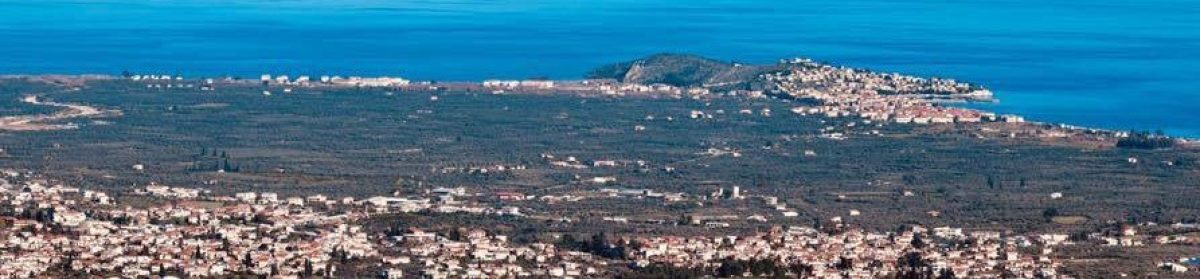


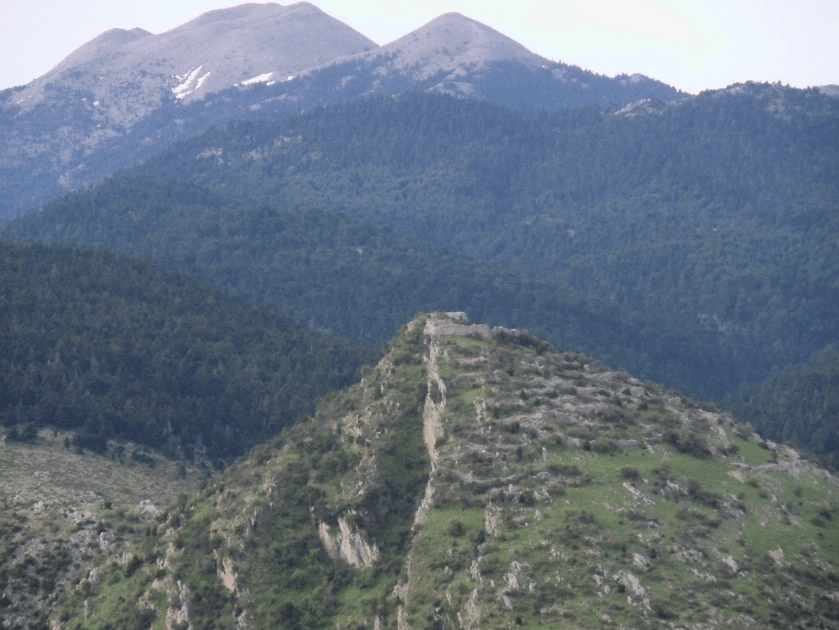


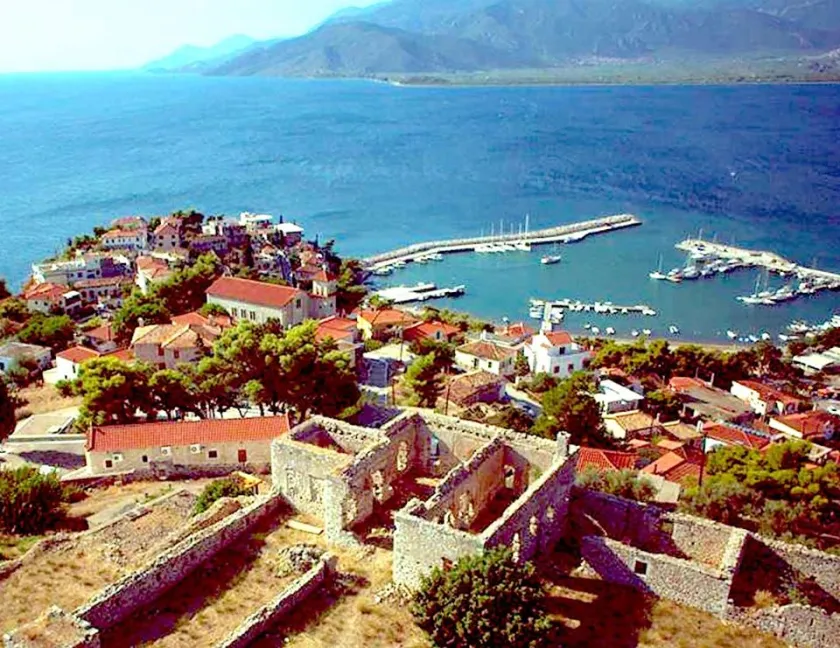
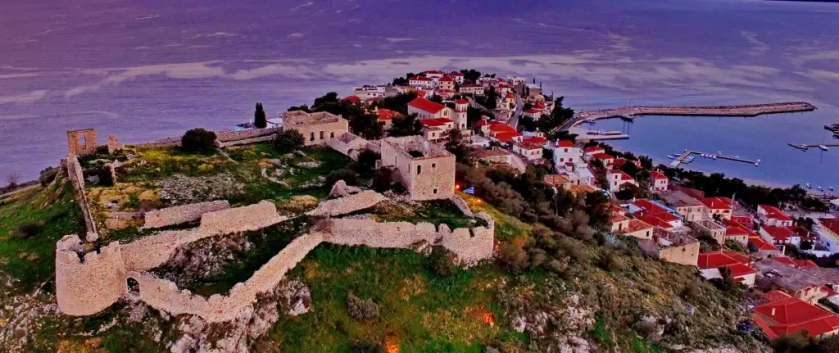
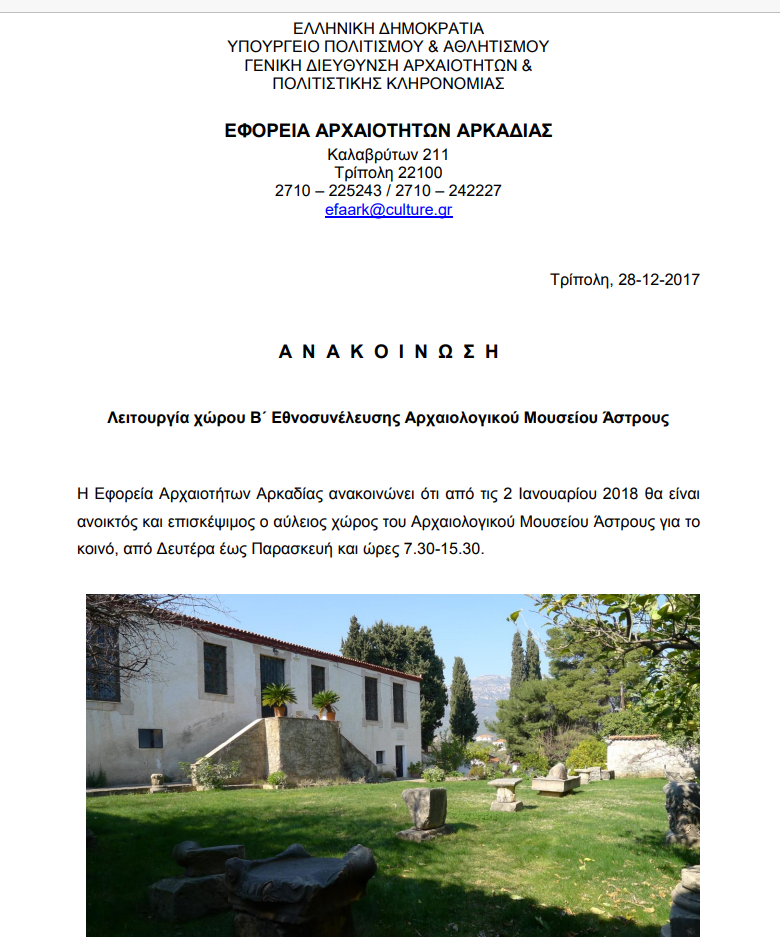

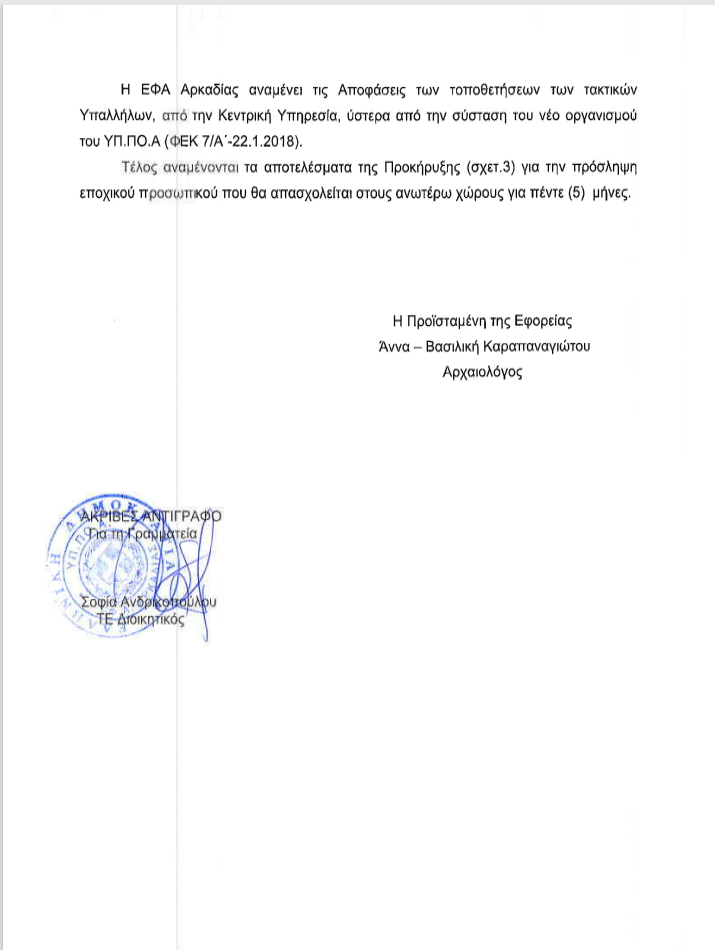
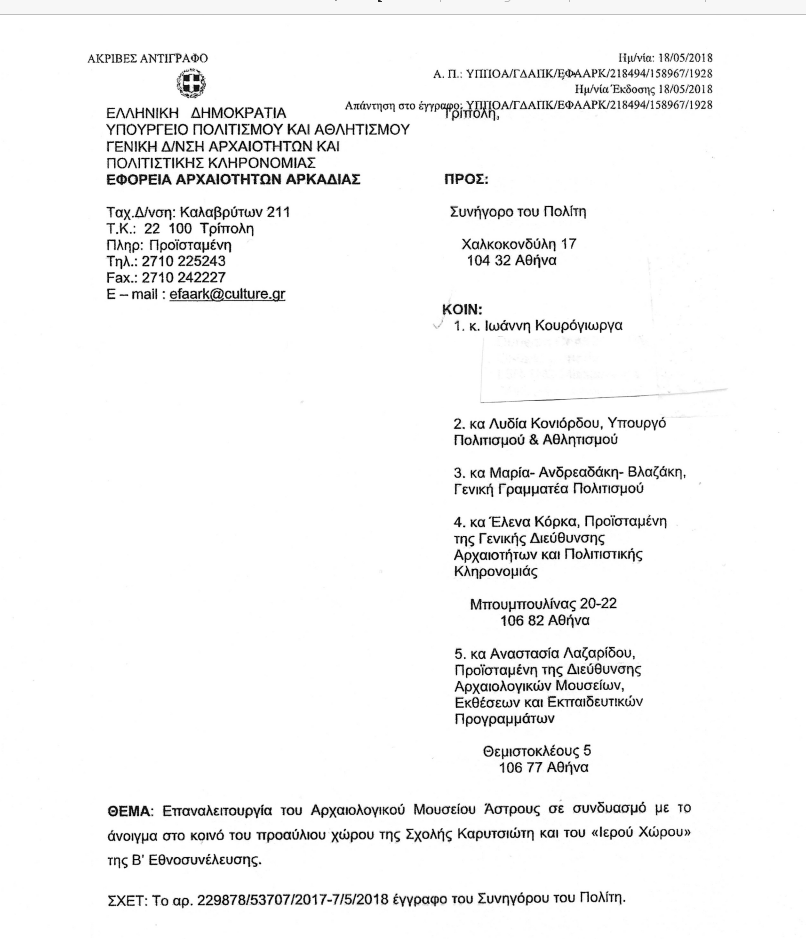



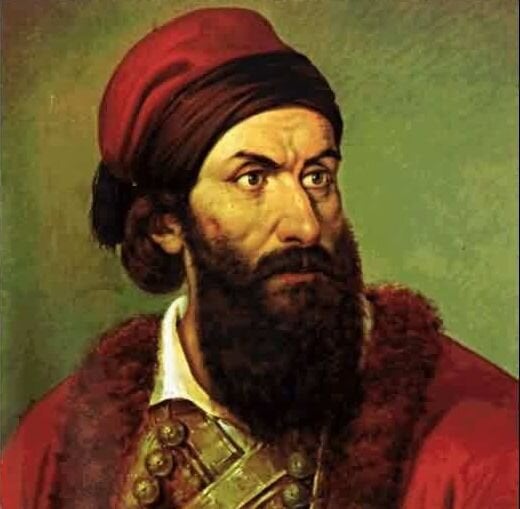
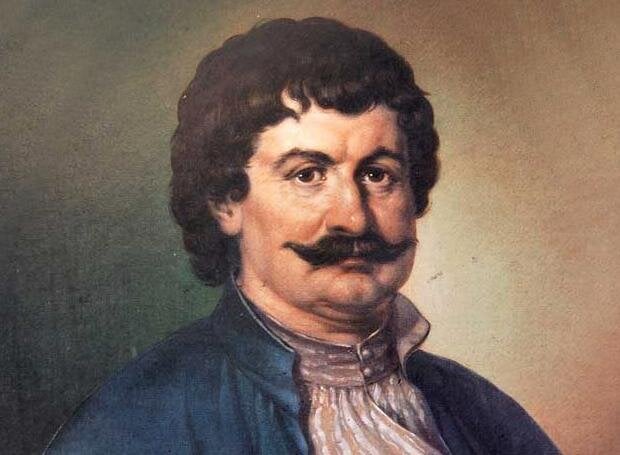


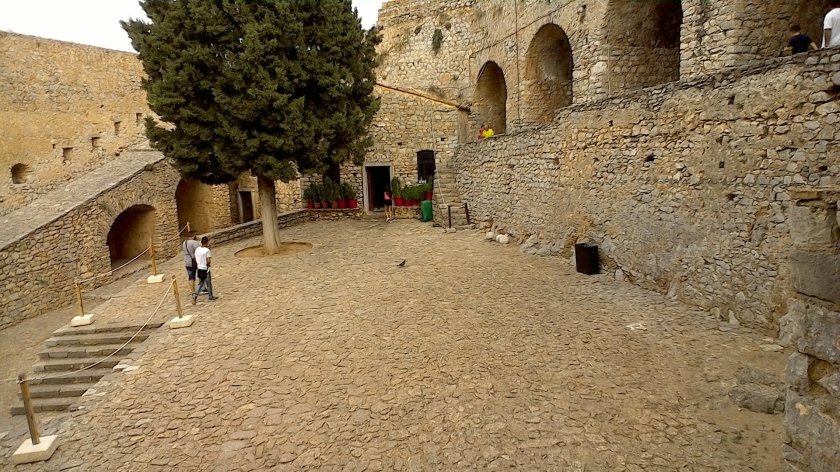


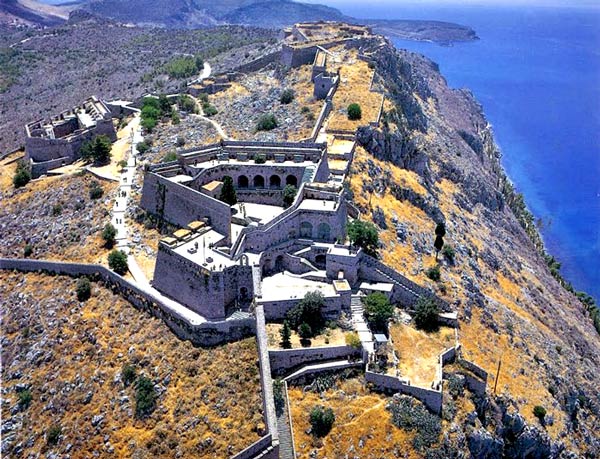

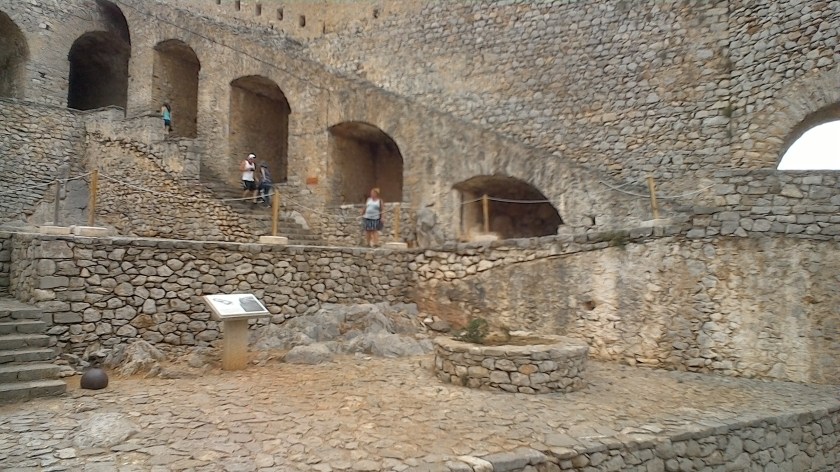
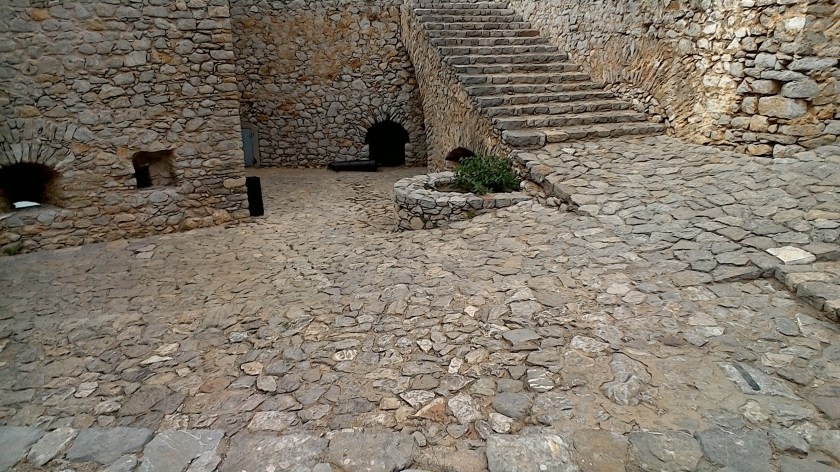


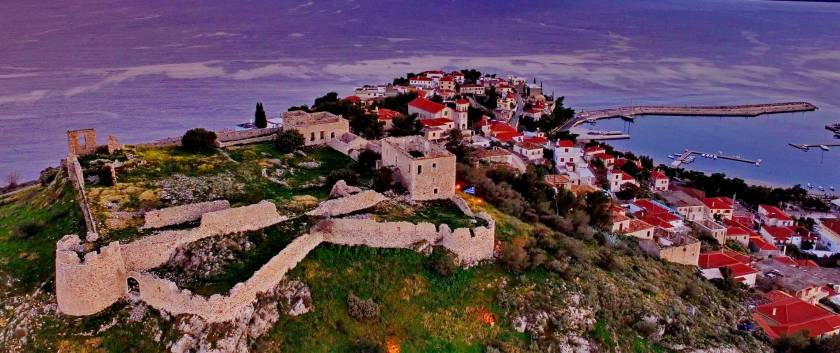


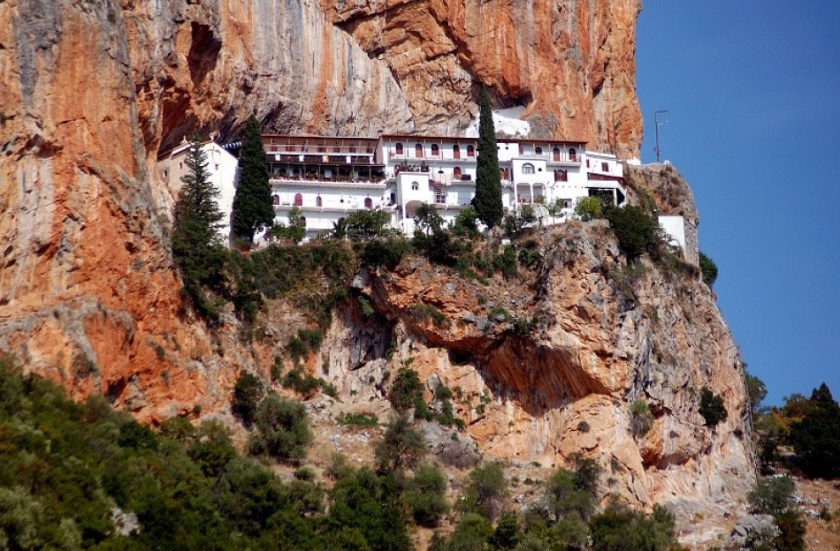

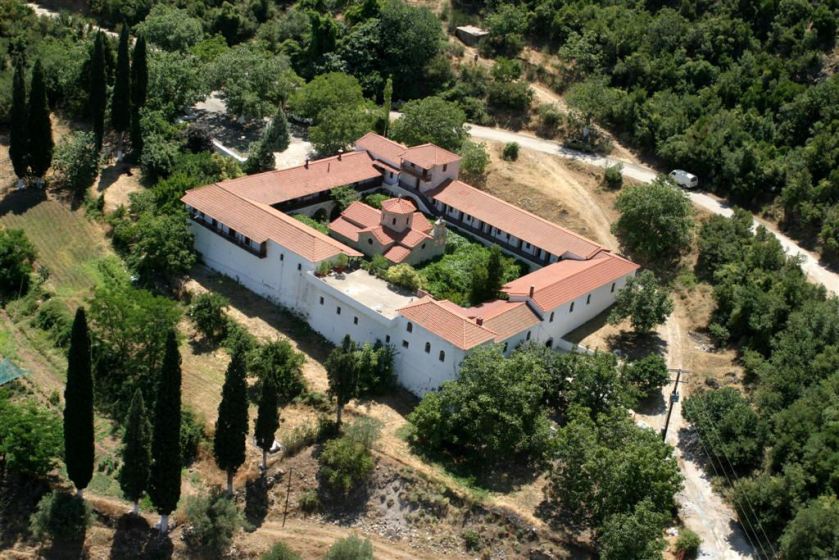
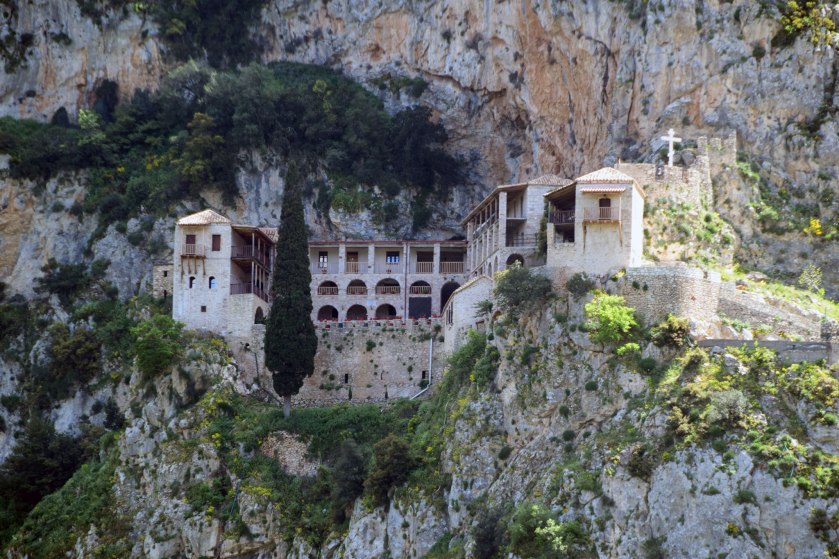


 astrosgr.com - Το Ιστορικόν Άστρος Κυνουρίας