From the “Mount Parnon and Moustos Wetland Management Agency, 2015. Guide for the protected area of Mount Parnon and Moustos Wetland. Nature, Culture, Ecotourism. Astros of Arcadia “
Municipality of Tyros
The Municipality of Tyros was a municipality of the prefecture of Arcadia that was created in 1993 with the merger of the former Communities of Tyros and Sapounakaika, which are residential and constitute the town of Tyros. In 1997, with the “Ioannis Kapodistrias” program, the former Community of Pera Melanes was added to the Municipality of Tyros, constituting the Municipal Department of the Municipality of Tyros. It operated in the period 1993-2010, when it was abolished with the implementation of the Kallikratis program and joined the new Municipality of South Kynouria as a Municipal Unit of Tyros, with a total population of 1,779 inhabitants, according to the 2011 census. The seat of the Municipality is Leonidio. It is located in the east of the prefecture and is bathed by the Argolic Gulf and the Myrtos Sea. It is 180 km from Athens, 20 km from Leonidio, 30 km from Astros and just 14 nautical miles from Spetses.
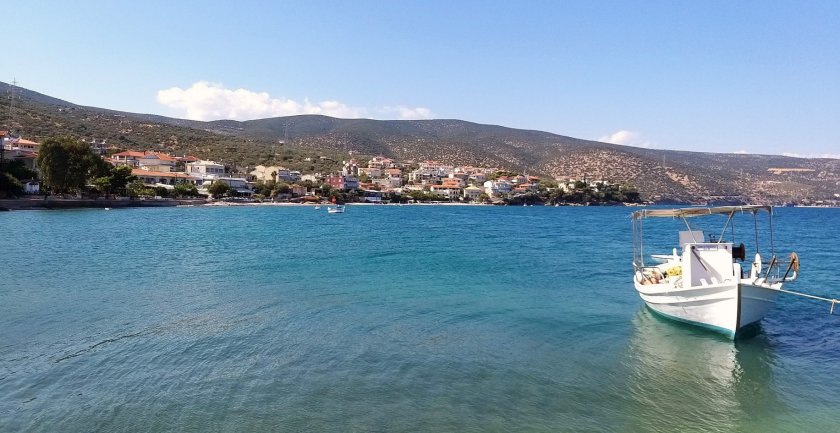
Tyros, one of the oldest naval states of the Peloponnese, belongs to the area of historic Tsakonia, where the Tsakonian dialect is still spoken. The town of Tire has been characterized as a traditional settlement and enchants the visitor as it impressively combines mountain and sea. It has a modern tourist infrastructure and in its modern port tourist boats of all types can be moored. At 18 km of coastline it has many beaches: the coastal settlements of Kryoneri and Tserfo on the road to Agios Andreas, the small resort of Agios Christoforos and the beautiful beach of Zaritsi located in the bay of the same name. Nearby are the beaches of Livadi, Kissakas, Lygeria, as well as Tigani beach at the end of the pine-covered slope. At the edge of this beach is the “cave of lovers”. At the southern end of the port, at the top of the rock, above Lygeria beach, there are three windbreaks built around 1920, with a wonderful view to the sea.
Tyros has been inhabited since prehistoric times. Remains of an ancient settlement and cyclopean walls are located at the top of Kastro hill, above the current port. Ancient finds have been found on the Paliochora plateau of Tyros and on Mount Orion (1,194 m.), Which are now in the museums of Sparta, Tripoli, Astros, the Benaki Museum, as well as the Louvre museum. In the place that today is the chapel of the Prophet Elias, on the homonymous hill, are the ruins of a temple dedicated to the god Apollo Tyrita, a local deity who was worshiped in the area and who probably gave its name to Tire. In Tyros every Easter you will see some of the most beautiful Easter customs of Greece. On Good Friday the epitaphs are processed on the coastal road of the town accompanied by the boats of the fishing fleet, on Holy Saturday night at the time of the Resurrection the burning of Judas in the sea on a floating platform (See p. 272). On Easter Sunday, the Tsakonian feast takes place in the central square, with the reading of the Gospel in the Tsakonian dialect. Several events and festivals are organized in the area. In Tyros Beach, Agia Marina on July 17 (image procession) and Several events and festivals are organized in the area. At Tyros Beach, Agia Marina on July 17 (image procession) and the Transfiguration of the Savior on August 6, Agios Christoforos on May 9 (Zaritsi), Agios Ioannis on June 29 (Paliochora), Profitis Ilias on July 20 at homonymous chapel of Agios Panteleimon on July 27 (Stenoma) and Agios Dimitrios on the first Sunday of September (Soha). On the plateau of Paleochora of Tire, at an altitude of 755 m., Is the sink of Dersios known since antiquity, which in recent years has been explored by foreign and Greek speleologists (See p. 134).
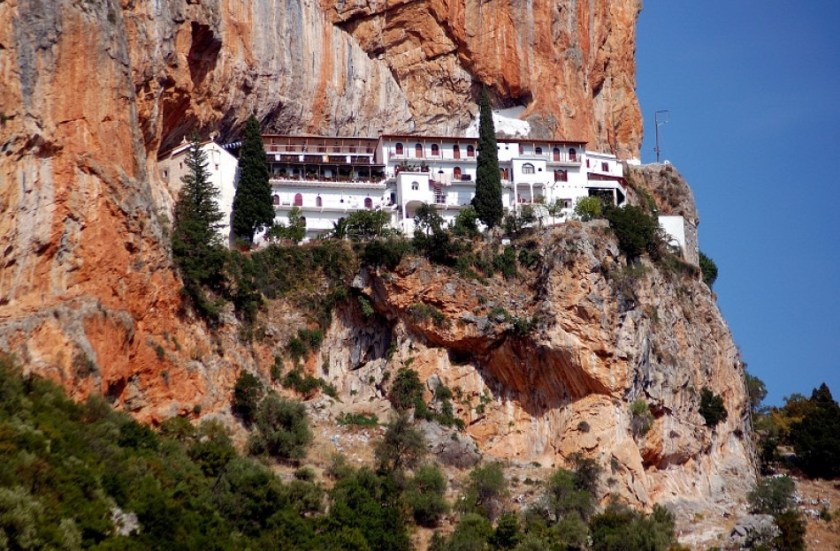
Leonidio is about 50 km from Astros, 220 km from Athens and 250 km from Athens airport. On the Astros Leonidio route there are many enchanting beaches where “the sun and the sea of the Argolic” are in their grandeur.Leonidio is today the capital and the center of Tsakonia. At a close distance from Leonidio about 17 km is the holy monastery of Elona, which as a symbol of Tsakonia is hung and inaccessible to the red rock.
From the “Mount Parnon and Moustos Wetland Management Agency, 2015. Guide for the protected area of Mount Parnon and Moustos Wetland. Nature, Culture, Ecotourism. Astros of Arcadia “.
The Tsakonian dialect, the Tsakonian dance, the costume, the customs and traditions of the Tsakonians, are another dynamic of the Parnon area. According to the “Chronicle of Monemvasia”: “And the prefectures and peasants of Thremte were settled in the rugged places adjacent to it, and finally the jaconia were named”. The Tsakones, as true descendants of the Dorians, kept their roots intact and the Tsakonian language is still the living expression of the Doric dialect. In the cradle of Tsakonia, today insists on walking and creating in the footsteps of yesterday in a perpetual and uninterrupted breath of Greece.
The special linguistic treasure of our place. The Tsakonian dialect has been included in the list of endangered languages of UNESCO and is recognized as a cultural achievement and a unique treasure of culture. The language was preserved genuine and unadulterated in the mouths of ordinary people, peasants, shepherds and farmers. In the wishes, in the greetings, in the curses, in the everyday expressions, in the teasing and the jokes, there is for centuries now the linguistic treasure of the Tsakonians. In this special part of the Greek land called Tsakonia (the cradle of Tsakonia was Prastos, Kastanitsa and Sitaina), in these rugged places, the inhabitants of the area, with few means, not only survived, but left behind a precious heritage, the Tsakonian tradition, the beautiful language, the unique evocative Tsakonian dance, the Tsakonian songs, the weaving art, their habits, what we call today customs and traditions. All this composes the identity of the place with a living language that is in the hands of the Tsakonians, but also of all Hellenism, to embrace it and protect it from oblivion
Leonidio, the capital of the sea, with a long naval history, is located at the beginning of the valley of the river Dafnonas (known since antiquity as Selinountas). It is built at the base of imposing red rocks that are a natural observatory with unrestricted views of the sea horizon. According to the 2011 census, it has 3,826 inhabitants, mostly Tsakones, with a strongly developed religious sentiment. The riverbed passes through the middle of the city like Psandros and continues to flow through its fertile plain ending in the sea of the Myrtos Sea. It is 93 km from Tripoli and 200 km from Athens. Leonidio took its name from the small church of Agios Leonidas, which refers to a gold bullion of Andronikos BI Palaiologos, in 1293 and in Tsakonian it is called “Agielidis”. It has been characterized as a traditional settlement and a historical place with two-storey and three-storey mansions with paved and pebbled courtyards, flat tiled roofed porches, high whitewashed stone walls and carved and painted, carved and painted visitor For a first taste of the local architecture.
In Leonidio are saved three of the most majestic pre-revolutionary Funerals of the Peloponnese. The tower of Tsikaliotis (1808), which from time to time hosts art exhibitions and events, is one of the oldest preserved buildings in the Peloponnese and is accessible to the public (See photo p. 367). Inside it has a nice wood paneling and a huge fireplace. Second is the mansion of Polytio (1816) and this preserved and third important building is the mansion Katsikogianni (1807), located at the northern end of the house. The Hatziroudis tower is also interesting. A real gem is the six-grade Kallia primary school, which has been operating since about 1910, while the new gem of Leonidio and the area is the “Fabrika”, the building of the Center for the Promotion of Rural History and Sea Roads in the Eastern Peloponnese. with a long and multifaceted history.
Remarkable and of historical importance are several churches of the city, such as the Diocese (the Annunciation of the Virgin) with important icons of the 17th century, Saint Catherine, Saint Kyriaki, the Three Hierarchs, the Saints Taxiarches and Panagia Hatzaliou. On a green hill south of the city is the church of Prophet Elias, which celebrates with a festival in the summer. On a hill that dominates the city, to the right of the eastern entrance, are preserved three characteristic traditional windmills.
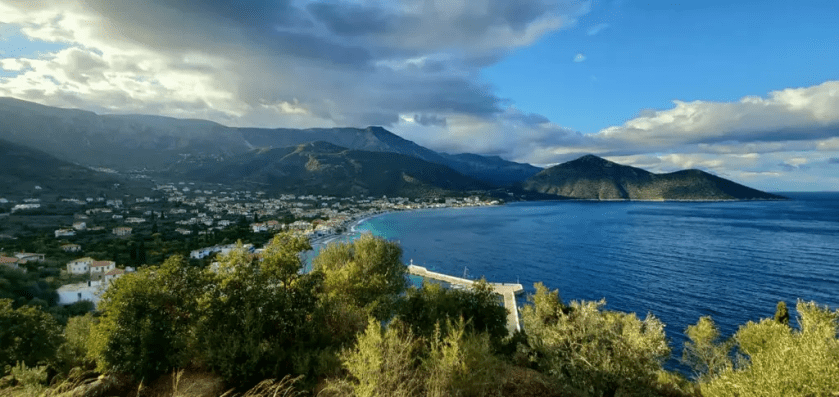
At 4 kg. from Leonidio is the port of the city, Plaka, with its picturesque port. There is a beautiful organized pebble beach near the port, as well as luxury accommodation, rooms to let, organized camping, restaurants and taverns with seafood delicacies. From the cape of Pelia, located a little north of the coastal settlement of Lakkos, to the port of Plaka, stretches a flat beach (2 km long) with coarse sand and pebbles. South of Plaka starts a rocky but gentle shore, which is suitable for underwater fishing.
The ancient name of Leonidio is Vrasies or Prasies, whose location was above the port of Plaka, on the hill with the chapel of Agios Athanasios. Plaka is today the port of Leonidio. Here, according to mythology, the sea in Larnaca washed away the unprotected little Dionysus, who was received by Ino and hid in the Cave of Sintza (See p. 128) and since then it is called the cave of Dionysus.
Leonidio, the “safe place” according to Theodoros Kolokotronis and the “Dionysus garden” according to Pausanias, is the homeland of the painters Nestoras Varveris and Vrasidas Tsouchlos, the poet Costas Ouranis, George Sarantaris, Elisabeth Ps. It is the homeland of many fighters, shipowners and financial sponsors and military leaders of the Struggle for Freedom of 1821. When Ibrahim’s Egyptian army in 1826 destroyed the historic capital of Tsakonia, Prastos, its inhabitants fled to Leonidio, where it began to develop. The once isolated Tsakonia, tightening its ties with the major urban centers of Europe and the East, smells the wind of freedom that blows from the West and due to its strong economic position, leads the Greek Revolution that shocks the Ottoman Empire. It is worth noting that the armament of Leonidio and the whole of Tsakonia played a very important role not only for the development of the region, but also contributed decisively to the Revolution of 1821.
The cape of Leonidiο produces a variety of agricultural products, citrus fruits, olives, tomatoes, lettuce and other vegetables. A typical product of the region is the Eggplant (Tsakonian, as it is known), which is sweeter than other varieties, mainly due to the climate and soil and is famous as the most delicious in Greece. At the port of Leonidio, Plaka, at the end of August, the “Festival of the Tsakonian eggplant” has been established (See p. 279) while in Leonidio is also organized the now famous Melitazz Festival (See p. 270).
Easter in Leonidio is impressive (See p. 271), so much so that Dimitris Psathas once wrote: “Carnival in Patras and Easter in Leonidio”. At a distance of 5 km from Leonidio, west on a rock, is the monastery of Agios Nikolaos Sintzas (See p. 192).
In all the great battles and sieges the rebellious Tsakones give the thunderous present. It is said that they fought and shouted: “The nutcracker of the tanu is jealous of the saddles, and Eona is guarding the tsakonops”. That is, “The nutcracker thunders on the saddles, Elona to guard the tsakonopoulos.”
History
Due to its fortified location and available water, the site of South Kynouria flourished during Mycenaean times. Typical vaulted tombs have been excavated in Paleochori, Leonidio and Vaskina, while the Greek leaves of the Dorians, Achaeans and Ionians were mixed here. From the end of the 11th century BC. and until the arrival of the Romans the land of Kynouria was incessantly claimed from Argos and Sparta. The Kynourians cross the Mediterranean, reach and meet Taranto and the shores of the Marmara Sea. This explains the preference of the Byzantine emperors for the Tsakonian warriors, since they knew their devotion and their ethos. During the period of Roman rule the area developed peacefully. The Tsakonians have been known by this name since the years of the Byzantine Emperor Constantine VII, forming during these years a separate military corps.
Tsakones friends, Tsakones friends and Tsakonia friends
It is remarkable that the Tsakonian culture is kept intact and alive for 3,000 years. This is not accidental but it is due to the passion and devotion of our ancestors, to maintain and carry the flame of Tsakonia through the centuries. This passion and devotion to Tsakonia is as evident and alive today as ever, may you all be well. As neighbors and friends of Tsakonia, we admire you and thank you for inspiring us and giving us “the passion for Tsakonia”.
In our digital age we must quickly catch the train of history. The Tsakonian language has remarkably been preserved intact orally over the centuries but we all understand that we must participate in our digital age to more easily achieve more for our children. We must speak, but we must also learn to write Tsakonika and most importantly if we want to better maintain the flame of our ancestors, we must also teach our children to speak and write Tsakonika.
With everything you do every day for the Tsakonian culture, you inspired us to participate as we can and we know in this great and difficult effort.
On our website astrosgr.com/en we designed the section The Tsakones a “blueprint for a website” that with the offer of many others, m ore experts from us, can later be improved and become a useful e-book, for preservation, learning and promotion of the Tsakonian language. We all know “WRITINGS REMAIN”.
The goal is to write e-language courses in a series for students of the future and at the same time to offer other useful relevant texts about Tsakonia, the obvious and what we can. We will find the right volunteers, we can not do everything.
We do not intend here to replace Kostakis Defner or the Tsakonia Archive. We try to make something simple and easy to use, yet easily accessible on our mobile phones, which will help our new friends to easily come into first contact with the Tsakonian language, to learn five basic things and then find their way. The report will be there and will improve over time for an easy use for those who want. “In our digital age we must quickly catch the train of history.”
I’m sure you will take a look at the draft of the “Tsakones” page and submit your own suggestions so that we can make something better together with many others. We owe it to Tsakonia.
This draft is daring because personally we are not teachers and we do not speak Tsakonika but you stuck the disease “passion for Tsakonia” and we consider such a thing self-evident for everyone, that should have happened.
We throw the draft of the section The Tsakones – astrosgr.com , the idea and “what we can do” to all Tsakones, teachers, friends of Tsakonia and public organizations that I am sure will continue better than us. There are many ways to achieve that “we owe to Tsakonia”, we can still look for funding from the Ministry of Culture, NSRF and UNESCO. To put it bluntly, the Municipality of South Kynouria, the Municipality of North Kynouria, the communities of Leonidio and of course organizations that have done a lot of work, such as the Tsakonia Archive, have the first say.
Eventually we will succeed in our work, when we see an admirable website about the Tsakonians and the Tsakonian language, which sooner or later will be done by the competent organizations with the participation of all the friends of Tsakonia. We owe it to Tsakonia.
Take a look at the topics / categories on The Tsakones – astrosgr.com main page. We do not suggest changing what you are doing today, but continuing the same and more that you can do with the same passion. Just all this and much more than the existing ones we will organize and coordinate them into categories in the section “The Tsakones” for easy access by our friends.
The section The Tsakones – astrosgr.com will deal primarily with the documentation of the Tsakonian language.
Of course there will be questions that we will be happy to discuss.
“Thales was one of the most important scientists of all time”
Intellectual and financial freedom create the perfect conditions for a spiritual take-off.
The Ionians, were the Greeks of the first diaspora, became free from the established way of life and thought, and far from any influence of the old changed the course of history. Anxious and adventurous, they quickly became financially independent of trade with other eastern peoples, and created an environment that allowed them to challenge, encourage, and allow for questioning and rational explanation of everything.
Suddenly the world abandoned the myths and religions that dominated its thinking for millennia, from its appearance on planet earth, and began to think logically.
The right moment had arrived in the history of mankind for the so-called creation of the Greek miracle.
Undoubtedly Thales the Milesian influenced humanity more than any other human being, he gave us the word and the common mind, a useful tool to do everything right.
“Those early philosophers had one thing in common: they all believed that behind all the changes there was a certain element of primacy.
“Thus philosophy was liberated from religion. We can say that the natural philosophers took the first steps towards a scientific way of thinking and thus laid the foundations for the later development of the natural sciences.
“… ..This process resulted in a deep spiritual fermentation, as well as serious effects on the mental history of man. It is obvious, then, that the economic and social conditions that prevailed in Ionia led to philosophical reflection. “
“But in the Ionian cities of the 7th and 6th century BC. there was a powerful bourgeoisie dominated by merchants and sailors. They tried to explain the phenomena – beyond the mythical interpretations of the world – with logic and the determination of the natural causes. “
“The city that pioneered this movement was Miletus with its numerous colonies. The first philosophers lived there: Thales (640 or 624 BC – 546 BC) Anaximander (610 – 547 BC) and Anaximenes (570-526 BC).
Thales the Milesian (640 or 624 BC – 546 BC) is the oldest prosocratic philosopher, the first of the seven sages of antiquity, mathematician, physicist, astronomer, engineer, meteorologist and founder of the Ionian School of natural philosophy in Miletus. ”.”
“According to Aristotle, Thales was the first philosopher and philosophy begins with him.
Stagiritis states: They asked about the first principles and causes… but Thalis, the leader of the same philosophy of water, is a principle … (Asking about the first principles and causes is a philosophy
Aristotle, Plato and several other philosophers consider Thales the first philosopher in history. After all, his name is among those of the “7 sages of antiquity”.
Even in modern times, Thales maintains his… mathematics “prestige”. One of the most important mathematicians of recent centuries, Bernard Russell, had stated: “Western philosophy begins with Thales.” Of course, this statement can be justified, since Thales was one of the first scientists to deal extensively with the concept of “logic”, which was the main object of study of Russell. “
“The members of the school of logic believed that logic was the basis for any kind of argument. The main representatives of this school were Bertrand Russell ((Bertrand Russell, 1872-1970)
It would be more appropriate if we corrected Bertrand Russell and said better that world culture begins with Thales, since Western culture today undoubtedly has a significant influence on world culture.
“Thalis Milesios was a multifaceted personality. He studied astronomy and mathematics, physics and philosophy. Much is said about his scientific achievements and it is difficult to distinguish how many of them are not due to the legend created around his personality. He emerged as perceptive mentally and politically
Thales first sought the beginning of beings not in God, but in some natural species. Thales’s attempt to explain the nature and the multitude of natural phenomena, no longer with myth and religion, but rationally, places him historically in the first place of the ancient Greek philosophical tradition “
“Thales the Milesian, this great philosopher and very capable observer of Nature, tried to explain the origin of the Universe by inductive research, setting aside the myth. He assumed that the primordial element, the beginning and the basis of the Universe, should be one of the four basic elements in fish ”
First, then, Thales Milesius, founder of the Ionian School and founder of theoretical Geometry and Astronomy, as a bearer of the theoretical Greek spirit, which is not content with finding and memorizing data but seeks theoretical explanation and justification of facts. notion of “principle”, which has since been a key condition of the world scientific intellect “
… ”It is certain that Thales is rightly considered one of the most important scientists… ..This is because the Milesian mathematician was the one who actually gave the impetus for the mathematicians to start thinking in a …scientific way…. “, Gave the hands of later scientists a powerful tool.
Whether he believed that water, apart from being a cosmogenic principle, participates in the constitution of the world or not, the important thing is that the philosopher removes his divine property from water and recognizes it only as a physical body.
The most important thing, however, is that through his problematic for the beginning of the world he reduced the multiple phenomena of the world to an impersonal, unique or unified principle, a fact that classifies him justly in the chorus of philosophers.
Thalis is also known for the successful prediction of the solar eclipse of 585.
During his long journey, Thalis took care to transmit some of his knowledge to the neighboring peoples. In fact, when he was in Egypt, in front of the impressive spectacle of the imposing pyramids, he made sure to make his most famous measurement. No one knew the true height of the great pyramid of Giza, until Thales made a very simple and clever thought. Placing a bar next to the monstrous building, he waited for the moment of the day when the shadow would reach the same length as wood. At the same time, the height of the pyramid could be measured through its shadow. An eternal problem, unsolved even for the builders of the pyramid, had been solved in such a simple way “.
For 2,500 years our people, when they want to say that someone is very smart, also say that he is “Thalis” (the “Aristotle”) as a sign of appreciation and admiration for the great thinkers. This was said more daily for many centuries after his death. Like the 78th Panhellenic Student Competition (P.M.D.) in Mathematics it is called “O THALIS” and it is not called Archimedes, Euclid, Pythagoras, to show the great appreciation that everyone has in Thales until today.
The “company” of Thales, (the most important Prosocratic philosophers and other philosophers).
.O Anaximander
The next philosopher from Miletus is Anaximander (610 – 547 BC) Like Thales, he also had important knowledge in mathematics, astronomy and geography.
It is said that he made the first map of the world, contributed to the introduction of the use of the sundial in Greece, while he also made a celestial sphere for the convenience of sailors. Specifically, he created a global model of the heavens in the center of which he placed the Earth (geocentric model of the universe).
However, the interests of Anaximander far exceed those of Thales. In addition to mathematics, astronomy and geography, he is interested in meteorology, anthropology, biology, and even the history of civilization. His interests betray his real intention: He wanted to give a universal picture of the natural course of things from their beginning to their present phase.
The first such example in the history of science is undoubtedly the theory of Anaximander, during the 6th c. BC, that the Earth hovers in a vacuum, a theory that according to K. Popper “is one of the boldest, most revolutionary and most wonderful ideas in the entire history of the human spirit.” What is remarkable about this idea is that insight and logic led Anaximander to the correct conclusion that the Earth can not be supported anywhere, but must be suspended, while, on the contrary, the observation and experience that we are on a flat earthly surface “Clearness with the circular horizon around us was what led him to the misconception that the Earth is a cylinder (and not a sphere), on one of the flat surfaces on which man lives.”
Anaximenes (570-526 BC
The third philosopher from Miletus was Anaximenes (c. 570-526 BC). His views are considered a consequence and variation of Anaximander’s views to the point that he is considered – but without sufficient evidence – his student.
“Heraclitus the Ephesian was a Greek prosocratic philosopher who lived from the 6th to the 5th BC. century in Ephesus, in Ionia of Asia Minor 535-470 px or 544-484? ”
Democritus (~ 460 BC – 370 BC, ETYM arch., Initial note “the judge of the municipality”, dῆmos + -critus <judge) was a prosocratic philosopher, who was born in Abdera, Thrace. . He was a student of Lefkipos. He believed that matter consisted rom inseparable, invisible elements, atoms. He was also the first to realize that the Galaxy is the light from distant stars. He was among the first to mention that the universe has other “worlds” and even some inhabitants. Democritus made it clear that emptiness is not identified with anything (“non-being”), that is, it is something that exists. “
Protagoras (c. 490 – c. 420 BC), from Abdera in Thrace, was an important sophist of antiquity. He was a contemporary of Democritus, also from Abdera, a leader among the sophists and the founder of the sophistic movement. As a teacher he traveled to many Greek cities. He often visited Athens where he became friends with Pericles and other prominent Athenians. It is reported that Pericles commissioned him to write the laws for the Thurians, the Athenian colony in Lower Italy founded in 444 BC on the site of Syvar. [1]
“Epicurus (341 BC – 270 BC) was a Greek philosopher. He founded his own philosophical school, called Kipos tou Epikourou, which is considered one of the most famous schools of Greek philosophy “
Socrates (Alopeki, Ancient Athens, 470 BC / 469 [8] – Ancient Athens, 399 BC) was a Greek Athenian philosopher, one of the most important figures of Greek and world spirit and culture and one of the founders of the West. philosophy
Plato (Ancient Athens, 427 BC – Ancient Athens, 347 BC) was an ancient Greek philosopher from Athens, the most famous student of Socrates and teacher of Aristotle. His work, which in the form of philosophical dialogues has been saved in its entirety (even some incorrect works are attributed to him), exerted a huge influence on ancient Greek philosophy and in general on the Western philosophical tradition until today. The main builder of philosophy, the guide or forerunner of its later approaches, the inspirer directly or indirectly of the most important socio-political visions. [6]
Aristotle (Ancient Stageira, 384 BC – Ancient Chalkida, 322 BC) was an ancient Greek philosopher and scientist born in Stageira, Halkidiki, Macedonia. At the age of 17 he entered Plato’s Academy in Athens, where he remained until he was 37 years old. There he is associated with both Plato himself and Eudoxus, Xenocrates and other thinkers. [16] His works refer to many sciences, such as physics, biology, zoology, metaphysics, logic, ethics, poetry, theater, music, rhetoric, politics, etc., and constitute the first complete system in Western Philosophy.
Humanity has finally entered its course and the world has changed into its current form.
From the “Mount Parnon and Moustos Wetland Management Agency, 2015. Guide for the protected area of Mount Parnon and Moustos Wetland. Nature, Culture, Ecotourism. Astros of Arcadia “
North of Astros at 11 km, is Xiropigado. It is the first seaside village that the visitor will encounter coming to the coastal Kynouria. Quiet and calm environment, crystal clear beaches with crystal clear waters and pebbles compose colorful images. Xiropigado, a fishing village with rich fishing grounds, has a dynamic tourist infrastructure with dozens of hotels, rooms to let, restaurants and fish taverns that stretch along the beautiful beach. It is an ideal destination for family tourism and lovers of quiet holidays and carefree. From the amphitheater Xiropigado on the slopes of Mount Zavitsa, the visitor can gaze at the historic Nafplio and the endless blue waters of the Argolic Gulf. In the wider area of Xiropigados there are dozens of important and under exploration caves, which give a special geological interest. One of these caves, which was recently excavated by speleological teams, is located nearby north of the village and with its entrance adjacent to the main provincial road.
After Xiropigado and below the ancient Anigraia Odos of the traveler Pausanias, as soon as we see the plain of Thyrea, 150 m. From the beach we can see Dini in the sea, where in antiquity horse sacrifices were made to the god Poseidon (Birth of Poseidon). Immediately north of Dini, on the west side of Cape Pournos, at Anemomylos and 50 m. Below the ancient coastal road Argos-Thyreatidos are the remains of an ancient prison. The hiking trail on the ridges of Zavitsa above Xiropigado, which follows the route of the ancient Anigraia road of the traveler Pausanias, offers unique experiences and unique emotions, with impressive views of Argolida, Arcadia and the Argolic. In this amazing route the visitor will be impressed by Voukolopyrgos, whose history is lost in the depths of the centuries and will feel religious immersion in the view of the chapels of the Transfiguration of the Savior, St. Panteleimon, Prophet Elias and St. Constantine. During the summer season, traditional festivals and cultural events are organized.
The Vortex In the area of Lileika, in the middle of the provincial road network Astros – Xiropigadou, a rare hydrological phenomenon is observed created by the fresh waters of an underground river, as they spring from the depths of the sea and at a distance of 150 m from the shore create a distinct large circle. (“Threshing floor”) 10-25 m in diameter (depending on the amount of water). The outflow of fresh water from the depths of the sea creates this water turbine, where fresh water dances incessantly, before being received in its embrace by the salty sea. This amazing phenomenon, with rich references to ancient writers (Pausanias VIII.7.2), has aroused the interest of Greek and foreign researchers and scientists, but it has not been possible to study it completely and systematically, due to the serious dangers posed by its great depth. sea (80 m.), the existence of strong sea currents, as well as the huge power of the water turbine. From Xiropigado to Fokiano, in many places along the coastline, the fresh waters of dozens of springs are gushing from the depths of the sea.
Xiropigado of Arcadia From Wikipedia, the free encyclopedia
Xiropigado (formerly known as Xeropigado) is a village in the prefecture of Arcadia which belongs to the Municipality of North Kynouria. It has a population of 353 inhabitants. It is an old fishing village of Kynouria that in recent years presents tourist development. The inhabitants are engaged in agriculture, mainly olive growing, viticulture, animal husbandry, fishing, but also tourism.
Location[ It is located at the foot of the northeastern side of Mount Zavitsa. It is the first seaside village of Arcadia that one encounters after Argolida, on the Argos-Leonidi road. It is 150 km from Athens and 10 km from Astros Kynouria.
Near the coastlines of the village there are rocks with small caves and small inaccessible sandy beaches, ideal for seclusion. At the borders of the community and 5 km from it, on the road to Argolida, springs an underwater spring with fresh water. The location is known as “Anavalos”. There are water collection facilities at the site, which is used for the water supply needs of the Argolic plain. [3]
Local Community-
Xiropigado, Lileika, Metamorfosi, Limanakia, Plaka, Hani tou Grigou
Sights Off the sea, near the settlement of Lileika, there is an underwater spring with brackish water. The spring is located at a distance of 290 meters from the coast and at a depth of 80 meters above sea level. Its waters come from the sinkholes of Partheni and the plain of Mantineia. The source is called “Lileiko Mati” by the locals and is distinct from the land when there is relative apnea and the waters are calm, as the sea turbine with a diameter of about 25 meters is created by mixing salt with brackish water. [4]
Churches The village has two churches, Agia Marina and the Annunciation of the Virgin (known as Vangelistra).
Beaches
POSTPONE BEACH
One of the many small and quiet beaches that can be found on the way from Argolida to Astros just before Xiropigado and after Kiveri. The beach is located on the border of the two prefectures and has sand and clear waters, while it took its name from known underwater karst source of fresh water of Anavalos that originates in Kynouria and Argolida.
VILLAS BEACH
This beach is known to many as Villas because of some houses that are above them but the descriptions of older people in the area for colorful butterflies that found refuge there and often beautified the landscape, show that the original and first name of this beach is: Butterfly .
EVANGELISTRIA BEACH
Entering Xiropigado from Argolida after Evangelistria we turn left to the first houses next to the small olive grove. After a short descent we will reach the quiet pebble beach with the caves under the houses.
PAPADIMITROU BEACH
Before Xiropigado: Passing Kiveri and on the road to Xiropigado, on the road to our left we find continuous small coves with beautiful and quiet beaches. Here we will find a very beautiful sandy beach where we descend by a twisting iron staircase!
XIROPIGADO CAVE BEACH
Spilia is a beautiful beach in the center of the village. Residents and tourists when they want to refer to the beach say go to the cave. It takes its name from the two small rock caves located in the center. It has fine pebbles and beautiful waters
XIROPIGADO BEACH
The organized beach of Xiropigados with small white pebbles stretches along the settlement. Above it we will find holiday homes, rentals, beach bars and taverns.
XIROPIGADO PORT BEACH Small beach with white pebbles just to the right of the small pier of the settlement with sea colors to be unique.
See the following link for all the beaches in Astros
Every summer, two open-air local festivals are organized: One on July 26, the eve of Agios Panteleimon in the chapel of Agios Panteleimon, where the service takes place and then the party begins with food, songs and dancing. The second takes place in the church of the Transfiguration of the Savior, on Mount Zavitsa, where there is a service and then follows the feast.
Sport
The football team of the village is called “Fortuna Xiropigadou” and its colors are blue and black. He competes in the local categories of Ε.Π.Σ. Arcadia. [5] Photos from Wikipedia, the free encyclopedia
With the landing of Ibrahim in the Peloponnese, the Revolution seemed to fade away as never before.
Looting, rape and death everywhere. Only those who accepted the “ray boujurdi”, the famous pardon paper and worshiped would be saved. The trick of the Egyptian pasha caught on and whole villages began to worship.
Dimitris Nenekos from Zoumbata, Achaia, was one of the first to be feared and worshiped. Because of him, the whole village bowed down and sided with Ibrahim, unable to resist the riches he had given him.
We made him Bey with a firman, since the former Greek chief together with the askeri of 2000 Greeks strengthened the pilgrimage. They terrorized those who did not worship in the city and the outskirts of Patras.
Thodoris Kolokotronis, however, did not worship.
He learns about the Turkish worshiper Neneko, the one who had fought alongside him in the siege of Patras.
He gets angry. July 19, 1827.
“Fire and ax to the worshipers!”
The phrase of Kolokotronis that now reaches the limits of the myth and remained in history. It threatens those who worship with death.
As for the fate of the famous Nenek. He was killed by the brother of his fellow villager Ath. Sagias. The one that Nenekos killed in the first years of the Revolution in order to take the leadership of Patras.
Text: Moraites in Dance »
The old man of Moria rightly said “Fire and ax to the worshipers!” like Anagnostis Papazoglou.
“The head of Kolokotronis. I am ready for you all to paint your scooters (= clothes) black from now on “. Kotzambasis Anagnostis Papazoglou or Papazoglis.
We must always say figs figs and things by their name.
Out of ignorance of history, recklessness, the small mistake is wrongly mentioned below that the Kotzambas Anagnostis Papazoglou Papazoglis, was an important personality of the struggle of 1821.
We hope we do not resent the “Greece 2021” committee with the stories of Turko-Papazoglou, which are many.
Municipality of North Kynouria: Decision Number: 126/2020
“The suggestion of the Mayor of North Kynouria, which states in detail”… ..
“Agios Ioannis’ contribution to the revolution of 1821 was decisive as he highlighted important personalities of the struggle such as Panos Sarigiannis, Anagnostis Papazoglou, but also the Zafeiropoulos brothers (Ioannis Zafeiropoulos, Konstantinos Zafeiropoulos and Panagirotikos but also during the revolution “.
We ask the mayor to correct the above text by removing “Anagnostis Papazoglou”.
Kotzambasis Anagnostis Papazoglou Papazoglis was a powerful prostitute and tax collector of the Turkish conquerors of Agiannis, the fear and terror of Moria for Greeks and Turks. He got his undisputed power from his excellent financial relations with the gate and the Turks, who needed the Kotzabasids to collect the hike from the blood of the people. Besides, his ancestors had Turkishized their name to Papazoglou, from the Greek name Papadopoulos.
He offered nothing to the liberation struggle because he died in 1818, before the revolution of 1821, from poisoning by members of the Friendly Society. The Friendly Society poisoned Turko-Papazoglou for fear of betraying the company to the Turks and mainly because he did not agree with the goals of the Friendly Society and worked with the Turks to fulfill his own plans, which were contrary to the plans of the Friendly Society. to rule the whole Peloponnese in his own way.
What we know about Turko-Papazoglou has nothing to do with the liberation struggle of 1821.
On the contrary, he had a permanent Turkish guard, he robbed as much as he could, like the monastery of Loukos, and he carried the groschen of the Turks for the head of the old man of Moria. There are many more, we reserve for later if needed.
The Friendly Society, which knew more than all of us and our mayor, poisoned Turko-Papazoglou very well and we will not all rightly mention his name anywhere in the celebrations for the 200 years of the liberation struggle by the Turkish occupiers and their collaborators. .
AstrosKynouria – News By Giannis D. Kourbelis
“During 1805 – 1806, when the great persecution of the thieves took place, Theodoros Kolokotronis took refuge in Mani. When the pasha of Tripolitsa found out, he sent Anagnostis Papazoglou with 50,000 grosis to the Bey of Mani, Antonbei Grigorakis. When Papazoglou arrived, he met Antonobei, handed him the groschen and the following order: << The head of Kolokotronis. Ready for you all to paint your scooters (= clothes) black from now on >>. Afterwards, Bey gave the money to Konstantinos Dourakis from Mania, in order to find and hand over to the pasha Kolokotronis. “As it is known, Dourakis trapped Kolokotronis in his tower, but Kolokotronis escaped and took refuge in Zakynthos.”
“We want to mention that the words, kotzambasides and collaborators, are the dirtiest words in the Greek language.”
In the above photo is the prostitute, Ioannis Logothetis, prefect of Livadia. Painting by Louis Dupre. Comments are unnecessary.
Throughout Greece and every season, a traveler can choose many and at the same time wonderful destinations.
Vervena, Arcadia, invites you to get to know them.
They are located on the west side of Mount Parnon. Twenty minutes from Tripoli, fifty minutes from Astros and just two hours from Athens. Visiting this wonderful mountain village of Arcadia is a unique experience. Decide it.
In general, we can say that you will travel back in time. You will feel the harmony of the natural environment, you will enter even for a while, in a way of life simple, carefree, full of human warmth. Throughout the Greek countryside, but here in our Arcadia, the nostalgia of yesterday, the enjoyment of simple things and the relaxation from the difficult everyday life seem to coexist and are “generously” given to each visitor.
Particularly :
1. Vervena is a beautiful traditional settlement with its own color, unique because the tourist development did not alter the essence of its traditional authentic character. It is masterfully integrated in the natural environment, built with materials provided by its place .. At an altitude of 1160 m. (The highest village in the province of Kynouria and one of the highest in Arcadia), the existence of large and wide roads, which serve locals and foreigners, is admirable.
2. REFERENCE TO THE RARE GEOMORPHOLOGY OF THE VILLAGE Its cleanliness, famous. Its alleys are flowery. Obsession for the inhabitants is the good reason that comes from foreign lips. Because they know that this praise is worth twice as much.
3. Its inhabitants, part and continuation of the landscape. Simple, simple, essential. The Doricity of their character, an asset hard to find nowadays…
4. Noteworthy: · The panoramic view of the entire Tegeatiko and Mantinea area.
· The Towers that played an important role in the revolution of ’21 (The tower of Papaioannou (Darveris), Marlagouzos, the Cretan, Adrachtas),
· The big Fountain,
· The I.N. Timiou Prodromou,
· The church of Panagia etc.
And if you are lucky, you may also meet Pana, the son of Hermes and Dryope who runs on the slopes of the Berven mountains, “In the beautiful place where people like it, where are the sweet wines, the nice lads, lemongrass twigs » . DIANA
5. At sunset you will be enchanted by the unique games of light. You will see many sunsets in your life, few will remain in your memory 6. There are traditional taverns with good cuisine and local ingredients.
From our Municipality
Historic village known since the Revolution of 1821. Here was one of the two victorious battles under K. Karabelas against Mustafa Bey, the other was that of Doliana, which led to the Fall of Tripoli. One of the most mountainous villages of the Peloponnese at an altitude of 1160 meters, it has at its feet the plain of Tripoli. It is inhabited mainly in the summer, as well as the neighboring village of Ano Koutroufa, which is lost in chestnut and walnut trees. It is 40 km away from Tripoli and stands out for its stone and marble houses. Impressive is the Church of Panagia that has been built by Tinian craftsmen. The first printing house of the Struggle of 1821 operated in the village, while a marble plaque placed in 1920, reminds the fact of the arrival of Dimitris Ypsilantis in the village on June 21, 1821 where the Peloponnesian Senate was established. Ano Vervena was set on fire in 1826 by Ibrahim. Its inhabitants have been transferred to Kato Vervena, a seaside settlement near Paralio Astros, which is a tourist resort with a developed infrastructure and an excellent sandy beach.
From the “Mount Parnon and Moustos Wetland Management Agency, 2015. Guide for the protected area of Mount Parnon and Moustos Wetland. Nature, Culture, Ecotourism. Astros of Arcadia “
. Vervena
The historic Vervena is a mountainous village of the Municipality of North Kynouria, in the northwestern slopes of Mount Parnon and at an altitude of 1,160 m. And at a distance of 42 km from Astros. In ancient times, according to the lexicographer Isichios, the Bervenians, an Arcadian genus, may have lived here. Significant archaeological finds have been found in the area of the village, while in the place of Panteleimon, north of the village and at a distance of about 2 km are the ruins of the sacred temple of Artake of Knakeatida. There are ruins of Byzantine settlements around Vervena. Thanasis is a special figure in the area of Kleftouria
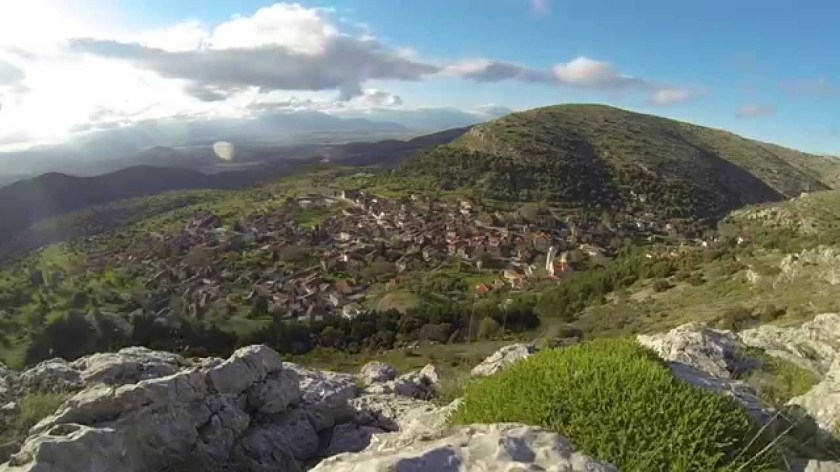
In the much-sung Vervena, the visitor is pleasantly surprised by the majesty of the landscape and the architecture of the historic village. Every point and building of which awakens the pride and brings to life the memories of 1821, where some of the most glorious pages were written here. of the history of Karabelas, one of the most famous thieves of the Peloponnese, whose achievements were praised by the popular muse. In the revolution of 1821, Vervena played an important role, mainly due to its strategic location. Their camp was the first and one of the most important during the first days of the struggle. Here Kolokotronis had set up his headquarters, in the Tower of Augustus, before his attack against the Turks for the conquest of Tripolitsa. The first organized Tutorial of the Struggle also operated here and the heroic battle took place on May 18, 1821 (See p. 267). Important personalities of the Struggle passed through Vervena during the Revolution, including Dimitrios Ypsilantis, who addressed the fighters with an inspiring speech (June 21, 1821). The village was completely set on fire in 1826 by Ibrahim. The beautiful image of the village is completed by the imposing tower houses, the impressive stone houses, the picturesque alleys, the squares with the marble sculptures. Remarkable are the churches of Timios Prodromos and Panagia, a work of Tinian craftsmen from the beginning of the century, built with money from the Brotherhood of Vervenians from America. The only source of water in the village until the aqueduct was built was the “Great Fountain”, built in 1788 from white marble consisting of two arches corresponding to taps. The facade is decorated with reliefs depicting human figures, animals, trees and geometric patterns. Of remarkable interest are the works of the Bervenian sculptor Konstantinos Gavros, which dominate placed by him in prominent parts of the village. He was a popular, self-taught sculptor of the first twenty years of the 20th century and was influenced by the Tinian craftsmen who built the Church of the Virgin. The village is not inhabited in winter. Many inhabitants have been wintering for many years in the settlement of Kato Vervena, in Astros but also in many other places both in Arcadia and in the neighboring prefectures.
Folk song of the Verbena
They pressed the Verbena – mother today they made them birgiani-hello leventi They got white, they got floria-mother today they got pearls-you got lads They also took a bride-good today walks-good today And it does not go back-the trees wither -Walk star, walk dawn-good today Walk the bride-baby ‘Verveniotopoula Do not be burdened by the flowers-baby today Do not be burdened by the tassel-baby’ Verveniotopoula -D floria-mother today I do not weigh the tassel-baby ‘Verveniotopoula Mon’ weighs me the child-good today that I left her in the crib-I curse the gums And I said to the cradle: rock it-baby today Let me go back-to do not forget it. (Collection: Ioannou I. Tyrovola)
From Wikipedia, the free encyclopedia
Vervena (or Vervaina or Vervena, also known as the incorrect Ano Vervena) is a mountain village of Kynouria in the prefecture of Arcadia which has been characterized as a traditional settlement. They are built on the northern slopes of Mount Parnon at an altitude of 1,160 meters, being its most mountainous settlement and one of the most mountainous villages of the Peloponnese. They are 20 km from Tegea, Arcadia, 35 km from Tripoli and 45 km from Astros. The inhabitants live in the summer and during the winter months they move to Kato Vervena, Xiropigado, Astros but -to a lesser extent, to the surrounding settlements.
Ancient times
In ancient times, the Bervenians, an Arcadian genus, may have lived here, according to the lexicographer Isichius [2], while the area of the present village belonged to ancient Arcadia. The oldest relics that have been identified in the area date back to the 2nd millennium BC. and these are stone pickaxes found at Petra, where the homonymous fountain …………….
Greek revolution
During the Revolution of 1821, Theodoros Kolokotronis founded a camp in Vervena and had set up his headquarters in the Tower of Augustus, which is still preserved. On May 18, 1821, the Turks from Tripoli, Arcadia, attacked the village camp, but were repulsed at the battle of Vervena and Doliana. On June 21, 1821, Dimitrios Ypsilantis arrived in Vervena from Odessa, Russia, where the Peloponnesian Senate had settled, where he was officially welcomed, which is mentioned on the marble slab, in the form of an open scroll, which was posted in 1920 in point of reception. In July 1825, the village was attacked by Turkish-Egyptian forces, while in 1826 it was set on fire by Ibrahim. ==================================
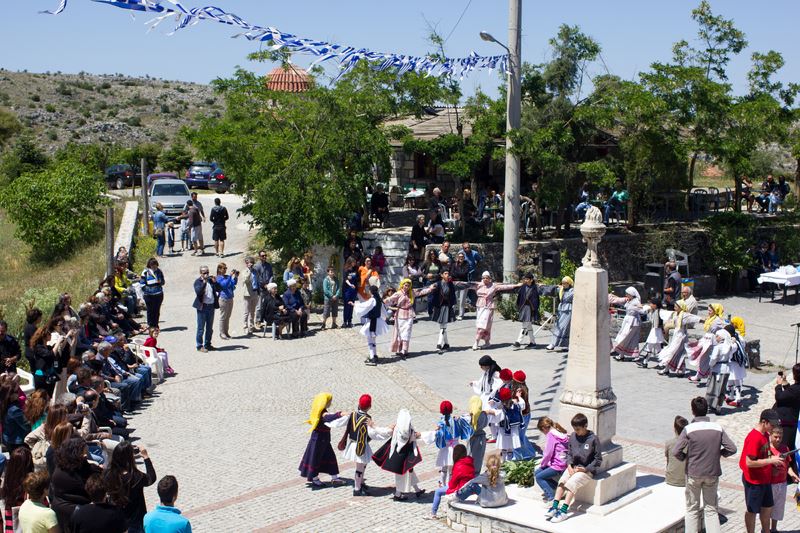
Verveniotes in Doliana From Astros News January 9, 2012 ~ By Panagiotis V. Faklaris
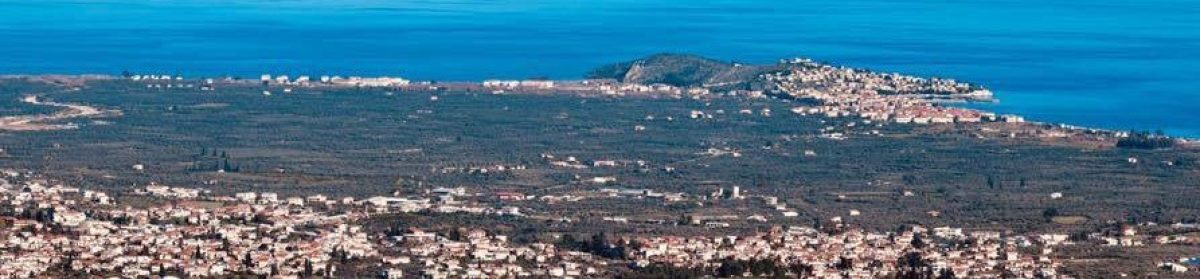
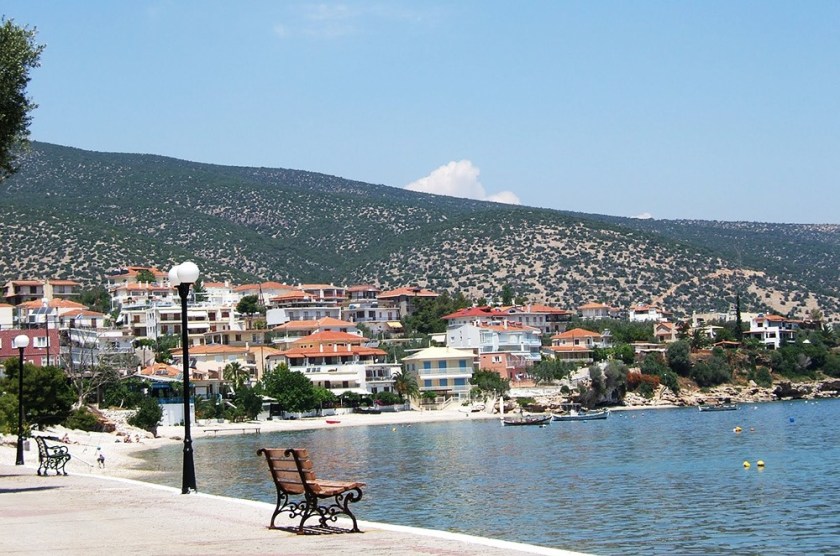
Kato Vervena, Arcadia Kato Vervena is a small settlement at the foot of Mount Za joke, 5 km from Astros Kynouria. It is the first settlement of the plain of Astros that we meet coming from Athens. It is the winter residence for most of the inhabitants of the mountainous Bervens.
Until 1927 it was called Chereni. Then, on August 20, 1927, it was renamed Temenion [2], a name that lasted until November 13, 1984, when it received its current name. [3]







 astrosgr.com - Το Ιστορικόν Άστρος Κυνουρίας