We will gradually add links that will lead to details on each topic. For those who like hiking a bit. Let’s go for a walk in the village, “in Astros the arched and with its nobility”, we have a lot to see on foot or by car.
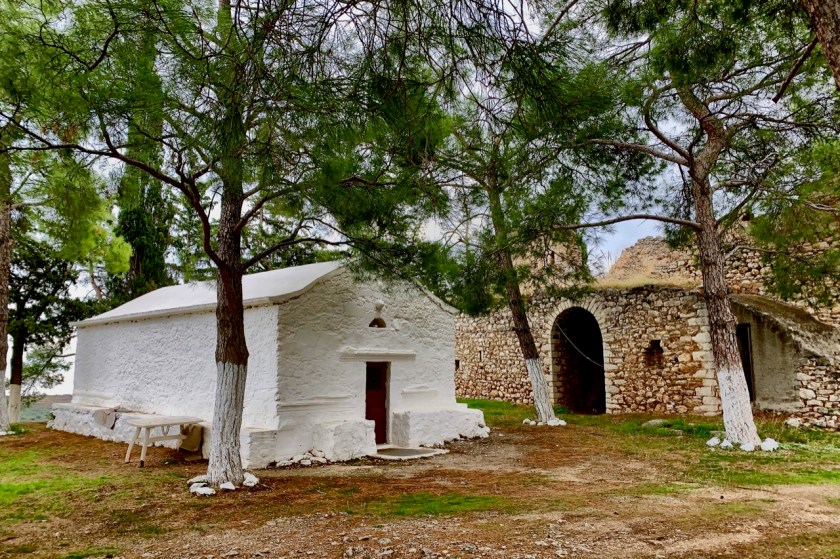
Of particular interest is the church of Agios Ioannis Prodromos in Agiannis. The abundant icy water of the spring Prodromos flows through five canals, one is very low, just below the church, as if the water seems to come through the church. (17km)
Agios Ioannis (Agiannis) of Kynouria, was the capital of the Greek state in 1822 and offered many and important things in the revolution of 1821.
Let’s go for a walk to get to know the sights of Agios Ioannis (Agianni) Kynouria. We will walk slowly to the village and we will see all the sights in a row. Later where we have material we will add links that will lead to details. We have a lot to see around Agiannis
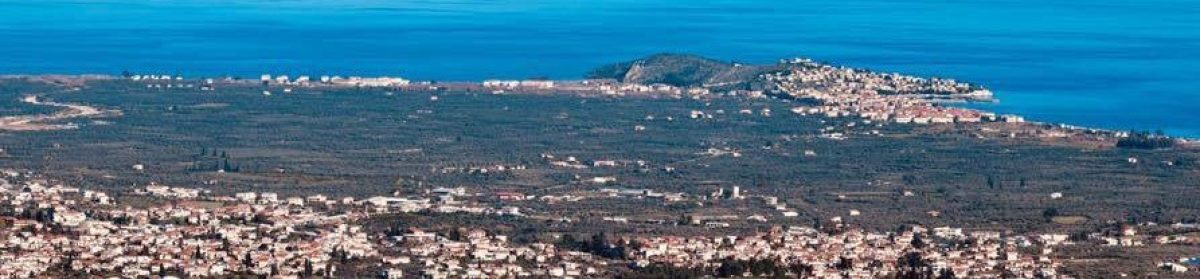
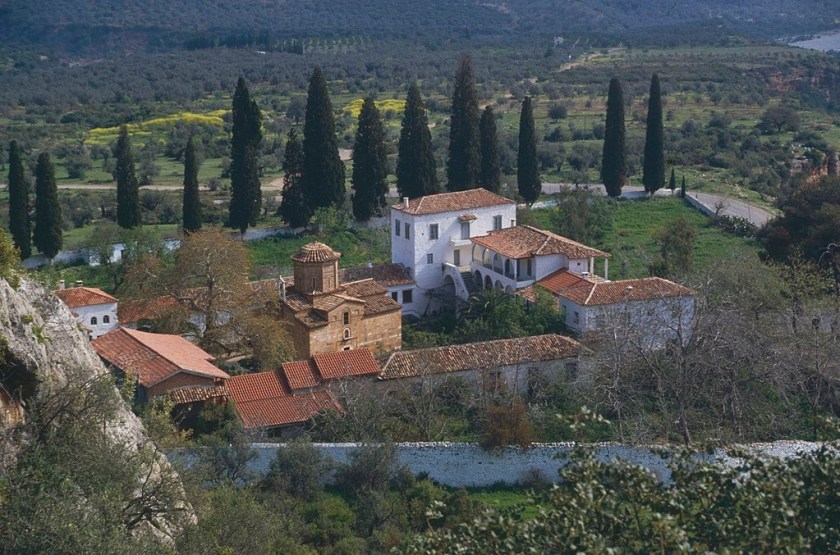
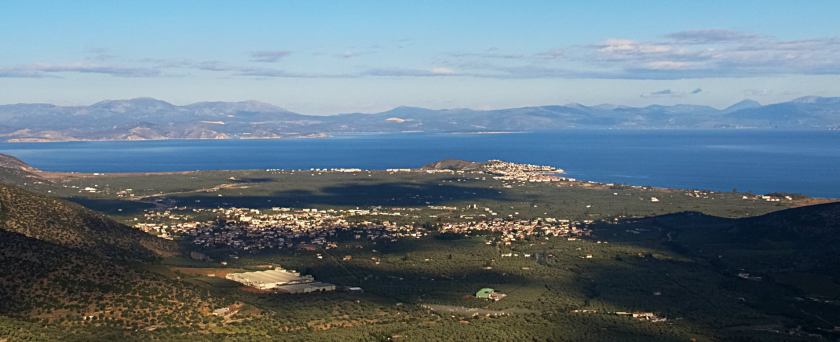
1)In the first photo we can see a partial view of Agiannis from Kalogerovouni.
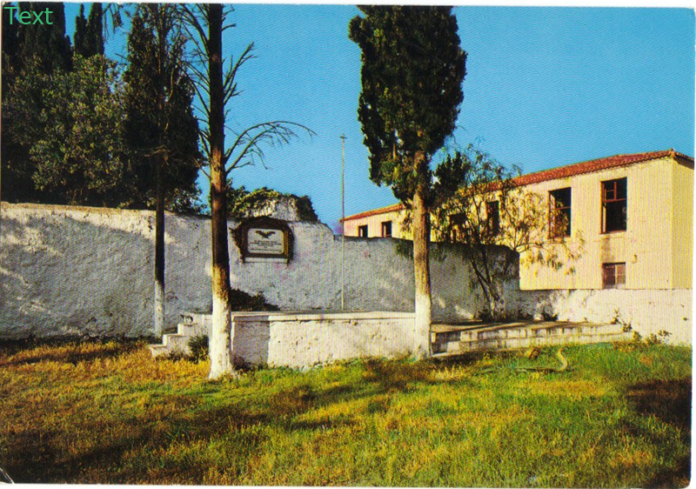
2)Our walk begins with the founding inscription of the Karytsiotis School of Agiannis. «1798 IN MONTH JULY 18 THE SCHOOL TO PHILOTHEAMON. WHY DID YOU GET BURIED FRIEND FILOTHEAMON WITH A QUESTION SECRET YOU ASK MY NAME……………..
Pre-revolutionary Greece had many small “hidden” and few open schools. One of the few obvious schools was the famous Karytsiotis School that was built in 1798, 23 years before the Greek revolution and this is of great importance. It was built on the hill Koutri of Agiannis Kynourias and was one of the few “universities” of our pre-revolutionary homeland and its students were from all over mainland Greece and our islands. Our great benefactor Dimitrios Karytsiotis (1741 – 1819), a powerful Agiannitis patriot of the Diaspora, found a way to allow the 400-year-old Turkish conquerors to acquire and operate the school in Agiannis and in the branch of the Karytsiotis school in Astros, which in 1805.
3) The “government” located very close to the Karytsiotis school of Agiannis was the seat of government The Karytsiotis school played a primary and decisive role in making Agiannis the capital of revolutionary Greece from 15 August to 1 October 1822. The “government” located very close to the Karytsiotis school of Agiannis was the seat of government. under the windows.
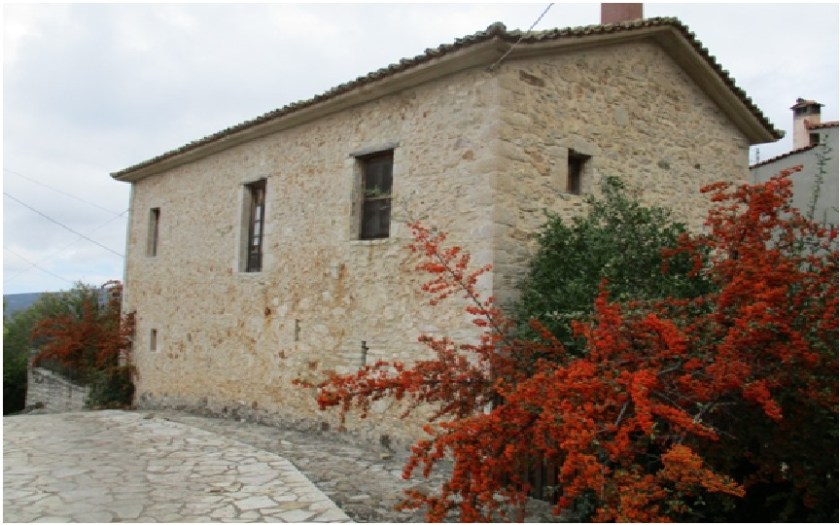
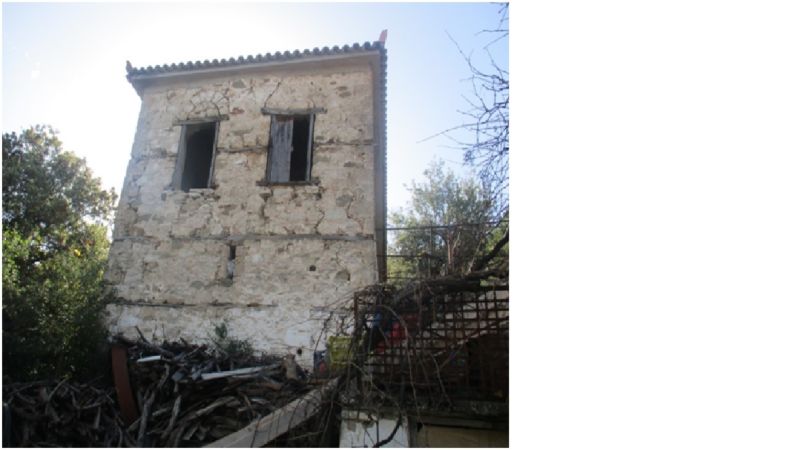
4) The mansion of Zafeiropoules in Agiannis The above mansion of Zafeiropouloi is located just above the source Soulinari, at the bottom of the village and is just below the school Karytsioti. After the πριν before the.’S burning of the school by Ibrahim in 1826, Panos Zafeiropoulos and Akouros here initially transported the 1500 books of the Karytsiotis school here, before transferring them permanently to the castle of Paralio Astros for better preservation
5) The famous traditional spring Soulinari Agiannis was the capital of Greece under the Provisional Government of the Revolution, from August 15 to October 1, and the neighborhood of Soulinari was the metropolis of Agiannis. specifically in the place of Matthew and near the source Soulinari.
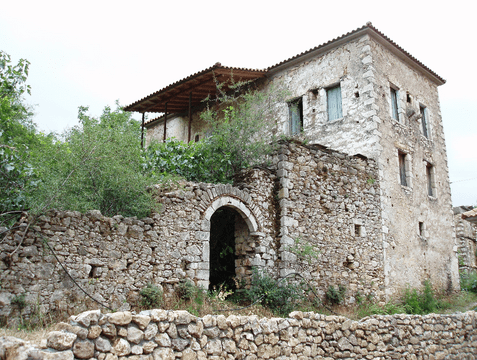
6)” According to the historian Nikolaos I. Floudas “The mansion of the Kourogiorgas – Fourliga family in Agios Ioannis. It is located in the place “Elagos – Agios Vassilios”, near the source Soulinari. The lower school of the village was housed here during the Turkish occupation
7)”According to the historian Nikolaos I. Floudas, who saved the relevant Agianniti tradition, after the burning of the Karytsiotis School by Ibrahim Pasha, the students were taught in the basement of this mansion as well as in the neighboring mansion of Fourligas” (Grigori)\
8) The mansion of Panos Sarigiannis as it was in the 1960s. Panos Sarigiannis was one of the pworkers of the Revolution in the Peloponnese from a very early age. In 1820 he was initiated into the Friendly Society by Agiopetritis Protestant Anagnostis Kondakis, in Constantinople,
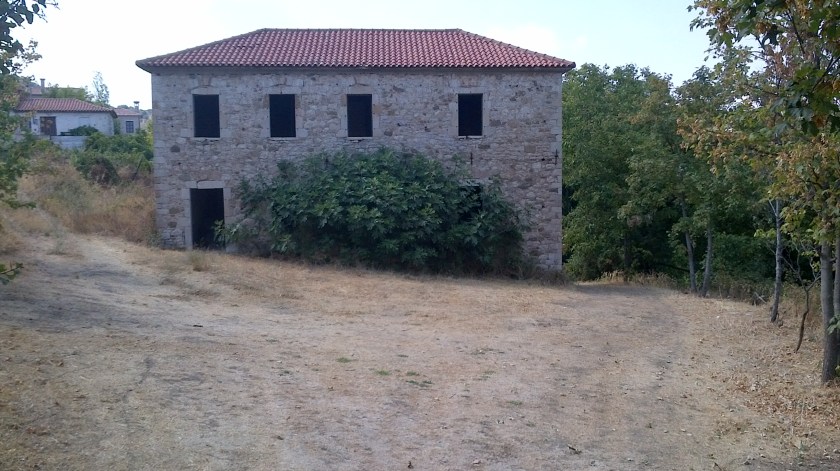
9) The old primary school of Agiannis
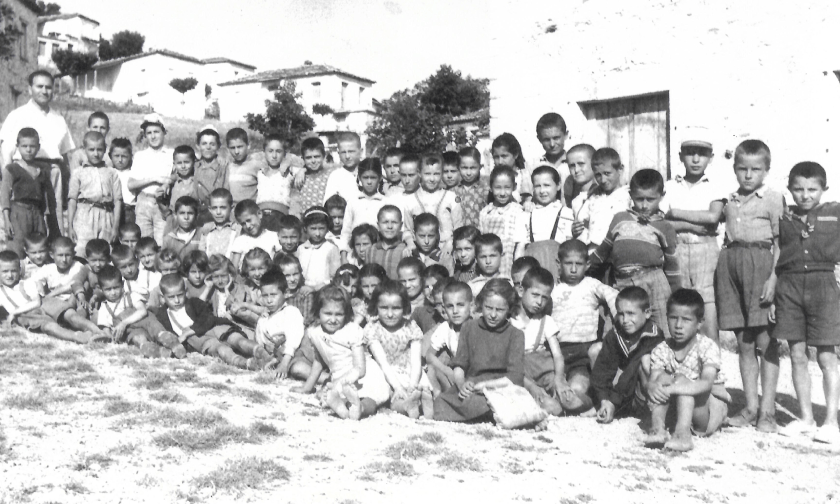
10) Students in front of the primary school in 1958 The photo was taken in front of the old primary school of Agiannis in 1958 by our fellow photographer and barber Thanasis Koutivas. Our late teacher Leonidas Kolovos can be seen with most of the students of the school, some of whom were absent that day.\
11) The famous traditional source Pigadaki. “On March 13, 1742, the Pigadaki spring was erected, a little above Prodromos, in the settlement of Hasapogianneika. The source was built according to the founding inscription, which is written in Arabic,
12) The mansion of Tsakonas with the scalpel was acquired in the 15th century. This mansion is located in Koufovouno, just above the church of Prodromos.It is a building of the 14th – 15th century, according to the testimony of the owner Ioannis Harbalis. So we understand that it is probably the oldest house in our village. The scalpel can be seen at the end of the building on the left under the two windows,
13) Tsakonas’ scalpel can be seen.
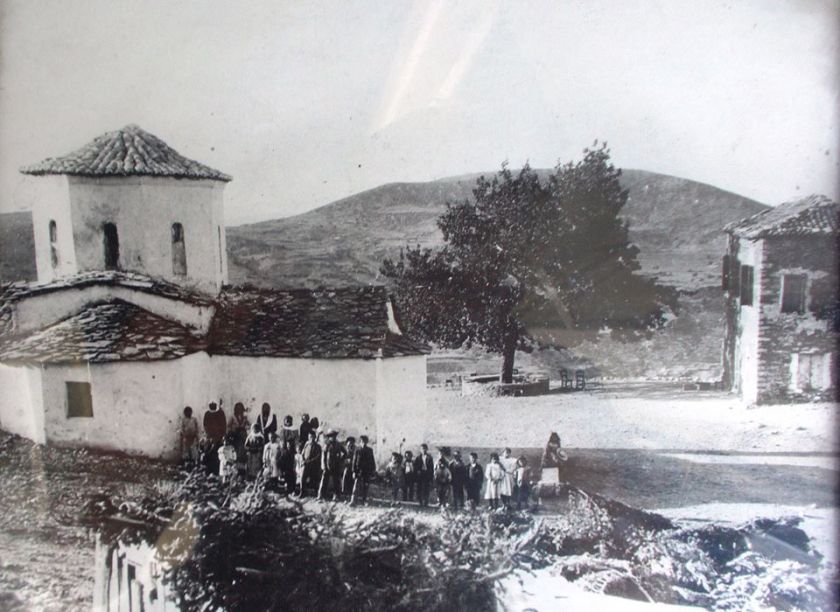
14) The church of Agios Ioannis the Forerunner. Agiannis took its name from the picturesque church of Agios Ioannis the Forerunner. The visitor admires the centuries-old plane tree and the abundant icy water that springs just below the church and flows through five canals, one is very low, as if the water seems to come through the church.
15) The church of Agios Ioannis Prodromos, the tiles on the roof can be seen, as they had before we discovered the tiles ..
16) The source of Prodromos, the abundant water is like coming out of the church. The majestic church of Agios Ioannis Prodromos in Agiannis was renovated and became a patriarchal exarchate in 1638. Plenty of icy water springs just below the church. Just as the water flows through five canals, one is very low, as if the water seems to be coming through the church.
17) The cistern of the forerunner and the plane tree
18) The sougelos of the water, the water was transported away to irrigate the “pergolas” and to live the people of Agiannites for many centuries ,,
19) The mansion of Kotzabasi, an associate of the Turks Anagnostis Papazoglou, who was feared not only by the Greeks but also by the Turks of the Peloponnese.
20) We go up the paved road in the village square where the historic church of Ai Giorgis is located with the big bell in the plane tree, which broke strangely ..?. The church of Ai Giorgis, post-Byzantine, with a holographic interior. The murals are probably works of the Agiannitis priest and painter Georgios Koulidas The old photo from the website Thyreatis Gi .
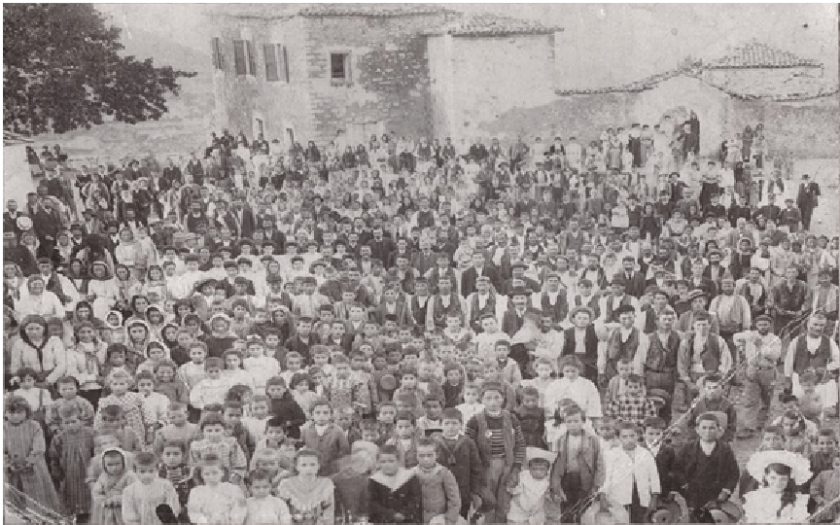
21) Old photo of a lot of people in the village squarefrom the website Thyreatis Gi. LATE 19TH PRINCIPLES OF THE 20TH CENTURY.
22) We went up to Lakka at the top of the village, an old photo from Lakka of the village. Agiannis is advertised for its beautiful mountain climate that renews and invigorates its inhabitants and visitors, has many natural beauties and is only half an hour away from the beach of the Stars.
23) From Lakka we gaze at the village, the new technologies begin…. and evolution ..
24) The church of Panagia in Lakka. The church of Panagia in Lakka, at the top of the village with a nice view, in Lakka, the second square, where the church of Panagia is located, built by the brothers M. Papoulias (or Touris) on the foundations of an older one destroyed by Ibrahim. From this point one can admire almost the whole village, the wild beauty of the surrounding mountains and the lively green. the church has been recently renovated .. we thank the friends of Agiannis.
25) From Lakka we gaze at the new village, many new tiles, and Kalogerovouni opposite.
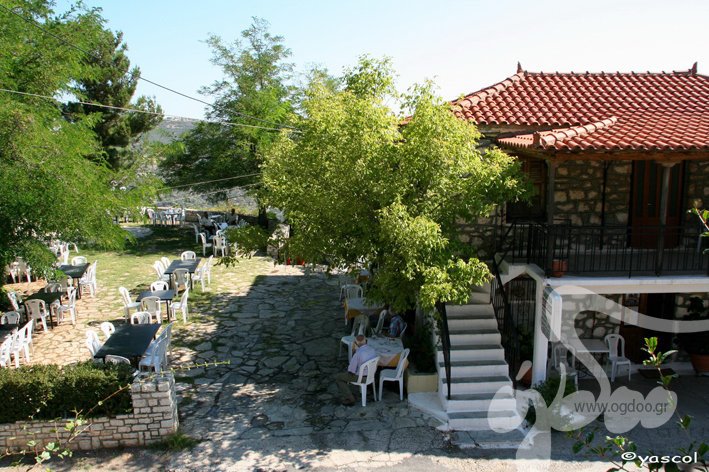
26) The new… many new ίζουν The Guesthouse of “Founta
27) The famous tavern of “Karamantzanis in Lakka, wonderful view. does not appear in this photo, we will find another one later ..
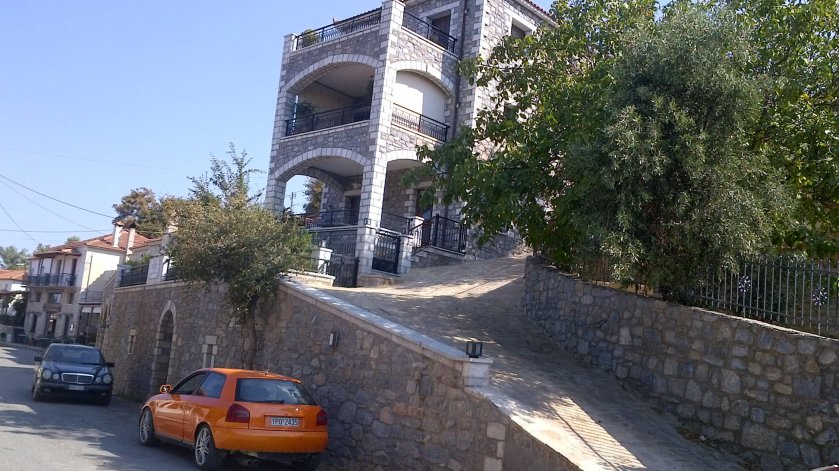
28) We said new…. stone houses
29) Picturesque new houses for rent
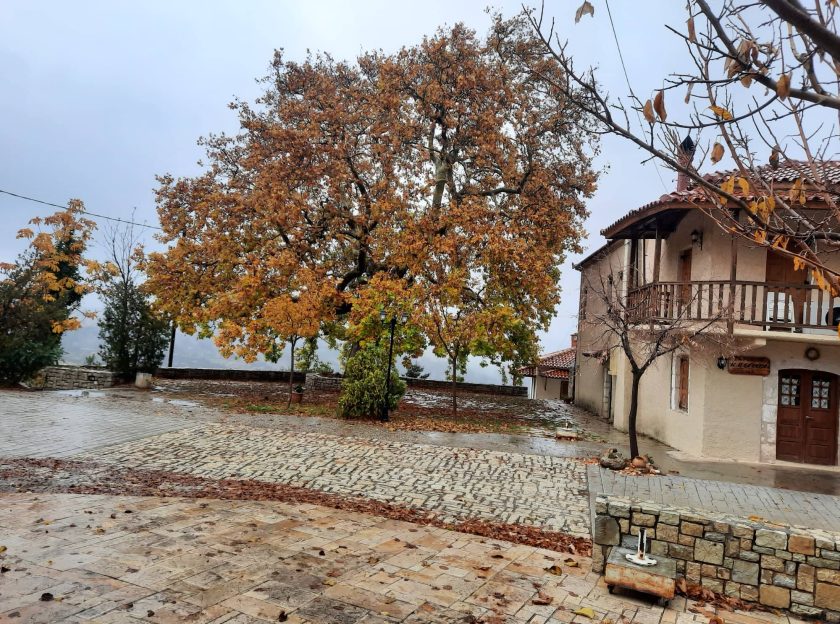
30) The Platanas cafe in the square of the village of Agianni
31) From the village square
32) The cafe “To koutri” is located next to the founding plate of the school Karytsioti, on Koutri small hill as we enter the village from Astros was built the famous school Karytsioti.
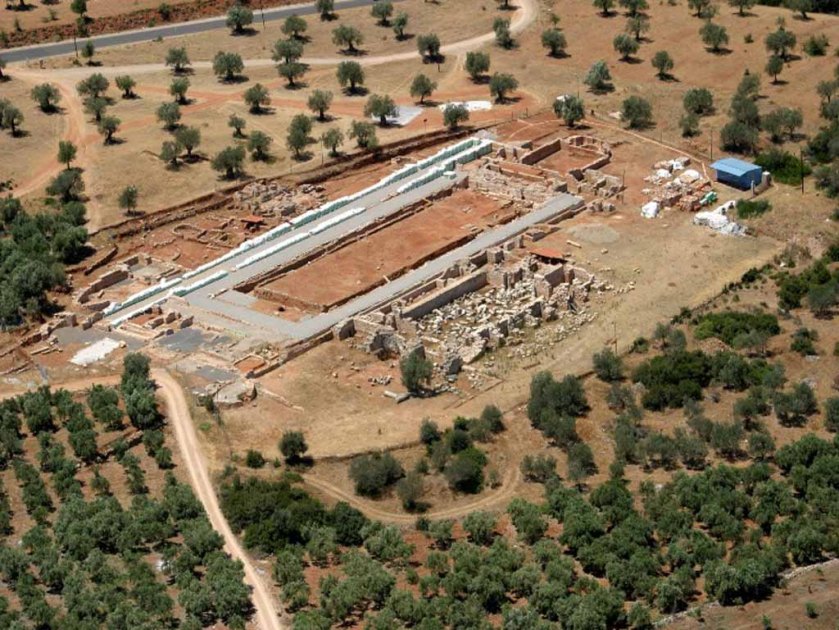
35)The school in Agiannis was a marble and spectacular historical monument, burned by Ibrahim in 1826, the photo shows the annex of the school of Agiannis in Astros, acquired in 1805, which now houses the Archaeological Museum of Astros next to the neighboring “The Holy Shrine” 2nd National Assembly of the Greeks, this place is modest and imposing, it is a “museum” in itself (distance 17 km)
“The total is greater than the sum of its parts.” Aristotle
We always have our neighbors by our side and we promote our place for everyone, for us and for our neighbors. We can project more effectively that we all have together and the projection of an area is not done from one square … but from all the squares of Thyrea.
Our friends and neighbors, we are all in the same boat of Thyrea, no one is left over, we never open holes, nor do we let others open holes …, because eventually we will all sink and drown ……
When someone visits us, he does not come to see only one square, he always sees more, let us understand. Let’s put it another way and in a nutshell, it is in our interest to show “what we have” and our neighbors (and it is in our interest not to shoot ourselves ….), period and pavla.
The Municipality of North Kynouria, based in the historic Astros, consists of 26 Local Apartments and 40 settlements, located in the northeastern part of the Prefecture of Arcadia and to the east is bathed by the waters of the Argolic Gulf.
In the whole of Thyrea it is not an exaggeration to say that if you pick up a small stone you will find a historical monument and an archeological treasure.
Below are the communities of our municipality in a geographical order.
The blue letters are links. Let us know our neighbors they have a lot …
The Municipality of North Kynouria is a municipality of Arcadia and the Peloponnese Region, which was established in 1998 according to the Administrative Reform of “Kapodistrias”
Photos and texts from the website Thyreatis land (northern kynouria Θυρεατις γη (βορεια κυνουρια Anniversary of March 25 in the 50s. From the archive of the Kordogiannis family. Pupils beautifully dressed for the celebration of March 25 in the 1950s in front of the then high school Astros in the school Karytsioti, today Archaeological Museum … Continue reading“School photos, Our teachers -Pho”
Θυρεατις γη (βορεια κυνουρια Our respect and admiration for the monuments and our history is evident, when 55 years ago we worshiped the “Holy Space” of the Second National Assembly of the Greeks. This space can not be taken from us. This space is ours, it belongs to the local community and it does not … Continue reading“School photos, in the 1960s-Ph”
The name Parnonas means bright glow, from the light of the second sun or from the light of the moon. Published by John Kourogiorgas astrosgr.com/en / John Koutogiorgas Back to astrosgr.com/en /Dedicated to Thyreatis Land
Photos from the website Thyreatis Land Θυρεατις γη (βορεια κυνουρια Agiannites in the square of AiGiorgis in Agiannis late 19th to early 20th century Very old photo from the end of the 19th century, Agiannites on an excursion to Xerokambi, the seated aristocrats of the time and occupying with their European clothes …. and the … Continue reading“Old Astrinoi and Agiannites # 1 -PH”
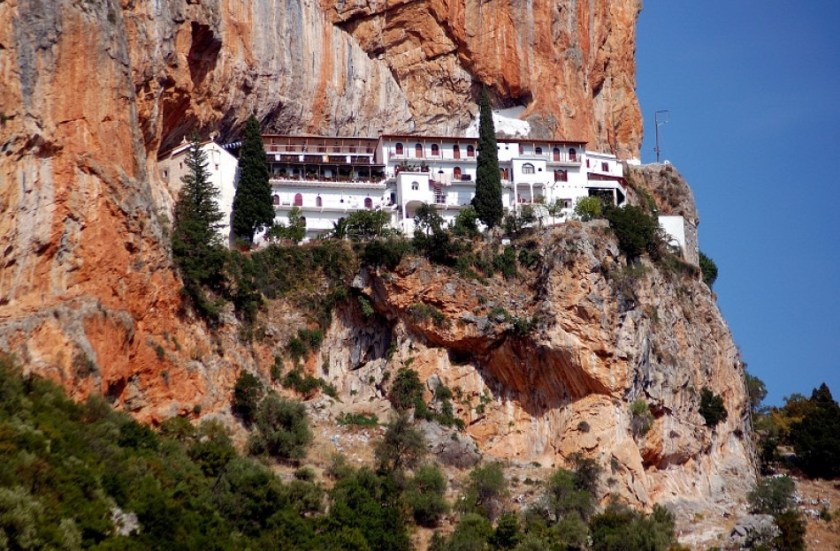
From Astros at a distance of about 67 km is the holy monastery of Elona, which as a symbol of Tsakonia is hung and inaccessible on the red rock.
In the route of Astros Leonidio there are many enchanting beaches that “the sun and the sea of the Argolic” are in their greatness.
From Astros Leonidio is at a distance of about 50 km. Argolikos and its enchanting beaches, “as if you were going there”.
Sampatiki beach.
The “sun and the sea”, and the many beaches of the Argolic are enchanting. It is no coincidence that the locals out of admiration for the beaches of the Argolic, briefly let the visitor see with his own eyes and draw his own conclusions, “as you go there” you will see and enjoy the magic of nature… .. We do not need to tell you about the beauty of the Argolic. This is what our ancestors used to say about the enchanting beach of Sampatiki, which took its name from the admiration of the locals… “as if you were going there”. There are many enchanting beaches and we will visit them in order.
From the “Mount Parnon and Moustos Wetland Management Agency, 2015. Guide for the protected area of Mount Parnon and Moustos Wetland. Nature, Culture, Ecotourism. Astros of Arcadia “.
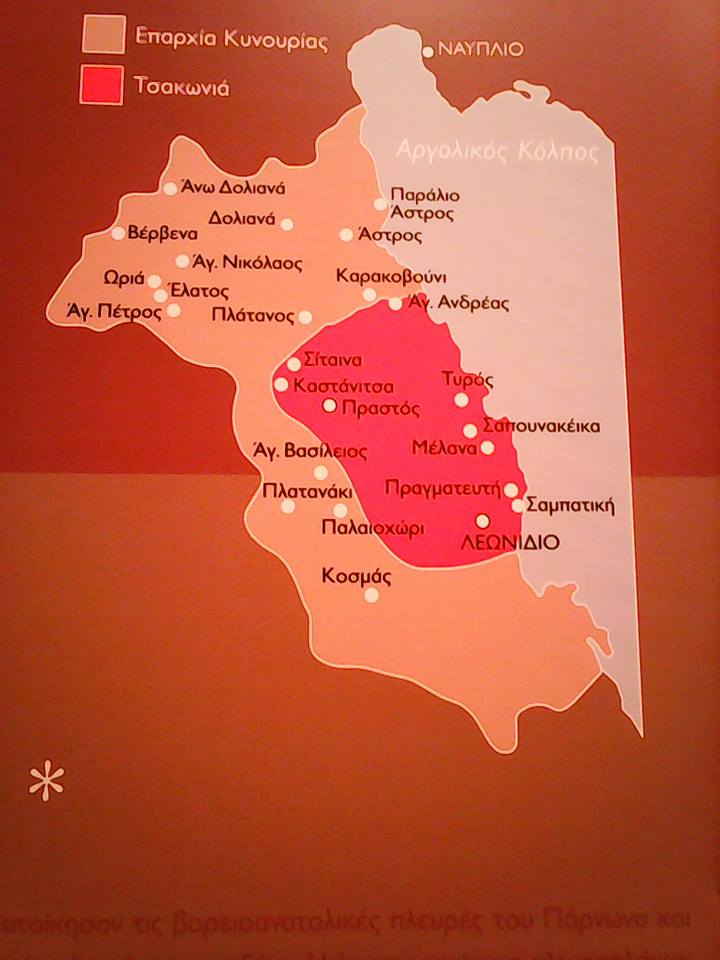
The Tsakonian dialect of Leonidio, Pragmatefti, Melana, Tyros, Sapounakeika, Agios Andreas, Prasto, Sitaina, Kastanitsa is spoken. Settlements: Sampatiki, Livadi, Vaskina, Paliochora, Agios Panteleimonas (Bubble), Dernikeika
The Tsakonian dialect
The Tsakonian dialect, the Tsakonian dance, the costume, the customs and traditions of the Tsakonians, are another dynamic of the Parnon area. According to the “Chronicle of Monemvasia”: “And the prefectures and peasants of Thremte were settled in the rugged places adjacent to it, and finally the jaconia were named”. The Tsakones, as true descendants of the Dorians, kept their roots intact and the Tsakonian language is still the living expression of the Doric dialect. In the cradle of Tsakonia, today insists on walking and creating in the footsteps of yesterday in a perpetual and uninterrupted breath of Greece. The special linguistic treasure of our place. The Tsakonian dialect has been included in the UNESCO World Heritage List and is recognized as a cultural achievement and a unique treasure trove of culture. The language was preserved genuine and unadulterated in the mouths of ordinary people, peasants, shepherds and farmers. In the wishes, in the greetings, in the curses, in the everyday expressions, in the teasing and the jokes, there is for centuries now the linguistic treasure of the Tsakonians. In this special part of the Greek land called Tsakonia (the cradle of Tsakonia was Prastos, Kastanitsa and Sitaina), in these rugged places, the inhabitants of the area, with few means, not only survived, but left behind a valuable heritage, the Tsakonian tradition, the beautiful language, the unique evocative Tsakonian dance, the Tsakonian songs, the weaving art, their habits, what we call today customs and traditions. All this composes the identity of the place with a living language that is in the hands of the Tsakonians, but also of all Hellenism, to embrace it and protect it from oblivion
The topics that we will try to cover later as best we can are the following.
From the “Mount Parnon and Moustos Wetland Management Agency, 2015. Guide for the protected area of Mount Parnon and Moustos Wetland. Nature, Culture, Ecotourism. Astros of Arcadia “. In Leonidio, the pioneer of weaving was Polyxeni Dounia, the genus Lyonta (1841-1911), wife of Theodoros Ioannis Dounias (1822-1901), who had learned the art in Aydin, Asia … Continue reading“The Tsakonian textile”
The jumpsuit is the traditional women’s costume of the wider area of Tsakonia. In the past, the nobility of Prastos, the first Tsakonian capital, used to wear the jumbe as a sign of economic surface and superior origin. This costume, which was used as a wedding dress, was characterized by Doric simplicity. Free from gold … Continue reading“Tsakonian Costumes”
From the Tsakonia Archive Tsakonian dance is a music and dance event, characterized by spiral and snake formations and is an element-symbol of the cultural identity of Tsakoni. It is a heavy and majestic dance, characterized by the locals as “humble”, “serious”, “strict”, “austere” and “restrained”. It is the dance with which the festivities close, … Continue reading“The Tsakonian dance”
We cite our printed sources. We do not mention the friends from the internet who are the brave “soldiers and guards of Tsakonia”, every day they offer a lot without expecting personal rewards and they do this “all for Tsakonia”. If we are asked in writing we will mention the names of our sources from the internet or if requested in writing we will still download the relevant posts when we verify it. The “Tsakones” page is dedicated to Tsakonia. The users of the website astrosgr.com/en agree with the above when they open the website or otherwise communicate in writing.

























 astrosgr.com - Το Ιστορικόν Άστρος Κυνουρίας