Από ελληνικής πλευράς, υπέγραψαν τη Συνθήκη ο Πρωθυπουργός Ελευθέριος Βενιζέλος και ο έκτακτος απεσταλμένος και πληρεξούσιος Άθως Ρωμάνος,
Η Ελλάδα κερδίζει εδάφη και γίνεται «η χώρα των δύο ηπείρων και των πέντε θαλασσών», σύμφωνα με τον Ελευθέριο Βενιζέλο
Από τη Βικιπαίδεια, την ελεύθερη εγκυκλοπαίδεια
Η Συνθήκη των Σεβρών (10 Αυγούστου1920) ήταν διεθνής (ευρωπαϊκή) συμφωνία, μία από μία σειρά αντίστοιχων συνθηκών μεταξύ των νικητριών δυνάμεων που επικράτησαν στον Πρώτο Παγκόσμιο Πόλεμο και της ηττημένης Οθωμανικής Αυτοκρατορίας. Η συνθήκη επέφερε τον διαμελισμό της Οθωμανικής Αυτοκρατορίας ως επιθυμητή λύση του λεγόμενου Ανατολικού Ζητήματος, όπως την σχεδίαζαν οι δυτικές δυνάμεις. Οι διαπραγματεύσεις που κατέληξαν στην υπογραφή της διεξήχθησαν στο μικρό Παρισινό προάστιο των Σεβρών[1]από όπου και έλκει την επωνυμία της.
Η Τουρκία, βάσει των όρων της συνθήκης αυτής, θα έχανε περίπου τα 2/3 της έκτασης των προηγούμενων εδαφών της, θα συρρικνούτο δηλαδή, από έκτασης 1.589.540 τετρ. χιλιομέτρων (1914) σε 453.000 τετρ. χιλ. και θα αποτελούνταν πλέον μόνο από την Κωνσταντινούπολη (και μέρος της ενδοχώρας της) και την Ανατολία, ενώ ο πληθυσμός της θα μειωνόταν στα 10.000.000 περίπου[2]. Τη συνθήκη αποδέχτηκε η Κυβέρνηση της Κωνσταντινούπολης. Δεν τη δέχτηκαν όμως οι Τούρκοι εθνικιστές, που υπό την ηγεσία του Μουσταφά Κεμάλ[3]αγωνίστηκαν και πέτυχαν τελικά την μη εφαρμογή της.
Η Συνθήκη των Σεβρών υπεγράφη στις 28 Ιουλίου/10 Αυγούστου1920 στην πόλη Σεβρες (Sèvres) της Γαλλίας, φέρνοντας την ειρήνη ανάμεσα στην Οθωμανική Αυτοκρατορία και τις Συμμαχικές και σχετιζόμενες Δυνάμεις μετά τονΑ΄ Παγκόσμιο Πόλεμο. Εκ μέρους της Οθωμανικής Αυτοκρατορίας έγινε αποδεκτή από τον σουλτάνοΜεχμέτ ΣΤ΄ ο οποίος προσπαθούσε να σώσει τον θρόνο του, αλλά απορρίφθηκε από το ανεξάρτητο κίνημα των Νεότουρκων. Το κίνημα υπό την ηγεσία του στρατηγου Μουσταφά Κεμάλ χρησιμοποίησε αυτή τη διένεξη για να αυτοανακηρυχθεί κυβέρνηση και να καταργήσει το χαλιφάτο.
Στην Ελλάδα παραχωρούνταν τα νησιά Ίμβρος και Τένεδοςκαι η ανατολική Θράκη μέχρι τη γραμμή της Τσατάλτζας κοντά στην Κωνσταντινούπολη. Η περιοχή της Σμύρνηςέμενε υπό την ονομαστική επικυριαρχία του Σουλτάνου αλλά θα διοικούνταν από Έλληνα Αρμοστή ως εντολοδόχο των Συμμάχων, και θα μπορούσε να προσαρτήθει στην Ελλάδα μετά από πέντε χρόνια με δημοψήφισμα. Το άρθρο 26 της Συνθήκης όριζε ακομα οτι αν οι οθωμανικές αρχές δεν συναινούσαν στην εφαρμογή της, θα εξέπιπταν από την κυριαρχία τους στην Κωνσταντινούπολη, την οποία θα μπορούσε να καταλάβει η Ελλάδα, κάτι το οποίο έντεχνα είχε προωθήσει ο Βενιζέλος.
Παράλληλα, η Βόρεια Ήπειρος ενσωματωνόταν στην Ελλάδα με το μυστικό Σύμφωνο Βενιζέλου – Τιττόνι. Η Ιταλία συμφώνησε ακόμα να παραχωρήσει τα Δωδεκάνησα (εκτός από τη Ρόδο και το Καστελλόριζο) στην Ελλάδα, και όταν η Βρετανία έδινε στο μέλλον την Κύπροστην Ελλάδα, τότε (μετά από δημοψήφισμα) θα παραχωρούταν και αυτά τα νησιά (η συμφωνία ακυρώθηκε αργότερα από την Ιταλία το 1922).
Τα στενά των Δαρδανελίων και η θάλασσα του Μαρμαρά αποστρατικοποιήθηκαν και έγιναν προσωρινά διεθνής περιοχή, οι Σύμμαχοι απέκτησαν τον οικονομικό έλεγχο της Οθωμανικής Αυτοκρατορίας και τέλος καθορίζονταν η ισότητα και τα δικαιώματα των χριστιανικών μειονοτήτων.
Η επικύρωση της Συνθήκης δεν έγινε από κανένα συμμαχικό κοινοβούλιο (ούτε από το ελληνικό), καθώς μετά την επαναφορά του Κωνσταντίνου στον ελληνικό θρόνο, διαταράχθηκαν οι σχέσεις με τις συμμαχικές δυνάμεις, οι οποίες ποτέ δεν τον αναγνώρισαν ως αρχηγό του ελληνικού κράτους. Η Σοβιετική Ένωση έκανε ξεχωριστή συνθήκη με τους Οθωμανούς. Μετά την επικράτηση των Νεότουρκων, που μετέφεραν την πρωτεύουσα στην Άγκυρα, καθώς και την Μικρασιατική Καταστροφή, οι σύμμαχοι υπέγραψαν νέα συνθήκη ειρήνης (Συνθήκη της Λωζάνης) το 1923, με ευνοϊκότερους όρους για την (πλέον) Τουρκία.
The historic Astros and Agios Ioannis (Agiannis) are one community.
October 20,2022
Welcome to the historic Astros where in 1823 the Second National Assembly of the Greeks took place.
In 1823, the Second National Assembly of liberated Greece met in the historic Astros of Kynouria.
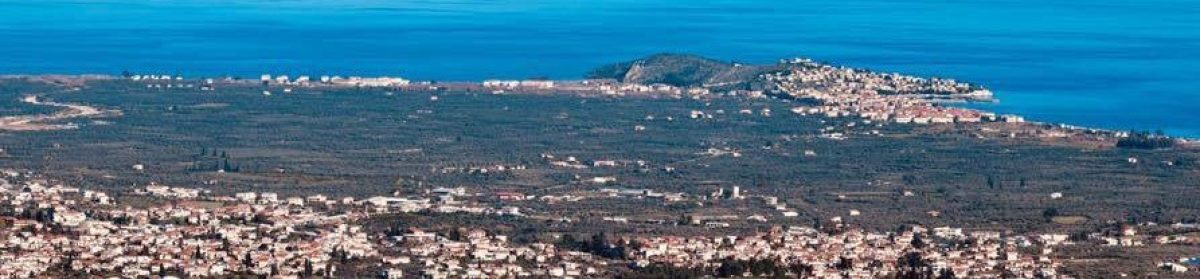
The historic Astros of Kynouria is located in the Eastern Peloponnese in the west beach of the Argolic gulf , where was the ancient city of Thyrea and the polis Astron, south of the first city in Europe the historic Argos and the seat of the Mycenaean culture, Mycenae.
Alexandros Mavrokordatos, president of the Executive Counsil (i.e. Prime Minister), in a letter dated April 22, 1823 states. “It is a pleasant task for me to inform the Philhellenic Committees that the National Assembly of liberated Greece was convened in Astros, in the bay of Nafplio” (Aristidedis N. Hatzis p. 12)
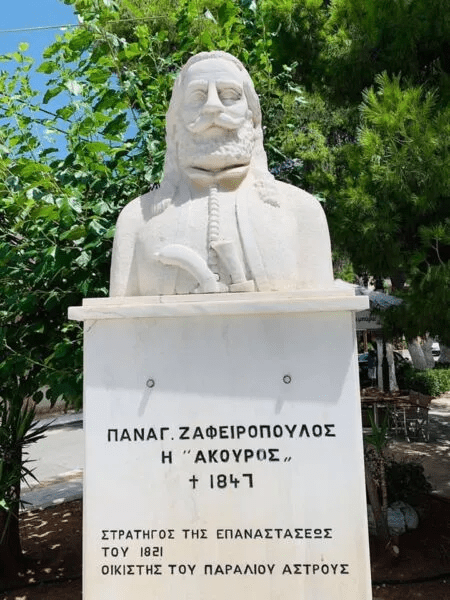
Not far from Astros, about 4 km, is Paralio Astros which has enchanting beaches and the “sun and sea” of the Argolic gulf is charming. Paralio Astros was built from 1832-1845 by the general Panos Zafeiropoulos and Akouros, as the inhabitants of the village honor with his statue in the central square, “SETTLER OF PARALIO ASTROS”.
The historic Astros is built at an altitude of 75 m. In the center of the plain of Thyrea, 40 km southeast of Tripoli and 33 km southwest of Nafplio and belongs to the prefecture of Arcadia. Astros and Agios Ioannis (Agiannis) Kynouria have been a community for at least eight hundred years.
With the first administrative division of the Greek state in 1835, it joined the Municipality of Thyreas, which had its original seat in Agios Ioannis from 1834. From 1841 to 1912, it was the winter seat of the Municipality of Thyreas, Agiannis was the summer seat. The Municipality of Thyreas was established by decree of 9 (21) November 1834/12 May 1835, according to which the first municipalities of Arcadia and Kynouria were established. In 1912, the old Municipal system of 1834 was abolished and the communities were established. The following communities emerged from the Municipality of Thyreas: Astros, Vervena, Xiropigadou, Paralio Astros, Meligou, Platanos and Haradros.
Since 1912 the settlement was the seat of the community of Astros which evolved into the Municipality of Astros in 1985. Since 1997 Astros is the seat of the Municipality of North Kynouria. The first official reference of the city with the name “Astros” is found in a gold bull of the year 1293.
For many centuries before the revolution of 1821 in different reports and maps the two settlements Astros and Agiannis are mixed, Astros refers to Astros, becomes Agiannis, Kalivia Astros, Agiannitika huts and Agiannis refers to Agiannis, becomes Astros, Astros, and Agiannis of Astros. It seems that Astros started from the xerokambi and the castle of Oria, Estella, which is located near Agiannis, to the castle of Paralio Astros or also Estella, (which is also mentioned in many maps as a castle), and its core was its inhabitants Agianni and today’s Astros and the settler of Paralio Astros, Agiannitis Akouros, who knew his place better than all of us, certainly agreed with them.
Astros and Agiannis have been a community for at least eight hundred years and most importantly the inhabitants are the same, they had and still have houses in Agiannis and Astros. Let us also remember what Thucydides told us, “the inhabitants are the states”…, not are states, cities and castles.
In the historic Astros of Kynouria we have it all.
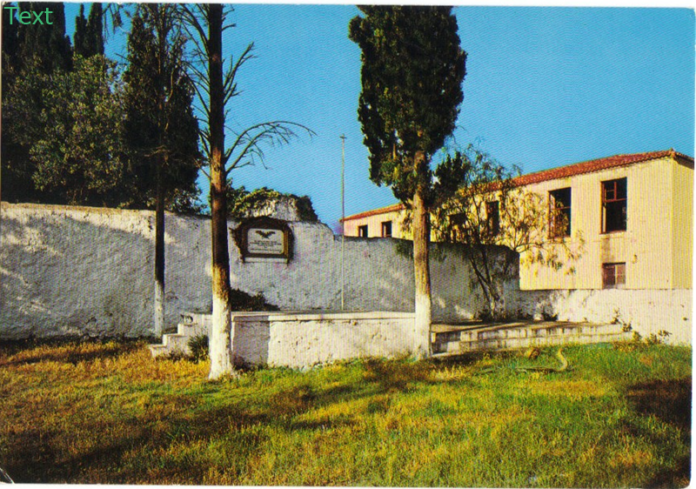
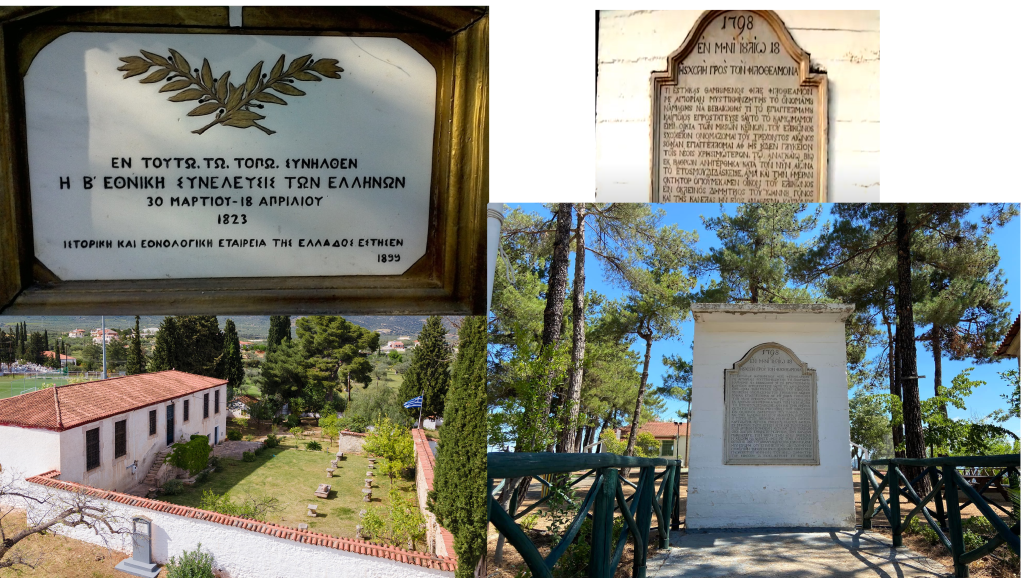
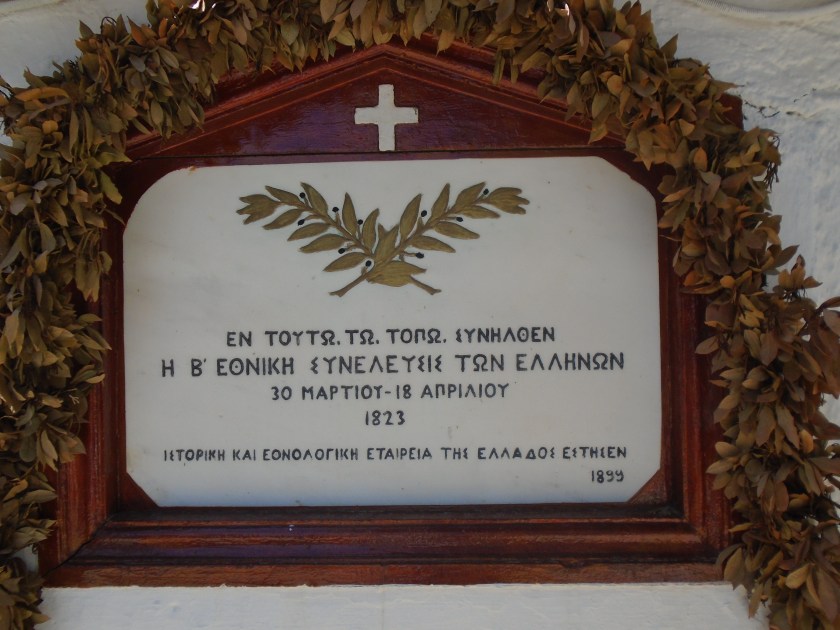
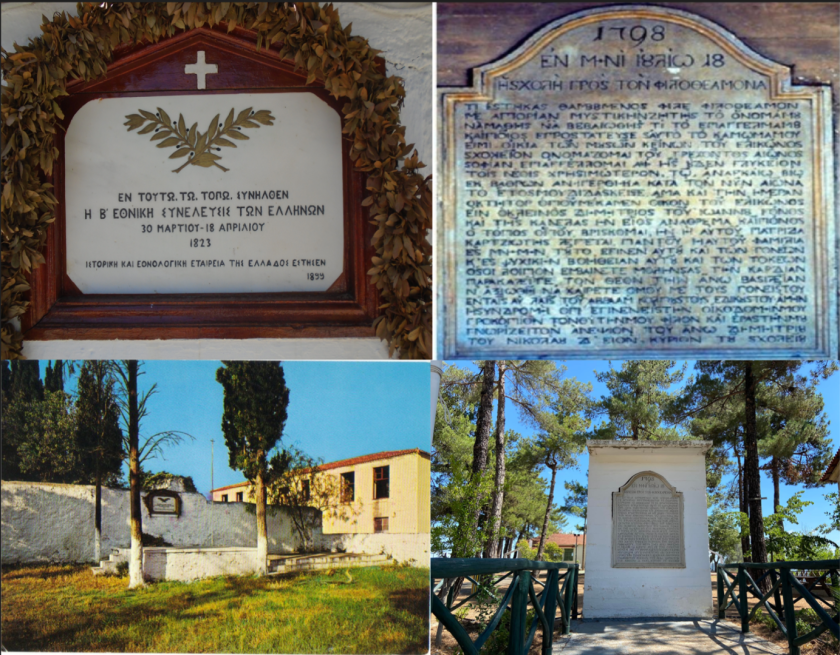
“Here, the Second National Assembly of the Greeks met on March 30, 18 April 1823”
The “Holy Space” of the Second National Assembly of the Greeks is undoubtedly one of the most important historical monuments not only of Kynouria but also of our homeland.
1) We are close to everything ..
2) We have the “sun and the sea” of the Argolic, with many enchanting beaches.
3) We have a long history and very important archeological monuments
4) We have Parnon, “our mountains and our castles”.
5) We are the “Mount Athos” of Southern Greece.
We have our neighbors and the right infrastructure for holidays for everyone and for families.
Astros is not the center of the world, but it is very close to the most important Archaeological Sites and Museums of our country that with day trips from Astros are easily visited by many of our friends when choosing Astros for the basis of their annual vacation.
Palamidi in Nafplio (33 km), Mycenae (43 km), the Epidaurus Theater (70 km), Olympia (170 km), the Parthenon, the Acropolis and the Acropolis Museum in Athens (170 km), Delphi ( 288 km) and Mystras (88 km).
The Municipality of North Kynouria, based in the historic Astros, consists of 26 Local Apartments and 40 settlements, located in the northeastern part of the Prefecture of Arcadia and east is bathed by the waters of the Argolic Gulf. We have a long history and very important archeological monuments.
In all of Thyeratida Earth (Thyrea) it is not an exaggeration to say that a small stone and you will find a historical monument and an archaeological treasure. In Astros, March 30 – April 18, 1823, the Second National Assembly of the Greeks met, with the main purpose of the revision and modernization of the Constitution which had been voted in 1822 AD, during the First National Assembly in Epidaurus, for this and was named “Law of Epidaurus”. The Karytsioti school played a leading and decisive role in making Agiannis the capital of revolutionary Greece from August 15 to October 1, 1822. Like Astros, all the neighboring villages have contributed much to the Greek revolution of 1821 and have a long history. The most important historical villages are Agios Ioannis <Agiannis>, Vervena, Doliana, Agios Petros, Prastos, Kastanitsa, Paralio Astros, Korakovouni and Sitaina.
In the neighboring Tsakonochoria, Prastos, Kastanitsa, Sitaina, Agios Andreas, Leonidio and Tyros, the Tsakonian dialect is spoken until today, which has its roots in ancient Doric, “today they speak ancient Greek”. In Tsakonian villages there are signs with the inscription “Kaour Ekane”, which means welcome. The Tsakonian “ts’es’ poiou” means what you do (comes from the ancient verb I do ).
We have the right infrastructure for holidays for everyone and for families Today Astros and Thyrea in general is a beautiful small town that has everything it needs to please and the most demanding visitor. Athens is 170 km, about two hours, the airport about 200 km and ‘Astros has the best and “famous Attic climate“, without the exhaust gases of Athens (the real distance directly from Athens is about 100 km opposite Piraeus ..)
Astros and Thyrea have a health center, banks, restaurants, hotels, stadiums, shops, many gas stations, many cars and whatever else the small towns have and Tripoli and Nafplio are close to half an hour. Astros has become a global holiday destination and our secret is “whoever comes to our place will definitely come again and will definitely bring his friends”, as the German guests from a fellow citizen did. In Paralio Astros it has apartment owners from Athens and the Diaspora, who often come to enjoy the enchanting beaches of the Argolic in a wonderful Attic climate. Astros and Thyrea are visited regularly every year by Germany, Italy, France, England, Athens, our entire homeland, the Greek Diaspora and the whole world. It is no coincidence that we heard on Portes beach a friend of ours from the Diaspora who said in a court from Italy, our regular visitor for ten years, “you will surely become mayor soon”. Also “little Paris” Agiannis and the other traditional villages of Parnon are very close.
We have it all and we are close to everything, we are waiting for you in the hospitable historic Astros, Kynouria.
Astros and Agios Ioannis (Agiannis) are one community.
The historic Astros of Kynouria is located in the Eastern Peloponnese in the west beach of the Argolic gulf , where was the ancient city of Thyrea and the polis Astron, south of the first city in Europe the historic Argos and the seat of the Mycenaean culture, Mycenae.
Welcome to the historic Astros where in 1823 the Second National Assembly of the Greeks took place.
Τα δύο σπουδαιότερα ιστορικά μνημεία της Θυρεάτιδας Γης αναμφισβήτητα είναι η Σχολή Καρυτσιώτη και ο «Ιερός Χώρος» της Β’ Εθνικής Συνέλευσης των Ελλήνων .
O Αλέξανδρος Μαυροκορδάτος, πρόεδρος του Εκελεστικού (δηλ.Πρωθυπουργός) , σε επιστολή στις 22 Απριλίου 1823 αναφέρει . «Αποτελεί ευχάριστο καθήκον για μένα να ενημερώνω τα Φιλελληνικά Κομιτάτα πως η Εθνοσυνέλευση της απελευθερωμένης Ελλάδας συνήλθε στο Άστρος, στον κόλπο του Ναυπλίου» (Αριστείδης Ν. Χατζής σελ 121).
«Δημήτριος Καρυτσιώτης, “Παραιτώ της πατρίδος μου το κτίριον της Σχολής και το υποτακτικόν( Αγροκήπιο) του Άστρους με όλα τα συμπεριλαμβανόμενα εις το κοντράτο (συμβόλαιο) καμωμένου παρ εμού.Μάϊος 1819 Δ.Καρυτσιώτης»
Από το ίδιο σιγίλλιο του 1638 πληροφορούμαστε ότι ο Αγιάννης έγινε πατριαρχική εξαρχία «χάριν βεβαίως τῆς Σχολῆς τοῦ Ἀγίου Ἱωάννου, λειτουργούσης πολλοῦ παλαιότερον». Σύμφωνα, λοιπόν, με το συγκεκριμένο απόσπασμα στον Άγιο Ιωάννη λειτουργούσε σχολείο, πολύ πριν το 1638. Στον Άγιο Ιωάννη, λειτουργούσαν επίσης και «κατώτερα» σχολεία, όπως αυτό του Παπακυριακού και κρυφά σχολεία, αρχικά στο Μετόχι της Μονής Λουκούς, Άγιος Δημήτριος και αργότερα στους νάρθηκες των εκκλησιών του χωριού.
Oι Αγιαννίτες πραγματικά δεν παραδόθηκαν ποτέ στους κατακτητές και για απόδειξη με το τρόπο τους κατάφεραν να κρατήσουν τα σχολεία τους ανοικτά όλη την διάρκεια του τούρκικου ζυγού και διατήρησαν κρυφά και φανερά αναμμένη την φλόγα του έθνους.
Η σχολή Καρυτσιώτη έπαιξε καταλυτικό ρόλο για την τοπική κοινωνία για πολλά χρόνια και ακόμα μέχρι σήμερα, αφού όλοι οι Αγιαννίτες με πολύ μόχθο και με κάθε θυσία επιθυμούσαν τα παιδιά τους να μάθουν γράμματα και σαν απόφοιτοι “καλαμαράδες ” να αλλάξουν την ζωή τους ,σύμφωνα με τις “έξυπνες ” προσδοκίες του μεγάλου ευεργέτη τους Δημητρίου Καρυτσιώτη. Στη σχολή φοιτούσαν νέοι από την ευρύτερη περιοχή και από όλη την Ελλάδα.
Η προεπαναστατιμένη Ελλάδα είχε πολλά μικρά “κρυφά” και λίγα φανερά σχολεία. Ένα από τα ελάχιστα φανερά σχολεία ήταν και η περίφημη καλιμάρμαρος Σχολή Καρυτσιώτη που είχε κτιστεί το 1798 στον Αγιάννη 23 χρόνια πριν την Ελληνική επανάσταση και το παράρτημα της Σχολής στο Άστρος το 1805 , και αυτό έχει μεγάλη σημασία. Είχε κτιστεί στο λόφο Κουτρί του Αγιάννη Κυνουρίας και ήταν ένα από τα λίγα “πανεπιστήμια” της προεπαναστατικής πατρίδας μας και οι μαθητές της ήταν από ολόκληρη την ηπειρωτική Ελλάδα και τα νησιά μας. Ο μεγαλος ευεργέτης μας Δημήτριος Καρυτσιώτης, πανίσχυρος Αγιαννίτης πατριώτης της διασποράς, βρήκε τον τρόπο να επιτρέψουν οι 400 χρόνια κατακτητές Τούρκοι το κτήσιμο και την λειτουργία της σχολής στον Αγιάννη το 1798 και στο παράρτημα της σχολής Καρυτσιώτη στο Άστρος Κυνουρίας ,που άνοιξε το 1805.
Επίσης το 1798 σε αριστοκρατικό και περίβλεπτο σημείο της παραλίας της Τεργέστης άρχισε την ανέγερση μεγαλοπρεπούς μεγάρου, τελείωσε το 1805, και προς τιμήν της ιδιαίτερης πατρίδας του, ο μεγάλος εθνικός ευεργέτης μας έθεσε την επιγραφή «ΆΣΤΡΟΣ». Μετά τον θάνατο του το μέγαρο είναι γνωστό σαν Palazzo Carciotti. Ο μεγάλος εθνικός ευεργέτης μαςέφυγε από την Καρύτσα του Αγιάννη 15 χρονών το 1756, αλλά δεν ξέχασε ποτέ την πατρίδα του, τον Αγιάννη και το Άστρος και για το λόγο αυτό ονόμασε το κτήριο στην Τεργέστη «ΑΣΤΡΟΣ», που θυμότανε καλά από το 1756 . Η παραλιακή οδός εμπρός από το μέγαρο ονομαζόταν Viad ei Greci (οδός των Ελλήνων) και η παραλία «Riva Carciotti» ( Από την Σμαράγδη Ι. Αρβανίτη).
Η σχολή Καρυτσιώτη έπαιξε καταλυτικό ρόλο για την τοπική κοινωνία , έπαιξε πρωτεύοντα και καθοριστικό ρόλο για να γίνει ο Αγιάννης πρωτεύουσα της επαναστατημένης Ελλάδας, από τις 22 Αυγούστου έως την 1 Οκτωβρίου 1822 και για να γίνει η Β’Εθνοσυνέλευση των Ελλήνων στο Άστρος το 1823.Το “κυβερνείο” που βρίσκεται πολύ κοντά στη σχολή Καρυτσιώτη του Αγιάννη ήταν η έδρα της κυβέρνησης. Πριν την Εθνοσύνελευση είχε προηγηθεί το καταλυτικό κτίσιμο της Σχολής Καρυτσιώτη.
“Εν τούτω τω τόπω συνήλθεν η Β΄ Εθνική Συνέλευσις των Ελλήνων, 30 Μαρτίου – 18 Απριλίου 1823»
O «Ιερός Χώρος» της Β’ Εθνοσυνέλευσης των Ελλήνων είναι αναμφισβήτητα ένα από το σημαντικότερα ιστορικά μνημεία όχι μόνο της Κυνουρίας, αλλά και της πατρίδας μας.
Το Ελληνικό κράτος αναγνωρίζοντας την μεγάλη προσφορά της Σχολής Καρυτσιώτη και του«Ιερού Χώρου» της Β’ Εθνοσυνέλευσης των Ελλήνων στο Ελληνικό έθνος εκήρυξε σαν «ιστορικόν διατηρητέον μνημείον», «ιστορικό τόπο»και «αρχαιολογικόν χώρον».Διδακτήριον Άστρους
Χαρακτηρίζουμε ως ιστορικό τόπο το εναπομείναν σήμερα τμήμα εκτάσεως 18.850 τα.μ. του παλαιού αγροκηπίου (συνολικής εκτάσεως 46 στρεμμάτων), το οποίο ανήκε στη Σχολή Καρυτσιώτη…..
Ο χώρος αυτός είναι τμήμα του αγροκηπίου – αρχικά 46 στρεμμάτων, το οποίο είχε δωρίσει ο Δημήτριος Καρυτσιώτης στη Σχολή, την οποία είχε ιδρύσει το 1805 – δενδροφυτεμένου με πορτοκαλιές, λεμονιές και ελιές, το προϊόν των οποίωνχρησιμοποιούνταν για την πληρωμή των δασκάλων της Σχολής και την κάλυψη των εξόδων της.
Στο αγροκήπιο αυτό έλαβαν χώρα δύο σημαντικά γεγονότα της Επαναστάσεως, το γνωστό ως «κολοκοτρωναίικο τραπέζι της συμφιλίωσης» στις 19 Ιουνίου 1821, στο οποίο είχαν προσέλθει οι οπλαρχηγοί, προκειμένου να ξεπεραστούν οι αντιθέσεις και να ομονοήσουν για την επιτυχία της Επανάστασης που τότε ξεκινούσε, καθώς επίσης και η Β΄ Εθνοσυνέλευση των Ελλήνων (30 Μαρτίου έως τις 18 Απριλίου του 1823)με την παρουσία οπλαρχηγών, πολιτικών, πλήθους λαού και στρατού. Εντός της Σχολής η οποία περιλαμβάνεται στον υπό κήρυξη χώρο, συντάχθηκε η διακήρυξη της Εθνοσυνέλευσης».
Το Ναύπλιο, που είχε αρχικά επιλεγεί για να πραγματοποιηθεί η Συνέλευση, απορρίφθηκε καθώς εθεωρείτο«τόπος μερικός», δηλ. κομματικός, υπό την απόλυτο επιρροή του Κολοκοτρώνη. Έτσι, επιλέχθηκε τελικά το Άστρος για την Εθνοσυνέλευση ως«τόπος του Έθνους».“Οι συνεδριάσεις έγιναν στην ύπαιθρο, «μέσα εις ένα περιβόλι», σύμφωνα με τον Κολοκοτρώνη.
Στις 13 Απριλίου 1823, αναθεωρήθηκε το Προσωρινόν Πολίτευμα της Ελλάδος, το σύνταγμα το οποίο είχε ψηφιστεί την 1η Ιανουαρίου 1822 από την Α’ Εθνοσυνέλευση Επιδαύρου. ΤονέοΣύνταγμαονομάστηκε«ΝόμοςτηςΕπιδαύρου» (δείχνοντας τη συνέχεια του νέου Συντάγματος με το προηγούμενο).
Ένα από τα σημαντικά σημεία της Β’ Εθνοσυνέλευσης είναι η κατάργηση της αρχιστρατηγίας, απόφαση που αν και χωρίς αναφορά στο όνομά του, κατάργησε τη θέση του Θεόδωρου Κολοκοτρώνη.Η απόφαση θεωρήθηκε σαν διακήρυξητου δημοκρατικού πολιτεύματος ,που όλες οι εξουσίες ανήκαν στους εκλεγμένους από καθολική ψηφοφορίααντιπροσώπους του έθνους.
«Δημήτριος Καρυτσιώτης, “Παραιτώ της πατρίδος μου το κτίριον της Σχολής και το υποτακτικόν( Αγροκήπιο) του Άστρους με όλα τα συμπεριλαμβανόμενα εις το κοντράτο (συμβόλαιο) καμωμένου παρ εμού.Μάϊος 1819 Δ.Καρυτσιώτης»
Διακήρυξη της Εθνοσυνέλευσης -«Εξεδόθη εν Άστρει εντός του Μουσείου Καρυτσιώτη»και «Ήδη δε μετά δεκαέξ μήνας Δευτέραν να συγκροτήση εν Άστρει συνέλευσιν» Διονύσιος Κόκκινος Ιστορία Ελληνικής Επανάστασης (τόμος 3ος Σελίδες 475-476)
Σημαντικό είναι επίσης το καταληκτικό κείμενο της Εθνοσυνέλευσης όπου γίνεται επαναδιακήρυξη της Εθνικής Ανεξαρτησίας και της απόφασης για συνέχιση της Επανάστασης με κάθε θυσία.
Η Συνέλευση, στα πρότυπα των Συνταγμάτων της Γαλλικής Επανάστασης του 1789 μ.Χ., συνέταξε και τη «Διακήρυξη της Β΄ των Ελλήνων Συνελεύσεως».
Η διακήρυξη αρχίζει με τις φράσεις:“Τρίτον ήδη χρόνον διαρκεί ο υπέρ ανεξαρτησίας εθνικός των Ελλήνων πόλεμος και ο τύραννος ούτε κατά γην ούτε κατά θάλασσαν ηυδοκίμησεν. Ενώ δε αι τυραννοκτόνοι χείρες των Ελλήνων έπεμψαν μυριάδας Τούρκους εις άδου, και φρούρια απέκτησαν, και την επικράτειαν εξησφάλισαν, ο δε κρότος των ημετέρων όπλων, αντηχήσας, διετάραξε το Βυζάντιον, ευτύχησε το έθνος να διακηρύξη εν Επιδαύρω κατά πρώτον ως έθνος, την ανεξαρτησίαν του, να νομοθετήσει και εθνικήν να καταστήση διοίκησιν.Ήδη δε μετά δεκαέξ μήνας Δευτέραν να συγκροτήση εν Άστρει συνέλευσιν ....»
Οι πληρεξούσιοι της εθνοσυνέλευσης και ο Κολοκοτρώνης ετίμησαν το μεγάλο εθνικό ευεργέτη μας Δημήτριο Καρυτσιώτη, «Εξεδόθη εν Άστρει εντός του Μουσείου του Καρυτσιώτου», λέει η διακήρυξη της Εθνοσυνέλευσης. Η συνέλευση απάντησε με την διακήρυξη ,στην υφήλιο και τους μεγαλους της εποχής .«Είμεθα αποφασισμένοι να ανεξαρτισθώμεν, ως έθνος αυτόνομον και ανεξάρτητον».”λίγο επίκαιρο σήμερα…
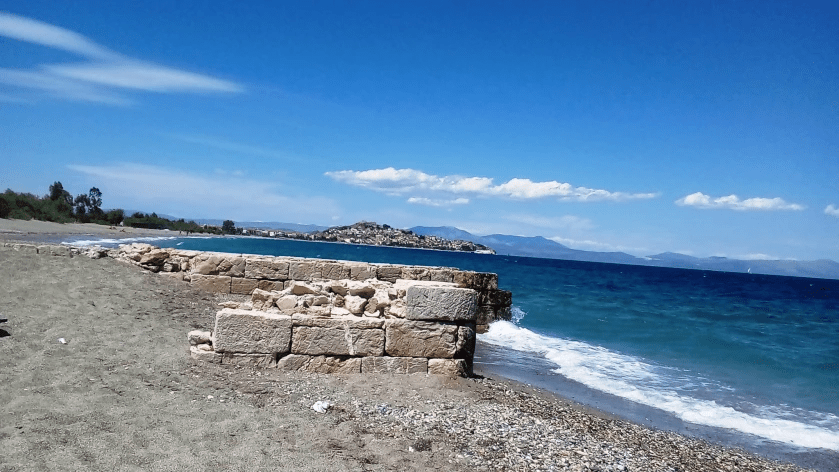
Not far from Astros, about 4 km, is Paralio Astros which has enchanting beaches and the “sun and sea” of the Argolic gulf is charming. Paralio Astros was built from 1832-1845 by the general Panos Zafeiropoulos and Akouros, as the inhabitants of the village honor with his statue in the central square, “SETTLER OF PARALIO ASTROS”. Paralio Astros, the amphitheatric coastal village of Arcadia with its picturesque alleys and traditional tile-roofed houses, intensively resembles a Greek Island.
“With the main feature of the area the” meeting “of the beautiful mountain with the sparkling sea, the Municipality of North Kynouria invites its visitors on a magical journey.”
From our Municipality
« One of the most famous summer resorts in the Peloponnese is experiencing rapid growth in recent years due to the short distance from the urban centers. It is 165 km from Athens and 49 from Tripoli. It has developed tourist infrastructure for every taste, kilometers of beaches with crystal clear waters and the possibility of marine activities. Area visitable all year round, ideal for weekends and three days. There is a Nautical Sailing Club in Paralio Astros, while there is a possibility of excursions to the islands of the Saronic Gulf and the villages of Kynouria. The picturesque natural harbor and the so-called “Island” by the locals with an incredible view of the Argolic Gulf are of special beauty. “Island” is the name of a part of the settlement that is built on the slopes of an asteroid hill. The houses in this part have retained their traditional color while at the top there is the famous medieval castle of Paralio Astros. Every summer in the small theater of the town there are many cultural events, while the sports activities are rich»
The most picturesque Paralio Astros, “the island” Paralio Astros, is perched on the hill and the ancients called the hill the “island”. Paralio Astros has nothing to envy from any Aegean island, it has it all, it is only two hours from Athens, it is very close “to the mountain” Parnonas, from its port the access to the “Aegean islands” is easy, is located close to the most important archaeological sites of our country and is very close to the historic Astros, the historic Agiannis and beautiful historical traditional villages.
For visitors Kynouria has a number of activities depending on the mood and physical endurance! Of course in summer the beaches of the area are full of life and invite the visitor to enjoy them. Portes, Atsiganos, Anavalos, Xiropigado, Heronissi, Arkadiko village and Kryoneri, are just some of the options we suggest! Those who wish to explore the beautiful waters of the area, can dive in the Arcadian village, Xiropigado and Paralio Astros.
“The Aegean Islands” are beautiful and offer many attractions that we all “must” visit. After all, it is not a coincidence that the prevailing view <the Greek name Atlantis helps this view> that in the Aegean existed about 12,000 years ago and Atlantis <Atlantis> which was the center of the world ….. There are many ways we can visit Aegean.
From the picturesque port of Paralio Astros in the summer there are many cruises to the “Aegean islands Spetses, Hydra
How to get there: From Athens airport follow the route to Athens, Corinth, Tripoli, exit to Argos (At the exit Sterna after Nemea), Argos, Tripoli (from the old road), exit to Astros (Left after the Mills), Astros.
Distances are from Astros, Paralio Astros is 4 km away from Astros
Astros is approximately 34 km from Argos, 33 km from Nafplio, 40 km from Tripoli, 48 km from Leonidio, 82 km from Sparta, 90 km from Mystras, 170 km from Athens and 200 km from Athens Airport.
In Astros and Paralio Astros there are many hotels and restaurants with traditional food, as in most neighboring villages.
Other options for Accommodation / Food: it is in Nafplio (33 km), in Tripoli (40 km),
Accommodation & Catering from the website of our municipality
For health issues there is the Astros Health Center in Astros, also many clinics and in Tripoli the Panarkadiko Hospital (see useful telephone numbers)
Schools, kindergartens: In Astros there is a kindergarten, elementary and high school, also lessons are given by private teachers for foreign languages and other subjects
Paralio Astros From Wikipedia, the free encyclopedia
«Paralio Astros is a seaside village in Arcadia. It belongs to the Municipality of North Kynouria and according to the national census of 2011 has a population of 1,043 inhabitants [2]. Formerly, the current existing Local Community of Paralio Astros (te as a Municipal District), was an independent Community, within the boundaries of the former Province of Kynouria
Paralio Astros Castle
The castle played an important role during the Turkish occupation. During the period of 1821, rich foreign merchants, brothers Zafeiropoulos (Konstantinos, Ioannis and Panagiotis), originally from Agios Ioannis, fortified the castle, building their houses there. On August 4, 1826, 1,200 soldiers locked inside the castle defeated the numerous army of Ibrahim who was besieging it. In 1833, Panos Zafeiropoulos (Akouros), dedicated the castle to the Kingdom of Greece and to King Otto. At the beginning of the 20th century, the castle was abandoned and deserted».
Panos Zafeiropoulos, was the most important Agiannitis before the revolution of 1821 and his contribution to Thyreatida Earth and his homeland is incalculable and went through the fine print of history.
“At the beginning of July 1826, the military corps of Panos Zafeiropoulos slaughtered 400 Arabs in an ambush set up by Mehmet aga of Tripoli. This was a very heavy blow to the Ottomans. That is why Ibrahim Pasha completely destroyed Agios Ioannis and the whole province of Agios Petros “
Ibrahim slaughtered and burned the whole Peloponnese, but he could never defeat Akuros, although he had been temporarily captured, not even in the castle of Paralio Astros, someone had to resist… and it is our great honor, this was Agiannitis Panagiotis Zafe Ακουρος).
500 books were saved from the burning of the School, which were kept in 1827 in the house of Zafeiropoulaia (Castle of Paralio Astros). These books were, according to tradition, placed in an old wooden library located in the offices of the School. Many of these books have been saved and recorded today. These books were mostly texts of ancient philosophers and writers, ecclesiastical texts, textbooks of physics, mathematics, etc. “
The settlement of Paralio Astros has a long history with the first important settlement by the Aeginians who were fortified in Paralio Astros in 424 BC. The construction of this fortification project was stopped by the Athenians, who at the same time, led by Nikias, came to Thyrea, captured it and destroyed it. But the Aeginians also settled in Agiannis, as historians report that the Aeginites came from Aeginites. Before the revolution of 1821 the Agiannites brothers Zafeiropoulos and many Agiannites made the second large settlement in Paralio Astros, and today many names from Paralio Astros are Agiannitika names.
“In November 1824, the Zafeiropoulos brothers began the restoration work of the ruined Frankish Castle of Paralio Astros and were completed in August 1825. More than 200,000 groschen were spent on the construction (according to a report by the widow Euphrosyne). The Zafeiropoulos brothers now settled permanently in the Castle and were the first settlers of Paralio Astros. Many Agiannites followed them and settled permanently in Paralio Astros, between 1825 – 1828 and later. These were mainly fighters who belonged to his military corps. The first Agianni families that followed the Zafeiropouloi were indicative: the family of Paschos, Logothetis, Nikolaidis, Maroudis (some of its members), Zafeiris (some of its members), Koralli, Bortzou, Diamantis, Karabatsou, Konstantinos, Vasilitheou, Vasileinos, etc., as well as the Avrantini and Nestora families from Spetses. We receive information about the first inhabitants of Paralio Astros from the memoir of Agiannitis Michael Logothetis, who was also the first president of Paralio Astros and from electoral lists of 1871 & 1881. “
Paralio Astros was built from 1832-1845 by the general Panos Zafeiropoulos and Akouros, as the inhabitants of the village honor with his statue in the central square, “SETTLER OF PARALIO ASTRO”.
By extension we can say that the inhabitants of Agiannis, Astros and Paralio Astros are almost the same inhabitants.
Administrative changes of the Local Authorities of D. Thyreas, Prefecture of Arcadia
Government Gazette 16A – 24/05/1835 Establishment of the municipality based in the settlement of Agios Ioannis
Government Gazette 5A – 08/03/1841 The settlement of Astros is defined as the winter seat of the municipality, The settlement of Agios Ioannis is defined as the summer seat of the municipality
ADMINISTRATIVE CHANGES IN SETTLEMENTS Paralion Astros (Arcadia)
With the actions of the Zafeiropoulos, the settlement named Paralio Astros was annexed to the municipality of Thyreas in 1845.
Government Gazette 32A – 08/12/1845 The settlement is annexed to the municipality of Thyreas
Government Gazette 252A – 24/08/1912 The settlement is detached from the municipality of Thyreas and is designated as the seat of the community of Paralio Astros
It is no coincidence that in the electoral list of 1871 of “Common. Paralio ‘Astros’ is mentioned first by Anastasios Paschos from Agiannis , a landowner.
See the links for more
From the Astros of the Sea electoral list of 1871
(Από το Άστρος της Θαλάσσης εκλογικό κατάλογο του 1871,1881)









 astrosgr.com - Το Ιστορικόν Άστρος Κυνουρίας